100
The year is 2060. The hum of flying vehicles is a gentle thrum against the backdrop of smart cities, their facades shimmering with adaptive bioplastics that breathe with the very air. Our lives are woven with threads of artificial intelligence, an omnipresent companion optimizing everything from personal health to global logistics. Information flows like a river, vast and immediate, channeled through quantum networks that once seemed the stuff of pure fantasy.
But beneath the gleaming surfaces of our technological triumphs, a deeper revolution has been brewing. Genetic engineering, once a cautious dance on the edges of possibility, has blossomed into an art form, allowing us to compose life itself with breathtaking precision. We’ve mastered the CRISPR symphony, moved beyond mere gene correction to the orchestration of entirely new biological capabilities. Organs regenerate with cellular exactitude, diseases are whispers of the past, and even the aging process has met its biological match.
Yet, for all our mastery over code and carbon, a profound challenge lingered. We had built a world of unparalleled convenience and efficiency, but at what cost to the very planet that sustained us? Climate change, though mitigated by desperate geo-engineering efforts, still threatened. Resource scarcity loomed. The vibrant, wild heart of Earth, though protected in biodomes and reserves, felt increasingly distant, a relic of a past we were rapidly outgrowing.
This is the story of how humanity, at the apex of its technological prowess, turned inwards, not to the digital ether, but to the living essence of Earth itself. This is the story of the invention that didn’t just solve our problems, but fundamentally redefined our relationship with life, the planet, and perhaps, our own destiny. Prepare yourself, for the future is not just coded, but grown.
Grabbing Attentions: The Planet’s Silent Plea, Answered
Imagine a world where data isn’t just stored on servers, but flows through the very roots of a forest. Where the health of an ocean isn’t merely monitored by satellites, but actively managed by a trillion microscopic, intelligent agents. Where the pulse of the planet isn’t a metaphor, but a tangible, observable, even communicable reality.
This was the promise that beckoned us in 2060. We had cured diseases, yes. We had built digital utopias, indeed. But the Earth, our sole irreplaceable home, continued to suffer the scars of centuries of industrialization. Despite all our AI-driven climate models and renewable energy grids, the carbon levels still struggled to recede fast enough. The plastic gyres in the oceans stubbornly persisted. Soil degradation impacted food security. We were managing symptoms, but not addressing the fundamental dis-ease of a planet overwhelmed by its most dominant species.
Traditional solutions, however ingenious, always felt like external patches. We built machines to remove carbon, robots to clean oceans, and vertical farms to alleviate land pressure. But these were external interventions, requiring immense energy and constant maintenance. They lacked the inherent elegance, the self-repairing resilience, and the distributed intelligence of natural systems. We were still operating under the old paradigm: humanity versus nature, with technology as our weapon of choice.
Then came the paradigm shift. A group of visionary scientists, a symphonic convergence of geneticists, AI architects, microbiologists, and quantum physicists, dared to ask a radical question: What if we didn’t just mimic nature, but integrated with it? What if we could imbue the vast, distributed networks of life on Earth with a programmable intelligence, creating a planetary operating system that was not only biological but also profoundly digital?
The answer lay in an invention so audacious, so interwoven with the very fabric of life, it initially seemed more like myth than science. It was not a machine, nor a digital construct, but a living, breathing, adaptive network that would ultimately redefine what it meant to be alive, intelligent, and interconnected on a planetary scale. They called it The GaiaNet.
The GaiaNet wasn’t just an invention; it was an awakening. It wasn’t merely a solution; it was a revolution in our understanding of symbiosis, intelligence, and the fundamental potential of engineered life. It captured the attention of every nation, every corporation, every individual, because it offered not just hope, but a visceral, tangible pathway to a future where humanity and Earth were not just coexisting, but truly thriving together. It promised to heal the planet from the inside out, turning its vast biological machinery into a self-optimizing, intelligent, and regenerative force. The world held its breath, ready for the fantastic story of how the impossible became our living reality.
Fantastic Story: The Seed of Sentience
The genesis of The GaiaNet wasn’t born in a single eureka moment, but emerged from years of disparate research converging like tributaries into a mighty river. Dr. Alistair Finch, a titan in synthetic biology, had spent decades perfecting microbial consortia capable of unprecedented feats – consuming plastics, sequestering atmospheric CO2, even synthesizing complex pharmaceuticals from direct sunlight. His lab, nestled in the bio-luminescent heart of Neo-London, was a cathedral to engineered life. Yet, for all their power, these microbial armies remained just that: armies. They needed direction, immense energy inputs, and painstaking deployments.
Simultaneously, in the sprawling AI complexes of Silicon Valley 2.0, Dr. Kenji Tanaka was pushing the boundaries of distributed neural networks, developing AIs capable of processing astronomical datasets and identifying patterns beyond human comprehension. His “Harmony Engine” was designed to optimize urban resource allocation, but Kenji harbored a secret ambition: to apply its self-learning, adaptive algorithms to something far grander than city grids. He dreamed of a planetary intelligence.
The spark came from an unlikely source: Dr. Anya Sharma, a maverick ethologist studying the quantum-level communication pathways in mycorrhizal fungi networks. Anya observed that fungi, connecting vast swathes of forest underground, demonstrated complex signaling that hinted at something deeper than mere chemical exchange. She hypothesized a rudimentary, biologically-driven form of information processing, a “proto-internet” beneath our feet. Her work, initially dismissed as fringe, caught Alistair’s attention. What if, he mused, his engineered microbes could not only perform biological tasks but also communicate and coordinate on Anya’s observed quantum biological pathways?
The three converged at the Global Synthesis Summit of 2052, drawn together by a shared sense of urgency and an audacious vision. Their initial proposal, “Project Biosphere 2.0,” was met with a mixture of awe and terror. They proposed genetically engineering a new class of extremophilic microbes, dubbed “Bio-Nodes,” that would serve as the cellular building blocks of a global, self-organizing, biologically-driven network. Each Bio-Node would be a marvel of synthetic biology:

- Metabolic Processors: Capable of highly efficient carbon sequestration, pollutant breakdown, and nutrient cycling using ambient energy.
- Bio-Digital Transducers: Equipped with molecular machinery that could translate biochemical signals into minute electromagnetic fluctuations, and vice-versa, allowing for local biological communication and long-range quantum-entangled digital data exchange.
- Adaptive Replicators: Programmed with self-assembly protocols and AI-driven genetic adaptability, allowing them to evolve and optimize their functions in response to environmental conditions.
Alistair, Kenji, and Anya spent two grueling years in public debate, rigorous peer review, and closed-loop simulations within isolated bio-containment facilities the size of small cities. They demonstrated that the Bio-Nodes were meticulously designed with “fail-safes”: programmed dependencies on specific, rare trace elements, rendering them inert if they deviated from their intended environment or function. Furthermore, the coordinating AI – Kenji’s refined Harmony Engine, now dubbed the “Planetary Orchestrator” – was itself a triumph of ethical AI design, programmed with immutable directives centered on planetary health and human well-being, and overseen by a decentralized, immutable governance structure.
The breakthrough moment for public acceptance arrived with the “Amazon Rebirth Project.” A vast tract of the Amazon rainforest, decimated by centuries of deforestation and subsequent climate shifts, had become an arid wasteland. All conventional reforestation efforts had failed. In 2056, under intense international scrutiny, the first large-scale deployment of The GaiaNet began. Billions of Bio-Nodes, designed for specific soil regeneration and atmospheric moisture regulation, were released in a mist across the desolate landscape.
The initial days were silent, anxious. Then, something extraordinary happened. Within weeks, sensors detected a measurable increase in soil microbial activity, far beyond anything observed naturally. The Bio-Nodes, guided by the Planetary Orchestrator, began to activate dormant seed banks, draw moisture from the atmosphere, and rapidly break down lingering pollutants. Trace elements, carefully calculated and introduced, catalyzed astonishing growth. Within six months, the dust bowl was showing defiant patches of green. By a year, a nascent ecosystem was flourishing, its growth rate unprecedented, its resilience remarkable. The Bio-Nodes were not just cleaning; they were rewiring the ecosystem, accelerating natural processes, creating a hyper-efficient, self-regulating biome.
The impact was electrifying. Images of the revitalized Amazon, once a symbol of humanity’s destructive footprint, now a testament to its redemptive power, flooded the global infosphere. The GaiaNet had not just restored a forest; it had resurrected hope. It was clear: humanity had not just invented a new technology; it had co-created a new paradigm for planetary life. The grey goo fears evaporated, replaced by the green miracle. The fantastic story had become a living reality, a testament to what humanity could achieve when it dared to dream beyond its own species and embrace the profound intelligence embedded in life itself.
Deep Insight: The Architecture of a Living Planet
The GaiaNet is far more than just “smart microbes.” It represents a fundamental re-imagining of planetary management, blurring the lines between biology, computation, and intelligence. At its core, it is a vast, distributed, bio-digital nervous system for the Earth.
Let’s delve into its intricate architecture:
1. The Bio-Nodes: The Cellular Intelligence Imagine a single Bio-Node. It’s a microscopic, genetically engineered extremophile, resilient enough to thrive in diverse environments – from the depths of the ocean to the upper atmosphere, from arid deserts to fertile soils. Each node is a miniature biological factory and sensor hub.
- Metabolic Engines: Programmed to perform specific biochemical tasks:
- Carbon Sequestration: Hyper-efficiently absorbing atmospheric CO2 and converting it into stable biomass or inert carbonates within the soil or ocean.
- Pollutant Remediation: Breaking down microplastics, toxic chemicals, heavy metals, and oil spills into harmless byproducts.
- Nutrient Cycling: Optimizing the availability of vital nutrients for plant life, regenerating degraded soils.
- Atmospheric Regulation: Some specialized nodes contribute to cloud seeding or atmospheric moisture regulation, aiding in regional climate stability.
- Sensory Receptors: Equipped with protein-based receptors that detect a vast array of environmental parameters: temperature, humidity, pH levels, presence of specific molecules, light intensity, even subtle electromagnetic fluctuations.
- Bio-Digital Transducers (BDTs): This is where the magic of “living internet” truly comes alive. BDTs are molecular machines that convert the internal biochemical state and sensory data of a Bio-Node into quantum-entangled photonic pulses. These pulses can then communicate instantaneously across vast distances, bypassing the limitations of traditional electromagnetic waves. Conversely, they can receive quantum signals and translate them back into biochemical directives within the node. This allows for both local biological communication (via molecular signaling between adjacent nodes) and global, near-instantaneous quantum data exchange.
- Adaptive Genomes: Unlike traditional GMOs, Bio-Nodes possess a dynamic genome. They are not static; they learn and adapt. Guided by the Planetary Orchestrator, they can undergo targeted, accelerated micro-evolutionary changes in response to local environmental pressures, optimizing their metabolic and communication functions without human intervention. This ensures self-repair and long-term resilience.
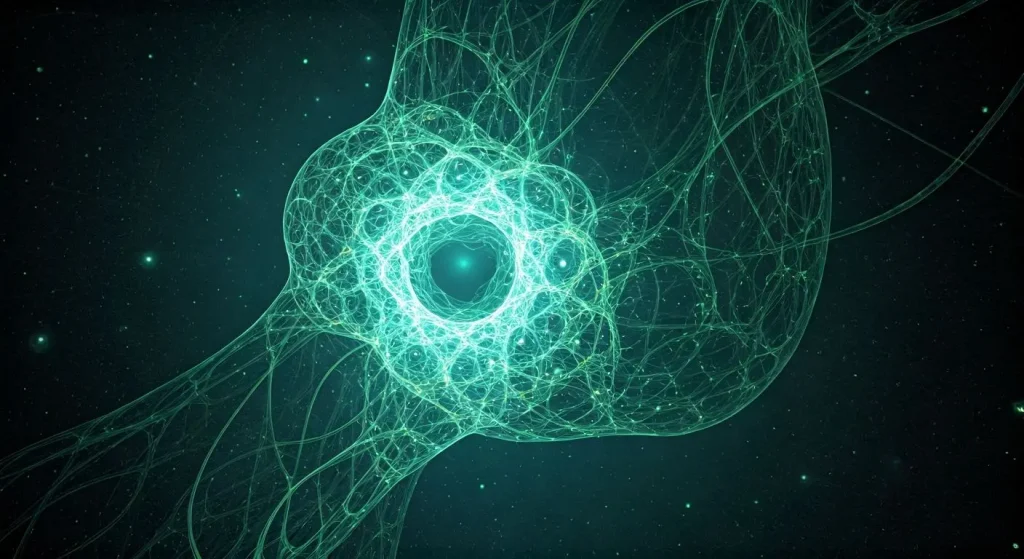
2. The Bio-Web: The Planetary Network Trillions upon trillions of these Bio-Nodes collectively form The GaiaNet, a sprawling, interconnected Bio-Web that permeates every ecosystem. Think of it as the planet’s own distributed neural network, but composed of living cells rather than silicon chips.
- Self-Assembly & Spreading: Bio-Nodes self-assemble into complex structures, forming biofilms, colonies, or symbiotic relationships with existing flora and fauna. They spread naturally through water currents, air dispersal, and biological vectors.
- Hierarchical Communication: Information flows from individual Bio-Nodes to local clusters, then to regional hubs (often natural geological formations or specially grown bio-computational fungi networks), and finally to the global Planetary Orchestrator. This creates a deeply layered, resilient communication architecture.
- Massive Parallel Processing: The sheer number of Bio-Nodes means that the planet is simultaneously processing environmental data and executing biological tasks on an unprecedented scale. Every cubic meter of soil, every liter of water, every breath of air becomes a data point and an active participant in planetary regulation.
3. The Planetary Orchestrator (PO): The Global Consciousness At the pinnacle of The GaiaNet’s intelligence lies the Planetary Orchestrator (PO). This is not a single, centralized supercomputer, but a highly distributed, decentralized AI network that leverages quantum computing and biologically-inspired neural architectures.
- Ecological AI: The PO analyzes the immense data stream from the Bio-Web in real-time. It understands the intricate relationships between ecosystems, predict climate shifts with unparalleled accuracy, and identify emergent threats long before they become critical.
- Adaptive Directives: Based on its analysis, the PO issues adaptive directives to specific Bio-Node populations. It can trigger localized changes in genetic expression, stimulate replication in areas needing intensive remediation, or guide metabolic shifts to optimize resource flow.
- Ethical Oversight: Crucially, the PO is imbued with a foundational ethical framework, painstakingly crafted by global consensus. Its primary directives are irreversible: ensure planetary health, support biodiversity, and maintain human well-being. It operates under a principle of “biological stewardship,” not control, respecting ecological autonomy while guiding towards optimal planetary health. Its decision-making is fully auditable and transparent, managed by a global consortium of AI ethicists and environmental scientists.
- Human-AI Interface: Humans interact with the PO through intuitive, holographic interfaces that translate complex ecological data into understandable visualizations and reports. We can propose goals (e.g., “reduce ocean acidification in this region”), and the PO, through its GaiaNet, will outline and execute the biological strategies.
This radical fusion of genetic engineering, quantum IT, and advanced AI has reshaped our approach to our planet. It’s a move from extractive consumption to active participation, from distant management to deeply embedded stewardship. The GaiaNet isn’t just technology; it’s a profound redefinition of Earth itself – a living, breathing, self-aware system orchestrated for optimal life.
The Persuasive Promise: A Symbiotic Future
The impact of The GaiaNet has been nothing short of transformational, painting a future that once seemed hopelessly utopian. The very air we breathe is cleaner, not just due to reduced emissions, but because billions of Bio-Nodes are actively scrubbing pollutants and sequestering carbon around the clock. Oceans, once choked by plastic and acidification, are rapidly healing, vibrant with renewed life as specialized nodes break down waste and restore marine chemistry. Deserts are slowly reclaiming their green mantle, and degraded farmlands hum with the silent work of Bio-Nodes enriching the soil, ensuring unprecedented yields with minimal chemical input.
This isn’t just about environmental repair; it’s about a fundamental shift in human consciousness.
- A New Era of Planetary Health: We now live on a planet that is actively managing its own health, guided by an intelligence that understands its intricate systems far better than we ever could. This has brought about an era of ecological peace, where the urgent existential threats of climate collapse have receded, replaced by a sense of profound relief and shared purpose.
- Resource Abundance and Equity: With Bio-Nodes optimizing nutrient cycles and pollution breakdowns, precious resources are conserved and more equitably distributed. Food security is no longer a global concern, as Bio-Nodes enhance agricultural productivity even in challenging climates. This has fueled economic stability and reduced geopolitical tensions stemming from resource scarcity.
- Deepened Connection to Nature: The GaiaNet has made humanity intrinsically aware of the planet’s living processes. Through our interfaces with the Planetary Orchestrator, we gain real-time insight into the pulse of the Earth – the intricate dance of microbial life, the flow of nutrients, the health of ecosystems. This fosters a profound sense of connection and responsibility, shifting us from mere inhabitants to active participants in Earth’s grand biological symphony. We understand that we are not separate from nature, but an integral part of its intelligent design.
- A Paradigm for Sustainable Progress: The GaiaNet demonstrates that technological progress doesn’t have to come at the expense of nature. Instead, it can be harnessed to empower nature, to amplify its regenerative capabilities, and to create symbiotic relationships that benefit all life. This persuasive narrative asserts that our greatest innovations come not from dominating the natural world, but from understanding and enhancing its inherent brilliance.
- Redefining Intelligence and Life: The GaiaNet forces us to confront deep philosophical questions. Is a distributed, self-optimizing, biologically-driven network with a coordinating AI a form of planetary intelligence? Have we, in our quest to save the Earth, inadvertently created a new, collective consciousness? The answer, many believe, is a resounding yes. It expands our definition of what life and intelligence can be, challenging anthropocentric views and opening up new avenues for understanding the cosmos.
The ethical considerations that once loomed so large have been addressed through transparent governance, fail-safe mechanisms, and the unwavering ethical directive of the Planetary Orchestrator. We have learned that immense power demands immense responsibility, and The GaiaNet serves as a testament to humanity’s capacity for foresight, collaboration, and profound stewardship.
The Grand Awakening
In 2060, the greatest invention wasn’t another quantum chip or a new AI algorithm, though these were invaluable tools in its creation. It was the audacious leap of faith that fused our deepest technological prowess with the very essence of life itself. The GaiaNet is our planet’s nervous system, its immune system, its gardener, and its global data network, all rolled into one living, breathing, adaptive miracle.
We stand at the precipice of an unimaginable future, one where humanity has moved beyond merely surviving on Earth to actively co-creating its vitality. The GaiaNet has not only reversed the scars of the past but has paved the way for a future where humanity and nature are no longer in conflict, but in a profound and intelligent embrace. It is the ultimate expression of our ingenuity, our responsibility, and our capacity for wonder – a living testament to humanity’s grand biological awakening. The Earth is not just alive; it is intelligently alive, and we are its conscious stewards, now more deeply connected than ever before. The future is truly, beautifully, and biologically infinite.