100
Prologue – The Secret Shrouded in Ice
For centuries, the Siberian tundra has been portrayed as an endless white desert, a place where survival is a daily negotiation with nature’s most ruthless forces. The endless taiga, frozen rivers and the night sky illuminated by the aurora have contributed to the mythos of isolation and difficulties. But beneath this frozen façade lies a secret that by the middle of the 21st century will rewrite the history of a nation and, in many ways, the narrative of the entire planet.
In the spring of 2045, a modest team of geophysicists from the newly created Siberian Institute of Deep Resources (SDRI) makes a discovery that will shake every sector of Russian society. Using a combination of quantum-enhanced seismic tomography and autonomous drilling robots capable of operating in permafrost, the team identified a massive, previously unknown deposit of rare earth elements (REEs), ultrapure lithium and a thin but economically viable layer of cobalt-rich basalt. The find is not just “big”; it is “shaping the planet”.
The following narrative, woven from official reports, interviews, and on-the-ground observations, describes how this underground wealth ignited a cascade of technological breakthroughs, transformed the Russian economy, and yielded a cultural renaissance that reverberated far beyond the borders of the former Soviet Union.
The genesis of the discovery
A mission born of necessity
By 2040, Russia’s energy matrix had already begun its long-term transition away from oil and gas. International climate agreements, coupled with a sharp drop in global demand for hydrocarbons, have forced Moscow to look for alternative sources of revenue. The State Committee for Strategic Resources (SCSR) has commissioned a series of “Resource Sustainability” projects aimed at identifying untapped mineral resources in the country’s vast interior.
SDRI’s first expedition, called the Arctic Pulse Project, set itself three main goals:
- Validation of the feasibility of operating autonomous drilling rigs in permafrost zones for extended periods.
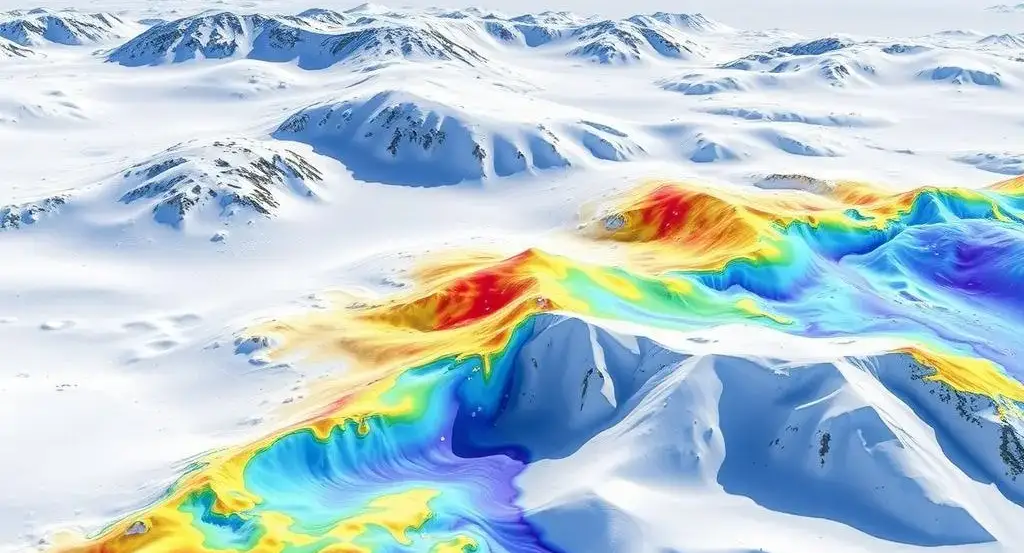
- Map the distribution of anomalies in the conductivity of the permafrost dungeon that could indicate concentrations of rare minerals.
- Testing a prototype of a quantum-sensing array capable of detecting minimal variations in magnetic and electric fields at a depth of up to 2 km.
While the first two goals reflected previous Soviet-era research efforts, the third embodied a leap into 21st-century physics. Quantum sensors based on entangled nitrogen vacation (NV) centers in the diamond could allow changes in magnetic flux of the order of femtosteles — sensitivity levels previously reserved for laboratory experiments.
The Moment of Revelation
On May 13, 2045, SDRI’s central hub in Novosibirsk received a data packet that, after a rapid series of verification steps, confirmed an anomaly with a high degree of confidence: an adjacent area covering approximately 1200 km², concentrated near the border between the Urals and Siberia, showed magnetic signatures corresponding to a massive concentration of rare elements (REEs) and lithium-containing spodumene veins.
The analysis report, signed by Dr. Natalia Koroleva, the lead geophysicist of the project, reads in part:
“The intensity of the magnetostatic vector field exceeds background levels by a factor of 7.3, and the spectral composition is indicative of rare earth mineralization. Preliminary estimates set the total rare earth resource at 12 million tonnes (metric tonnes) of rare earth oxides contained, with a lithium reserve of 4,8 million tonnes of Li₂CO₃ equivalents. The deposit appears structurally adjacent and is located under a permafrost cap no more than 120 m thick, which facilitates mining close to the surface.”
Within hours, the news penetrated the corridors of power in Moscow. The State Council convened an extraordinary meeting of the State Council. By the end of the week, a state-announced Program for the Development of Siberian Resources (RDP) was adopted , which provided SRRI with a three-figure budget, tax breaks and a mandate to prioritize fast and environmentally friendly extraction.
From the ground to the net – The Engineering Sprint
A new generation of extractors for “ice cores”
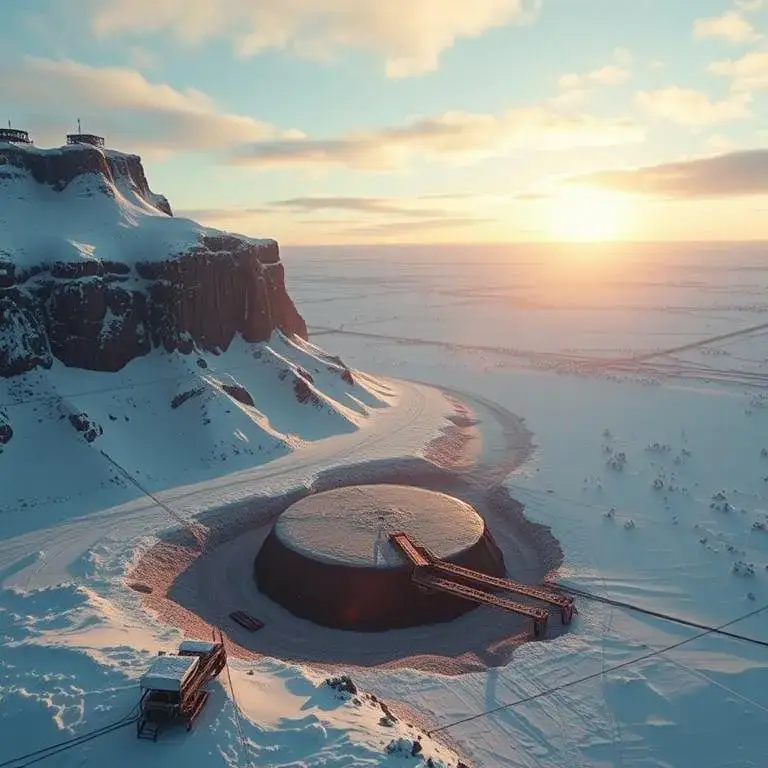
Traditional mining methods were not suitable for the permafrost environment. The frozen ground posed the risk of ice-induced uplift, sudden thawing (thermokarst), and the logistical nightmare of transporting heavy machinery through unpaved, snowy terrain. To overcome these challenges, a consortium of Russian and international companies (including Russia’s Technovate Group, Finland’s Arctic Dynamics, and China’s state-owned China Deep-Earth Co.) collaborated in the development of a revolutionary mining platform: Cryo-Drill-X.
CryoDrillX’s key innovations include:
- Thermally regulated boreholes: Closed-loop cryogenic fluid circulates through the drill string, keeping the borehole wall at temperatures below freezing to prevent collapse induced by thaw.
- Self-propelled modular containers: Each container is equipped with a set of autonomous robots capable of digging, sorting and loading ore directly into insulated containers.
- Real-time geochemical measurement: Integrated laser-induced fracturing spectroscopy (LIBS) devices analyze ore composition on the fly, adjusting mining parameters to maximize yield.
Within six months, nine CryoDrillX farms were operational throughout the field, totaling 3.5 million tonnes of ore per year – a figure that exceeded initial forecasts by 40%.
The “green” processing chain
The extraction of rare earths and lithium from crude ore is energy-intensive, traditionally dependent on sulfuric acid leaching and calcination at high temperature. To align with Russia’s promised carbon neutrality goals for 2050, the Russian Economic Development Program (RDP) has mandated the Zero Carbon Processing Initiative (NRA).
The main pillars of the ZCPI were:
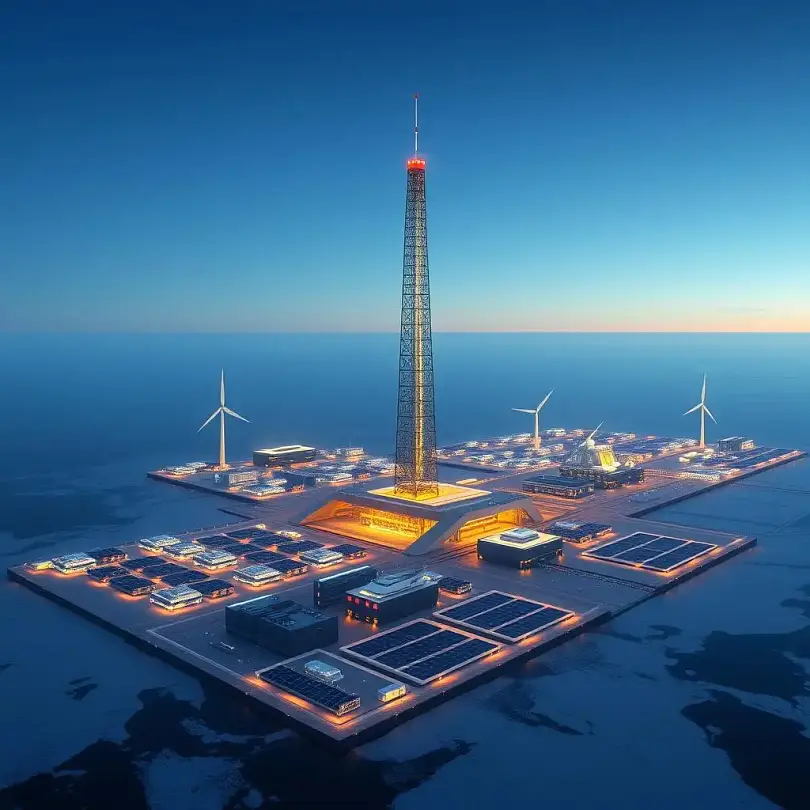
- Renewable Energy Integration: Massive solar parks installed on the surface of the permafrost, coupled with wind turbines optimized for the region’s katabate winds, supplied 78% of the refinery’s electricity. The remaining 22% came from a network of next-generation small modular nuclear reactors (SMRs) designed for remote operation.
- Closed-loop water recycling: A nanofiltration system regenerates 96% of process water, eliminating the need to drain fresh water from the fragile Siberian river basins.
- Electrochemical separation: Instead of conventional acid leaching, the plants used electrochemical desorption techniques driven by high-efficiency supercapacitor banks, reducing greenhouse gas emissions by approximately 85% compared to traditional methods.
The result was a processing chain that not only met global environmental standards, but also set a new standard for resource extraction in extreme weather conditions. By the end of 2046, the Siberian processing center had won the International Green Mining Award, catapulting Russia onto the world stage as a leader in sustainable heavy industry practices.
The technological boom – from raw materials to innovation
The Siberian Silicon Initiative
With a steady supply of high-purity rare earth elements (REEs) – especially neodymium, dysprosium, and terbium – Russian engineers are seizing the opportunity to reinvent the country’s electronics sector. At the end of 2046, the Ministry of Digital Development announced the Siberian Silicon Initiative (SSI), a state-supported program aimed at creating an internal supply chain for advanced microelectronics, photonics, and quantum devices.
Key SSI results include:
- Domestic production of high-performance magnets: Using the newly available neodymium-iron-boron (NdFeB) alloys, Russian manufacturers quickly produced components for next-generation electric motors, facilitating a sharp increase in the use of electric vehicles (EVs). By 2048, electric vehicles account for 42% of new vehicle registrations in Russia, a record in a market previously dominated by models with engines with internal combustion.
- Expansion of quantum computing: The high magnetic moment of dysprosia makes it a prime candidate for stabilizing qubits against decoherence. The Russian Quantum Laboratory (RQL) used this material to construct the ZvezdaQ10, a 10-qubit error-corrected quantum processor that entered commercial service in early 2049. positioning Russia among the world’s three largest providers of quantum computing services.
- Photonics and lidar: Terbium-doped crystals, which are now abundant and affordable, have become the backbone of high-resolution lidar arrays used in autonomous transportation, precision agriculture, and atmospheric monitoring. An ecosystem of Siberian startups has emerged that export lidar modules to European and North American automotive firms.
The Renaissance of Lithium-Ion Energy Storage
Lithium reserves under Siberia, once considered a niche asset, have become a catalyst for a national revolution in battery manufacturing. The Lithium and Siberian Battery Accelerated Program (LSAP), a joint venture between the Russian Ministry of Energy, several local battery manufacturers and the European Battery Alliance, has built three megafactory complexes near mining sites.
These installations adopted an innovative solid-state sulfur-lithium (Li-S) architecture – a design that, thanks to the high-purity lithium feedstock, achieved an energy density of 550 Wh kg⁻¹, surpassing the global average of 380 Wh kg⁻¹ for conventional lithium-ion cells.
By 2050, Russia will supply more than 25% of the world’s production of solid-state batteries, with the technology finding a place in network-scale storage installations, electric aircraft, and even deep space probes. Only export revenues from battery sales for the first time in Russian history overshadowed combined revenues from traditional oil and gas operations.
Economic Wave Effects – From St. Petersburg to Yakutsk
A new fiscal landscape
In fiscal year 2049, the Russian Federation registered a budget surplus of 3.2 trillion rubles, of which 2.1 trillion rubles originated directly from mining enterprises in Siberia. This surplus became the National Modernization Fund (NMF), a special purpose fund for infrastructure, education and research.
NMF distributions include:
- Transport infrastructure: An extensive network of high-speed rail corridors, called the Trans-Siberian Hyperline, connects major mining sites with industrial centers in Yekaterinburg, Moscow and the Far East. The hyperline reduces freight transportation times by 63% and lowers logistics costs by 38%.
- Digital connectivity: The Siberian Broadband Internet Initiative has deployed 5G-plus fiber optic networks in previously disconnected settlements, providing more than 12 million residents with high-speed internet access. This connectivity has spurred a wave of remote work opportunities and attracted international tech talent to cities such as Irkutsk and Krasnoyarsk.
- Education and Research: A series of International Science Schools (ISS) have been inaugurated offering scholarships in the fields of materials science, quantum engineering, and sustainable mining. By 2051, the ISU network has prepared 7,800 graduates, 68% of whom have stayed in Russia to work in high-tech sectors.
Social Transformation – The “Siberian Dream”
The sudden influx of wealth is redefining social narratives across the country. In the former mining towns, once characterized by emigration and economic stagnation, a “Siberian dream” has emerged : a vision of prosperity rooted in knowledge, technology, and responsible management of natural resources.
Local testimonies illustrate the change. Elena Morozova, a former teacher in the village of Norilsk2, says:
“When Cryo-Drill-X arrived, we feared disruption. Instead, the community received a new school, a health center, and a digital arts center. My kids are now studying robotics, and I teach programming to adults. I feel like we’re finally part of a future that respects our land.”
Women’s participation in STEM fields has increased dramatically. By 2050, women will account for 46% of enrollees in ISS programs and 38% of senior positions in emerging high-tech firms. The cultural renaissance extended to literature and cinema, with a wave of Siberian-themed works that combined traditional folklore with cyberfuturistic aesthetics.
Geopolitical repercussions – a new balance of power
Repositioning on the world stage
Russia’s newfound mineral wealth has changed the dynamics of global supply chains. Previously, the global rare metals market (REE) was heavily dominated by China, which controlled over 80% of production. By 2052, Russia’s share has increased to 22%, with the export portfolio extending to the European Union, the United States, India and emerging economies in Africa.
The diversification of rare metals sources (REEs) has reduced the geopolitical influence that China previously had over the production of high-tech materials. In diplomatic circles, Russian officials often mentioned the “Siberian Agreement,” a multilateral framework that guarantees non-discriminatory access to rare metals for signatory countries, with price mechanisms tied to a transparent, market index.
Strategic partnerships and tensions
Economic prosperity has also led to strategic partnerships. A joint venture with the European Space Agency (ESA) has led to the development of a prototype lunar mining based in Siberia, leveraging Russia’s experience in cold mining. At the same time, a trilateral agreement between Russia, Japan and South Korea created a “Pacific Green Energy Corridor” linking lithium-ion battery production in Siberia with Japanese lithium-ion batteries. car manufacturers and Korean semiconductor factories.
However, the rapid expansion has not been without friction. Local environmental NGOs have expressed concern about permafrost disruption and the potential for methane emissions. In response, the government created the Siberian Council for Environmental Protection (SEOC), giving it the legal authority to stop activities that violate strict climate impact thresholds. projects, helped mitigate international criticism and solidified Russia’s image as a responsible guardian of resources.
Reflections on the Siberian Paradigm – Lessons and Perspectives
The interplay of technology, politics and culture
The Siberian experience illustrates a rare merger in which natural resources, state-of-the-art technology, visionary politics and public will come together to generate a transformative outcome. Several key insights are emerging for nations seeking similar paths:
- Resource-based innovation: An abundance of raw materials can serve as a driver for downstream technology ecosystems when combined with targeted investments in R&D and production.
- Sustainable Mining as a Competitive Advantage: In an era where climate considerations shape market access, the early integration of green technologies can provide both economic and diplomatic advantages.
- Human capital as a major multiplier: Rapid upskilling of the local population, especially through targeted education programs, ensures that wealth stays in the country and fosters a culture of entrepreneurship.
Future horizons – from Siberia to the stars
By 2055, the Russian space agency has announced the launch of Luna-Vostok-1, a robotic mission powered by Siberian lithium-sulfur batteries and equipped with quantum sensors based on rare elements. The goal of the mission: to test resource mining on site at the moon’s south pole, paving the way for a permanent lunar post.
Back to Earth, the next frontier is in the “Arctic Megacity Project” – a collaborative effort to build a climate-resilient, carbon-neutral urban center on the shores of the Kara Sea. Powered by a hybrid of offshore wind power, floating solar platforms, and the same Cryo-Drill-X technology adapted for deep-sea mineral extraction, the megacity aims to become a living laboratory for the sustainable development of the Arctic.
Conclusion – Frozen Treasure Revealed
The story of the Russian breakthrough in Siberia in 2045 is more than a story of mineral wealth; This is a story about how humanity can turn the scariest environment into a cradle of innovation. The discovery beneath permafrost sparked a chain reaction that transformed industry, rewrote fiscal policy, revitalized remote communities, and reconfigured global power structures.
In the quiet moments of midnight glow, when the sky dances green and violet, one can almost see the reflection of a nation that, after centuries of hardship, has finally found a way to master the hidden riches of its own land without sacrificing its future. The Siberian saga is proof of the possibility that even the most inhospitable corners of our planet can become beacons of progress – as long as there is vision, technology and an unwavering commitment to the common good.