100
The Quiet Pages
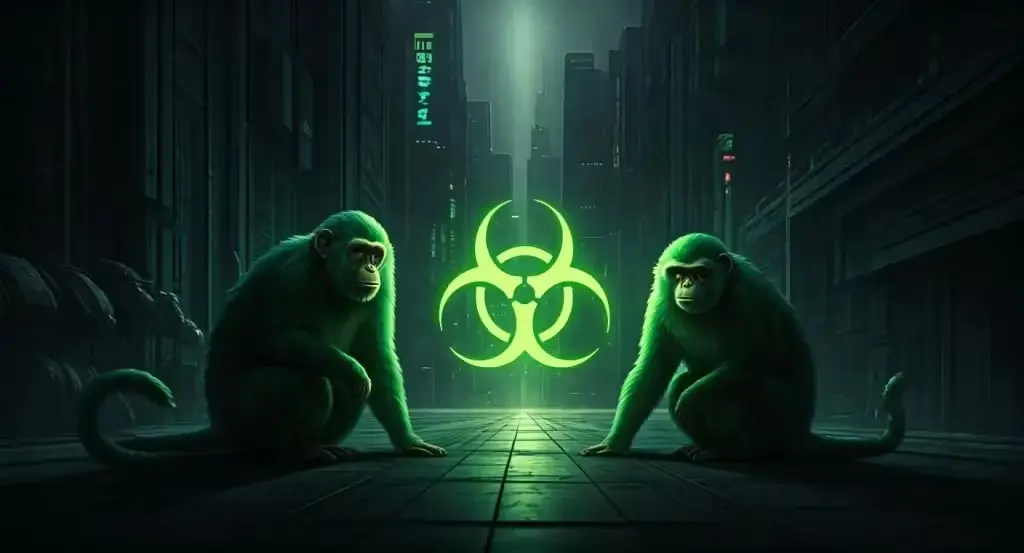
In the year 2040, humanity faces a grave new threat that emerged silently from the depths of the African rainforests. A mutated strain of simian immunodeficiency virus—distantly related to the HIV that plagued the late 20th and early 21st centuries—has been discovered in green monkeys. Unlike its predecessor, this new virus, tentatively named Aqua-HIV (A-HIV), has evolved an alarming capability: waterborne transmission. Initial reports from field researchers documented entire monkey troops decimated within weeks of the first infection. The first human cases appeared in a small village near a river where the green monkeys frequently gathered. Within days, the outbreak spiraled into a regional crisis. Now, as the pathogen threatens to spread globally through interconnected water systems, the world stands at a precipice familiar yet terrifyingly new. This is the story of humanity’s race against time, a testament to scientific ingenuity, global collaboration, and the lessons painfully learned from pandemics past.
Within hours of confirming human transmission of A-HIV, the World Health Organization activated its Emergency Coordination Network, a system established in the wake of the 2025 Indonesian H7N9 outbreak that killed 3.2 million people. Dr. Mei Lin, Director-General of the WHO, initiated the first of what would become daily virtual summits with health ministers from all 213 member nations. “We learned the hard way that diseases don’t respect borders,” she stated grimly during the inaugural meeting. “National isolation is not security—it’s just delayed vulnerability.”
Unlike the chaotic initial response to COVID-19 decades earlier, the Global Pathogen Response Initiative—founded in 2031—deployed specialist teams to ground zero within 48 hours. These multinational units consisted of virologists, epidemiologists, and emergency response experts from thirty different countries. The African Union’s Pandemic Prevention Authority, now the most sophisticated regional disease control network in the world, had already established containment protocols before the first international teams arrived.
What made this response notably different was the seamless integration of research efforts. Gone were the days of national laboratories working in isolation, hoarding data and competing for vaccine patents. The Global Virome Database, housing genetic information on over 900,000 potential zoonotic viruses, immediately made its resources available. Scientists from Nairobi to New Delhi, Boston to Beijing, collaborated via quantum-secured data networks, sharing findings in real time. Within ten days, the complete genomic sequence of A-HIV was mapped and distributed worldwide, while water treatment specialists devised emergency filtration solutions deployable in resource-limited settings.
As Professor Omar Sánchez of the International Pandemic History Institute observed during an emergency briefing, “The parallels between our current situation and past pandemics are striking, but the differences in our response capabilities are even more remarkable.” The bitter experiences of previous outbreaks had forged a new approach to disease management.
The coronavirus pandemic of 2019-2022 had taught the world the devastating cost of delayed response and uncoordinated containment efforts. The more recent outbreaks—the 2029 antibiotic-resistant tuberculosis crisis and the 2035 hemorrhagic fever that originated in the Amazon Basin—had further refined global response mechanisms. Each disaster had added layers of knowledge and infrastructure that now proved invaluable.
One of the most significant lessons implemented was the principle of radical transparency. Unlike the early days of COVID-19, when information was frequently suppressed for political or economic reasons, the International Pathogen Alert Treaty of 2033 had established binding obligations for immediate reporting with severe sanctions for non-compliance. When A-HIV first appeared in humans, local officials raised the alarm within hours, triggering continental and then global response mechanisms.
Another crucial evolution was the decentralization of medical countermeasure production. The pandemic supply chains of the 2020s had been fragile, with critical manufacturing concentrated in a handful of countries. Now, regional production hubs equipped with adaptive manufacturing technologies could rapidly retool to produce whatever was most urgently needed—from specialized water filters to antiviral medications.
“We’re not just fighting the current outbreak—we’re racing to prevent the next five,” declared Dr. Fatima Al-Zahrani, head of the WHO’s Anticipatory Pathogen Program, as she coordinated the deployment of genetic surveillance systems across Africa’s major watersheds. The A-HIV crisis had underscored a fundamental truth: reactive measures alone would never be sufficient against emerging pathogens.
The Global Early Warning System, a network of over 10,000 environmental monitoring stations spread across six continents, had actually detected anomalous viral particles in water samples three weeks before the first human case was reported. Unfortunately, the significance of these findings wasn’t immediately recognized—a gap in the system that was now being urgently addressed.
Beyond detection, prevention efforts had evolved to include predictive modeling of zoonotic spillover events. Satellite monitoring of land use changes, combined with wildlife population tracking and climate data, now generated weekly risk assessments for 327 known hot zones around the planet. When A-HIV was first detected, AI systems immediately identified twenty other locations with similar ecological profiles where monitoring should be intensified.
Perhaps most importantly, the concept of One Health—the integrated approach to human, animal, and environmental health—had finally moved from academic theory to practical implementation. Veterinarians routinely collaborated with human medical specialists, while environmental scientists contributed critical insights about transmission pathways. This holistic approach proved particularly valuable with A-HIV, as it enabled researchers to quickly determine that water contamination occurred primarily when infected monkeys used certain riverine areas that served as both watering holes and latrine sites.
In the specialized containment facility beneath Geneva’s International Virology Center, Dr. Kwame Osei carefully examined the holographic model of the A-HIV viral structure hovering before him. “The water transmission pathway is facilitated by this unusual protein capsid configuration,” he explained to colleagues watching remotely from six continents. “It provides remarkable environmental stability—but also gives us a specific target for countermeasures.”
The scientific response to A-HIV represented a quantum leap beyond what had been possible even a decade earlier. Advances in computational biology meant that researchers could simulate millions of potential antivirals against the virus’s structure in days rather than months. Quantum computing networks dedicated to pandemic response ran continuously, evaluating treatment options and predicting viral mutation patterns.
Gene sequencing technologies deployed in field conditions provided real-time genomic surveillance, tracking the virus’s evolution as it spread. This capability—merely aspirational during earlier pandemics—allowed researchers to identify emerging variants before they became dominant, adjusting vaccine development accordingly.
Perhaps most revolutionary was the role of medical AI systems in treatment development. The WatsonHealth-6 medical intelligence system, trained on the entirety of human medical literature and data from all previous outbreaks, identified a potential treatment pathway by recognizing similarities between A-HIV’s cellular entry mechanism and an obscure reptilian virus studied decades earlier. This insight led researchers to repurpose an existing medication, reducing development time by months.
Beyond treatment, scientific advances had transformed diagnostic capabilities. Nanopore sensors capable of detecting viral particles at concentrations of just five copies per milliliter were being rapidly deployed to water treatment facilities worldwide, while personal testing devices the size of a coin could analyze a drop of water or blood in under three minutes.
“This isn’t just a viral evolution story—it’s a climate change story,” explained Dr. Elena Rodriguez, environmental epidemiologist, as she presented satellite imagery showing the dramatic reduction of the green monkeys’ natural habitat over the previous fifteen years. The expanding Sahel had pushed monkey populations into increasingly concentrated areas with limited water sources, creating ideal conditions for viral transmission between primate groups previously separated by vast distances.
The A-HIV crisis represented a perfect storm of environmental factors converging to create ideal conditions for zoonotic spillover. Rising temperatures had expanded the range of certain mosquito species that, while not directly involved in A-HIV transmission, had introduced other pathogens that weakened monkey immune systems. Increasingly volatile precipitation patterns meant that drought periods concentrated animal populations around dwindling water sources, while subsequent flooding events rapidly distributed contaminants across wide areas.
Deforestation had played a particularly sinister role. As logging operations and agricultural expansion fragmented monkey habitats, human-animal contact zones multiplied. Satellite analysis revealed that the initial spillover location was less than 500 meters from a recently established palm oil plantation that had displaced an ancient forest stand just eighteen months earlier.
Ocean acidification and warming had also contributed indirectly. Changes in marine ecosystems had disrupted traditional fishing patterns, pushing coastal populations to rely more heavily on bushmeat and freshwater fishing—both increasing human exposure to potential zoonotic reservoirs. The first human cases of A-HIV appeared in a community that had recently shifted from predominantly marine to riverine fishing due to collapsed offshore fish stocks.
When Dr. Miguel Vargas, veterinary pathologist, conducted the first necropsy on an A-HIV-infected green monkey, he noted something alarming. “The viral concentration in the salivary glands is extraordinarily high—at least 100 times what we see in blood samples,” he reported to the emergency response team. This finding explained the unprecedented efficiency of transmission when monkeys drank from or defecated in water sources, but also pointed to a disturbing truth: the relationship between human activities and animal disease had created this crisis.
Investigations revealed that the virus had likely evolved its unusual transmission characteristics due to specific pressures in the changing environment. Green monkey populations had been increasingly confined to shrinking forest fragments connected by rivers—essentially creating viral transmission highways. Moreover, genetic analysis suggested that the strain’s unusual adaptations may have been accelerated by exposure to human pharmaceutical runoff in waterways, which contained subtherapeutic levels of various antiviral medications.
The crisis highlighted the complex interdependence of species health. As veterinary epidemiologist Dr. Sarah Kahumbu explained, “We’ve known for decades that approximately 75% of emerging infectious diseases come from animals, but we’ve been remarkably slow to implement the necessary surveillance systems at the human-animal interface.”
In response to the A-HIV outbreak, the newly established Animal-Human Health Monitoring Network deployed thousands of autonomous sampling devices to watering holes, rivers, and other sites where humans and animals shared water resources. These systems continuously monitored for known pathogens and unusual genetic signatures, transmitting data to regional analysis centers. Indigenous knowledge also proved invaluable, as local communities often noticed subtle changes in animal behavior and health long before conventional surveillance detected problems.
As the battle against Aqua-HIV continues, the world faces a defining moment in its long history with infectious disease. The virus has claimed nearly 30,000 lives, but the rapid global response has prevented the catastrophic scenarios initially feared. Experimental treatments are showing promise, with survival rates improving weekly. Water purification technologies have been deployed to vulnerable regions, while vaccine development proceeds at unprecedented speed.
Yet this crisis serves as both warning and wake-up call. The emergence of A-HIV was not a random biological accident but the predictable result of environmental degradation, climate change, and the complex interplay between human activities and natural systems. As WHO Director-General Lin observed, “We are not just fighting a virus; we are confronting the consequences of our relationship with the planet.”
Perhaps the most important lesson of the A-HIV pandemic is that humanity’s health is inseparable from the health of the environments we inhabit and the other species with whom we share them. The artificial boundaries between human medicine, veterinary science, and environmental management have proven not just obsolete but dangerous.
As the global community works to contain this threat, a new paradigm is emerging—one that recognizes that pandemic prevention must include environmental stewardship, sustainable development, and respect for the delicate balance between all living things. In this sense, A-HIV may ultimately be remembered not just as a crisis averted but as the catalyst that finally aligned humanity’s approach to health with the interconnected reality of life on Earth.