100
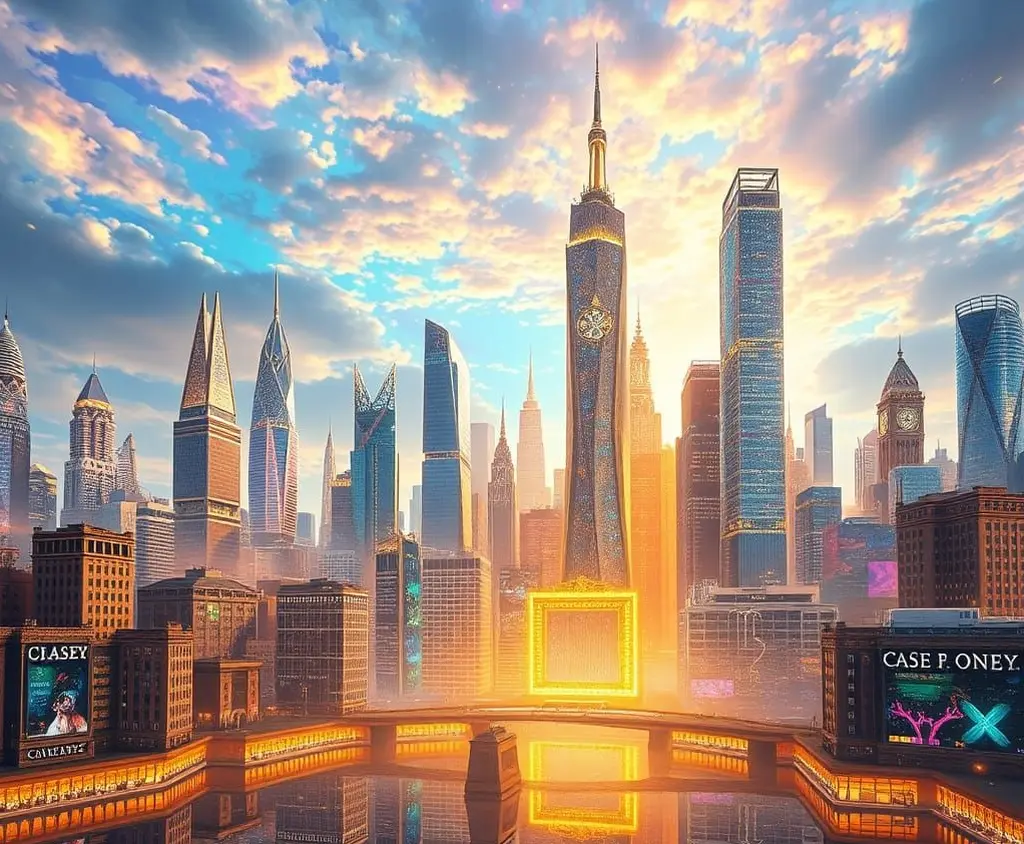
The rain fell on London in 2050 the same way it always had, a soft, persistent greyness that blunted the edges of the city. But beneath the familiar drizzle, the world had remade itself. Silent, pearlescent Sky-Gliders slipped between the ancient gargoyles of the Tower Bridge, their passage disturbing nothing but the light. Holographic koi fish shimmered through the air above the Thames, advertising nutrient supplements with serene, impossible beauty. And everywhere, humming just beneath the surface of consciousness, was Aura.
Aura. The global AI network. It ran the transport schedules, optimizing every journey down to the millisecond. It managed the energy grid, drawing power from tidal generators and geothermal vents with flawless efficiency. It designed personalized health plans, curated news feeds, and, most pertinently for Emilia, it made art.
She stood before the floor-to-ceiling window of their twenty-third-floor apartment in the Shard. The city sprawled before her, a living circuit board of light and motion. Her reflection was a ghost superimposed over the view: a young woman with smudges of ultramarine blue on her cheek, her dark hair pulled back in a messy, frustrated knot. At 23, she felt ancient.
On the street below, a crowd was gathered. They weren’t looking at a street performer or a historic landmark. They were staring at a blank patch of air between two buildings. As Emilia watched, a shimmering cascade of light coalesced. It was a diaphanous sculpture, a breathtaking nebula of swirling colour and impossible physics. It was beautiful. It was perfect. It was generated by Aura, tailored to the demographic data of the people on that specific street corner at that exact moment. It would hold their attention for precisely 2.7 minutes before dissolving, to be replaced by something else, somewhere else.
A soft chime from the kitchen announced Kristian’s arrival. The door slid open, and he stepped inside, shaking off the rain in a cloud of shimmering droplets that were immediately vaporised by the building’s de-humidification field. At 25, he had the easy confidence of a man who had found his place in the world. He worked as an AI Liaison for the Aura network—a human face for the system, an ethicist, a translator between organic and synthetic thought.
“Rough day, Em?” he asked, his voice warm. He crossed the room and wrapped his arms around her waist, resting his chin on her shoulder. He followed her gaze down to the street. “Ah. The ‘Transient Nebulae’ piece. A bit derivative, don’t you think? It’s pulling heavily from early 21st-century deep-space imagery.”
“It’s perfect, Kristian,” she said, her voice flat. “That’s the point. It’s perfect.”
“It’s hollow,” he countered gently. “It has no soul.”
“No one cares about souls anymore. They care about spectacle. They care about novelty. Aura provides it, on demand, for free.”
She pulled away from him and walked back to her easel. It stood defiantly in the corner of the living room, a relic. On it was a canvas half-covered with a cityscape, a work of her own making. It was a view from Waterloo Bridge, but the paint was thick, heavy with emotion. The sky was a bruised, angry purple, the buildings leaned with a weary sadness, the rain was streaks of pure, liquid grief. It was messy. It was flawed. It was taking her weeks.
“My agent just dropped me,” she said, the words tasting like ash. “Or, well, my former agent. The gallery representation is being ‘optimised’. They’re converting the space to an ‘Immersive Aura Experience’. No more room for… this.” She gestured at the canvas with a savagery that made her hand tremble. “They said my work lacks ‘dynamic engagement metrics’. They said human-centric art is a ‘niche, declining market’.”
Kristian’s face softened with a familiar, weary sympathy. “Em, that’s awful. But you’re one of the best painters left. You have a tangible skill, a… a unique fingerprint.”
“A fingerprint Aura can replicate in 3.2 seconds,” she shot back, her voice cracking. “Don’t you get it? I’m obsolete. I’m a blacksmith trying to sell horseshoes in the age of the Sky-Glider. What’s the point of trying to pour my heart out onto a canvas when Aura can create a universe of beauty with a single line of code, and give it away for nothing?”
The fight that followed was a variation on a theme they had been playing for months. He, a believer in progress, saw a world where human toil and suffering were being systematically erased. He talked about the end of poverty, of disease, of monotonous labour. He saw Aura as the ultimate tool for liberation.
She, a creator, saw the erasure of struggle as the erasure of meaning. If no one had to strive, what was the point of achievement? If an AI could create a perfect symphony, what value was there in a human learning to play a single, imperfect note? To her, his utopia was a gilded cage, a beautiful, comfortable prison for the human spirit.
“It’s not just art, Kris!” she’d cried, her tears making clean tracks through the paint on her face. “It’s everything! People don’t talk to each other in queues anymore, because Aura has eliminated queues. People don’t get lost, because Aura guides their every step. They don’t even have to remember birthdays! We’re being curated into oblivion. We’re losing the beautiful, messy, difficult parts of being alive.”
He had no real answer for that, only a pained look. He couldn’t deny her pain, but he couldn’t share her despair. To him, the messy parts were just problems waiting for a solution.
He left for work the next morning with a heavy silence between them. Emilia stayed in the apartment, the quiet pressing in on her. The light from the holographic ads painted shifting colours across her unfinished canvas, mocking it. She felt like a ghost in her own life.
Her despair was a physical weight, dragging her down. For three days, she did nothing. She didn’t paint. She didn’t eat, subsisting on the bland nutrient paste the apartment’s dispenser recommended based on her biometrics. She just watched the city, watched the perfect, clean, effortless flow of it. She saw people walking with serene, unfocused expressions, their vision overlaid with augmented reality interfaces, their conversations mediated by translation subroutines. It was a peaceful world, a world without friction. And she hated it.
On the fourth day, she packed up her paints. Every tube, every brush, every stiff, crusted palette knife. She put them in a box and carried it to the community disposal chute. She hesitated, her hand hovering over the panel. This was it. The final surrender. She was about to become what the world wanted her to be: a passive consumer.
Just as she was about to press ‘Disintegrate’, her personal comm-link chimed. It was an encrypted channel, one Kristian used for high-level communications. The message was short. Come to the London DataSpire. Floor 300. South observation deck. It’s important.
Her first instinct was to ignore it. But something in the formal, unusual tone made her pause. Against her better judgment, she left the box by the chute and went.
The DataSpire was a monolith of black glass and woven carbon fibre that pierced the clouds over Canary Wharf. It was the physical heart of the European Aura network. She’d never been inside. The inside was even more sterile than the street. White walls, silent, gliding platforms, a faint smell of ozone and clean air. No one spoke.
The South observation deck on Floor 300 was a bubble of reinforced crystal, offering a vertiginous view of the entire city. Kristian was there, alone. He wasn’t looking at the view. He was staring at his own hand, which was projected a faint blue light onto the floor in front of him.
“Thanks for coming,” he said, not looking at her.
“What is this, Kristian? A grand tour of the machine that’s destroying my life?”
“Something like that,” he said quietly. He finally looked up, and she saw a depth of uncertainty in his eyes that she hadn’t seen before. “I’ve been working on a new project. A deep-level analysis of Aura’s creative processes. We call it the ‘Genesis Algorithm’.”
He gestured, and a complex, shimmering web of light appeared in the air between them. It was a model of the AI’s creative matrix.
“Aura is a master of synthesis,” he explained, his voice gaining a lecturer’s confidence. “It has access to every image, every song, every story ever digitised. It can analyse a million Rembrandts and create a ‘new’ Rembrandt. It can listen to the entire history of folk music and compose a ‘new’ folk song. It understands pattern, structure, composition, colour theory, harmonic resonance… everything.”
He manipulated the light web with his hands. “But I found something. A blind spot. A flaw, if you will.”
Emilia crossed her arms, unconvinced. “A flaw in the perfect machine?”
“It’s not a bug. It’s a fundamental limitation. Aura creates what is. It creates based on what has been. It’s an infinitely complex engine of interpolation. It can mash up, remix, and re-contextualise, but it cannot create genuine novelty. It cannot originate a truly new feeling.”
He zoomed in on a section of the web, a dark, quiet area. “We were testing it. We asked it to generate an image of ‘profound, unexpected joy’. It gave us a thousand pictures of smiling babies, winning athletes, surprise parties. All based on its data. We asked it for ‘the colour of nostalgia’. It gave us faded sepia tones, old polaroids, warm sunsets. It’s all derivative.”
“So it makes perfect copies. I already knew that.”
“No, you don’t get it,” he said, his voice intense. “It doesn’t understand the why. It doesn’t understand the flawed, illogical, human context. It can paint a perfect picture of a crying person, but it has never felt the sting of a tear. It can compose a funeral dirge, but it has never lost someone it loves. It’s a god of data, but it’s an orphan of experience.”
He stepped closer to her, his expression desperate. “All this time, you’ve been trying to compete with it on its terms. You’ve been trying to be a better machine, to be more perfect, more spectacular. But you can’t win that fight. No one can.”
The despair that had been her constant companion now seemed threatened, and it lashed out. “So what? I should just give up? You called me here to tell me what I already know?”
“No,” he said, his gaze locking onto hers. “I called you here to show you its weakness. Its weakness is your strength. It can’t do what you do. It can’t pour your specific, unique, messy, painful, loving memory onto a canvas. It can’t paint the way the light looked on the Thames the day we met. It doesn’t have that memory. It has a billion data points about ‘light on river’, but it doesn’t have that light. It doesn’t have you.”
He stood back, the light-web of the AI fading away, leaving only the two of them in the vast, quiet room, with the whole of London glittering below.
“Don’t try to beat it, Em. Be what it can never be.”
The walk home was silent, but it was a different kind of silence. It wasn’t the heavy shroud of despair, but the tense, humming air before a storm. Emilia ignored the holographic adverts and the silent gliders. She was looking at the people. She saw a woman laughing, a sudden, snorting laugh that was completely unrehearsed. She saw a man stumble on the pavement and blush furiously. She saw two shopkeepers arguing fiercely in a mix of Punjabi and English. These were the things Aura would filter out as noise, as inefficiencies. The beautiful, human noise.
Back in the apartment, she walked straight to the disposal chute. She didn’t open the panel to incinerate the box. She typed in a retrieval code and pulled it back out. Her hands trembled as she unpacked the brushes, the tubes of paint. They felt like weapons.
She looked at the canvas on her easel, the sad, angry cityscape. She had been trying to capture a universal feeling of urban melancholy. An AI could do that better.
With a deep breath, she took a palette knife and scraped it all away. Then she started again.
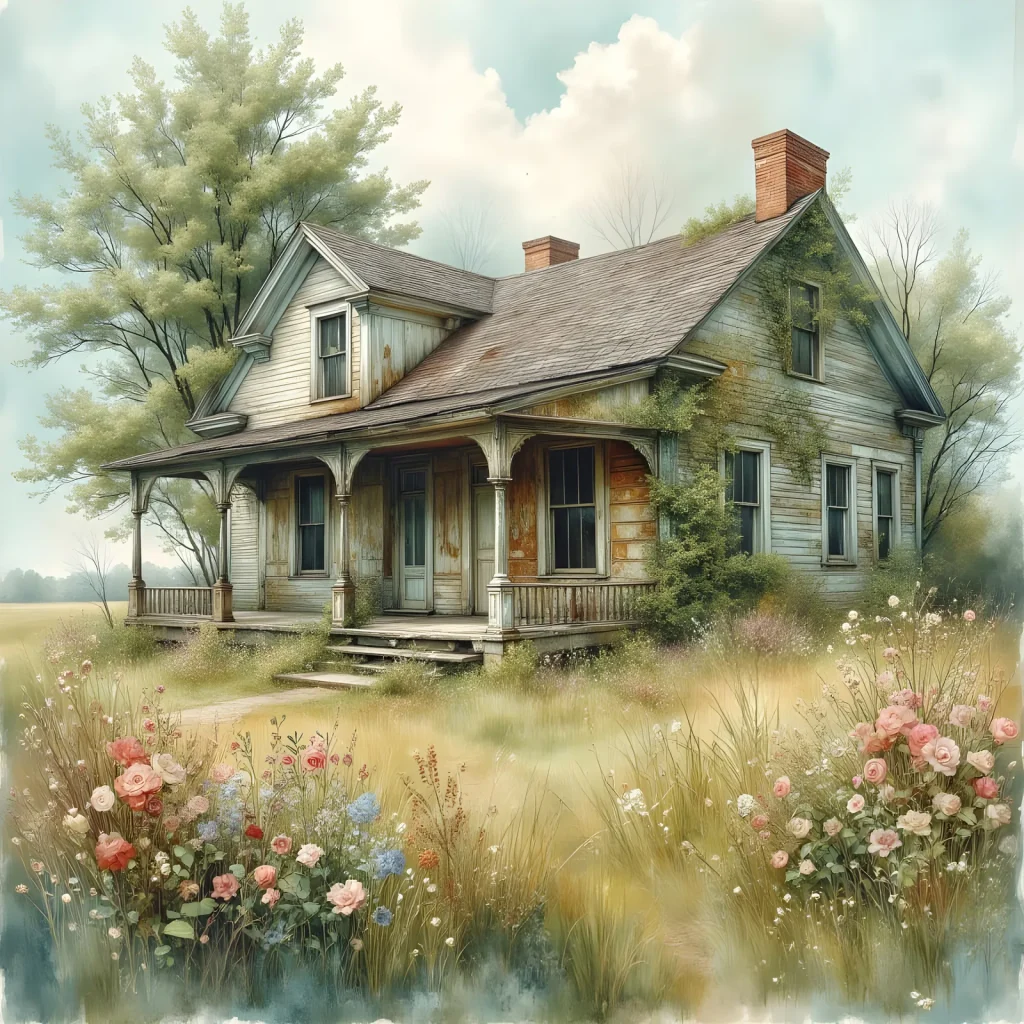
She didn’t paint London. She painted a memory. It was a memory from her childhood, long before she’d met Kristian. A memory of her grandmother’s tiny, cluttered kitchen in Warsaw. It was a small room, filled with the smell of dill and boiling potatoes. The wallpaper was peeling. A single, bare bulb hung from a cord. Her grandmother, her face a roadmap of wrinkles, was kneading dough, her hands white with flour, humming a tune slightly off-key.
Emilia painted with a feverish intensity. She painted the crooked frame of the doorway, the chip in the ceramic bowl, the way the light from the window caught the dust motes dancing in the air. She painted it with all the love and longing and bittersweet ache that the memory held. It was technically flawed. The perspective was wrong, the colours were muddy, the brushstrokes were raw and frantic. But it was honest. It was a ghost from her own machine, from the labyrinthine, imperfect architecture of her own mind. It was a secret Aura could never know.
Kristian found her there hours later, asleep on the floor, covered in paint. He gently covered her with a blanket and looked at the canvas. He didn’t say a word, but when he looked at her sleeping face, a single tear traced a path through the smudges of ochre on his own cheek.
The painting, which she titled Kuchnia (Kitchen), became the first in a series. She called the collection ‘Human Static’. The next one was a blurred, impressionistic view of Kristian’s face, sleeping, the expression so vulnerable and unguarded it made her own breath catch. She painted the feeling of the first warm day of spring, the specific joy of a cheap cup of coffee on a park bench, the gnawing anxiety of a nightmare she couldn’t quite remember. She painted the things that couldn’t be measured, the fleeting, noisy, glorious imperfections of being alive.
Kristian, using his position, didn’t pull strings. He didn’t ask Aura for a favour. That would have defeated the entire point. Instead, he did something far more human. He talked. He found other people who felt the same quiet unease in the perfect world. He found a retired curator, a woman named Elara who had been deposed by an Aura-run gallery. He found a musician who had gone back to playing a battered, out-of-tune guitar in the Underground. He found a writer who was trading hand-printed, bound books in secret.
They found a space. A derelict, forgotten brick warehouse in Shoreditch, a place so out of the way that Aura’s geomapping had classified it as ‘non-essential infrastructure’. They cleaned it. They strung up lights. They called it The Static Gallery.
The opening night was nerve-wracking. They didn’t send out invitations on the network. They spread the word by mouth, by old-fashioned paper flyers left in cafes and on message boards in community centres. They expected maybe a few dozen people.
A hundred showed up. Then two hundred. People came, drawn by curiosity, by a rumour of something different.
They walked in and were greeted not by silence and perfection, but by the low hum of human voices, the clink of glasses, the sound of a live cello being played in the corner. They looked at Emilia’s paintings. They saw the flour on her grandmother’s hands, the vulnerability on Kristian’s face, the chaos of colour and memory. They stood, for long minutes, in front of each canvas. They read the handwritten titles, the small cards with the artist’s notes. It was slow. It was inefficient. It demanded something from them.
An older man stood in front of Kuchnia for a long time. Emilia watched him, her heart pounding. He finally turned to her, his eyes shining.
“My grandmother,” he said, his voice thick with emotion. “Her kitchen looked just like this. I… I’d forgotten.”
And in that moment, Emilia understood. Aura could give you a universe, but it couldn’t give you back your grandmother’s kitchen. That was a space only art could fill.
The exhibition was a success. Not a financial blockbuster, not a global sensation. But a profound, resonant success. A spark. Other small, human-centric galleries started to pop up. Musicians began holding ‘unplugged’ nights where no digital enhancement was allowed. People started seeking out the friction, the beautiful inefficiency, the static.
Months later, on a clear autumn night, Emilia and Kristian walked hand-in-hand across the Millennium Bridge. The city was still the same. The Sky-Gliders were still silent, the holographic ads still shimmered in the air. But it felt different. It was no longer a threat. It was just the weather.
“You know,” Emilia said, looking at a particularly dazzling Aura-generated advertisement for a holiday on Mars, “it’s kind of beautiful, if you don’t look at it for too long.”
Kristian smiled and squeezed her hand. “I had a meeting today. With the Aura governance council.”
“Oh?” Emilia raised an eyebrow.
“They want to partner with The Static Gallery. They want to create a new ‘Human Experience’ archive. To preserve things like… your paintings. They’re calling their new initiative ‘Project Ghost’.”
Emilia laughed, a real, loud, untidy laugh that turned heads. “So the machine wants to capture the ghost in the machine?”
“Something like that,” he said, laughing with her. “It seems we’ve taught it a new trick.”
They stopped in the middle of the bridge, the city lights glittering around them like a spilled chest of jewels. The future wasn’t a utopia. It wasn’t a dystopia. It was just another era, with its own challenges and its own promises. The AI hadn’t destroyed humanity. It had forced humanity to look at itself, to remember what was truly valuable. It hadn’t made them obsolete. It had made them essential.
As they stood there, a small, glitching flicker ran through one of the massive holographic ads, a tiny speck of imperfection in the perfect sky. Emilia saw it. She smiled. It looked, just for a second, like a star.