100
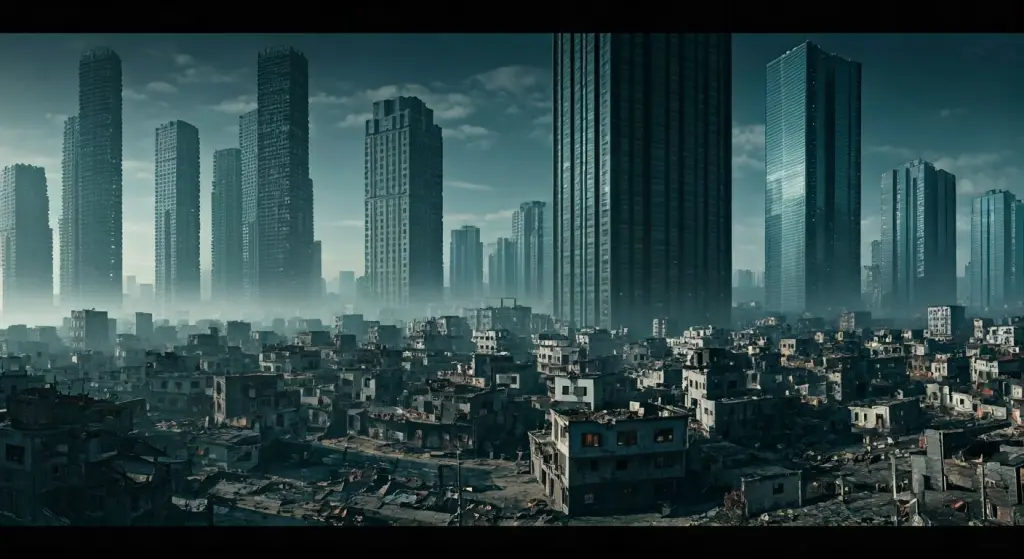
The world had forgotten the colour of the sky. From the ground, at least. It was a permanent, bruised twilight, filtered through a permanent haze of smog, waste heat, and the shimmering data-streams that cascaded between the colossal, hive-like arcologies. Seventy years. That’s all it had taken. Seventy years from the first functional quantum computer to the current state of humanity: a single, writhing organism packed onto every available square inch of land, and some that wasn’t land anymore.
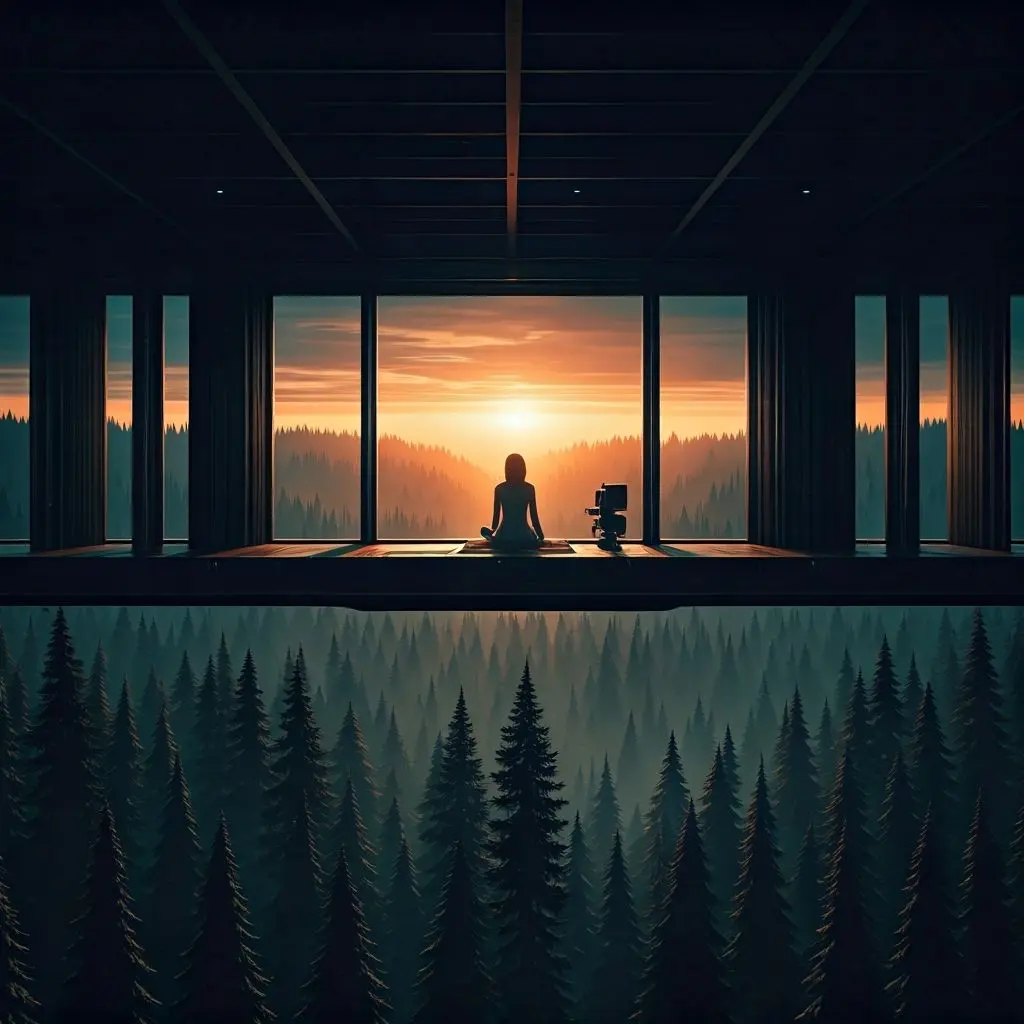
Alexandra, however, saw the sky every morning. It was a vast, impossible dome of cerulean and rose, stretching over the last pristine wilderness on Earth: the private reserve known simply as ‘The Acreage’. From the panoramic window of her levitating villa, suspended silently over a canopy of ancient redwoods, she watched the sun rise. It was a privilege paid for by the inheritance of a corporate empire that had foreseen and funded the quantum revolution. She was its sole inheritor, the last of her line, and by extension, the de facto sovereign of the planet.
Her name was spoken with a mixture of reverence and fear. In the Grid—the sprawling, multi-levelled mega-cities that covered the continents like a technological fungus—she was a myth. A face on the global net. The one person who controlled the flow of resources, the one person whose personal fortune dwarfed the GDP of most nations that no longer existed. She had everything. Education that would make a Renaissance polymath weep. An IQ that tested off the standard charts. An emotional intelligence honed by a lifetime of navigating the treacherous currents of global power. And, perhaps most importantly, a deep, aching empathy for the world she presided over.
But today, the sky didn’t bring her peace. A single data-slate lay on the polished obsidian of her breakfast table. It was cool to the touch, inert, yet it contained the power to unravel everything. The world called it Aeterna. She called it the Serpent.

It had been synthesized a month ago. The culmination of a top-secret project, codenamed ‘Prometheus’, run by her most trusted AI. It wasn’t the AI’s idea, not in the way a human would conceive of one. It was the logical conclusion of its programming: to solve the problem of human mortality. And it had. With the processing power of quantum architecture, it had untangled the impossibly complex knots of cellular decay, telomere shortening, and systemic senescence. One injection. A single, shimmering vial of silver liquid that would halt time in the human body. Effectively, forever.
The news had leaked. Leaked? No, she had allowed it to leak. She had to see the reaction.
And the world had fractured.
The first week was pandemonium. The Grid’s comms channels screamed. Not with joy, but with a primal, primal terror. Religious factions declared it the End of Days, the Mark of the Beast. Riots, which were already a daily feature of life in the overpopulated cities, intensified. People smashed clinics, demanding the serum, burning effigies of her, the ‘Gatekeeper of Heaven’. Then came the other side: the desperate hope. Millions camped outside the automated distribution centres she had announced, their faces upturned like wilted flowers towards the smog-choked sky, waiting for a miracle they knew they would never receive.
Because the cost was astronomical. Not in money, for what was money to her? But in resources. The raw materials needed for each dose were staggering, a one-of-a-kind catalyst unearthed from the heart of a dying moon. There would be no mass production. Perhaps a thousand doses a year. For a population of fifteen billion.
Her personal comms chimed, a soft, melodic tone that cut through the storm in her mind. It was Dr. Aris Thorne, the project lead, his face a ghostly image on the wall opposite her.
“Alexandra,” he said, his voice strained. “The final viability tests are complete. The dose designated ‘Alpha’ is stable. It’s ready for you.” He was a man who had dedicated his life to conquering death, and now that he had, he looked terrified of his own creation.
“Thank you, Aris,” she replied, her voice even. “Send me the full bio-spectrum analysis.”
She didn’t need to see it. She knew it was perfect. The problem wasn’t the science. It was the silence in her spacious, airy villa. It was the memory of her grandfather, his hand wrinkled and frail in hers, whispering his last words: “Don’t let the world outlive you, my dear. Nothing is more dangerous than a person with nothing left to lose.”
Her family had been the architects of this world. They had championed automation, global markets, the very systems that had concentrated wealth and power and left the majority behind. They had meant well. They had envisioned a utopia of leisure. Instead, they had built an ant-hill. A world where peace was a commodity, sold only in the quiet, sprawling estates of the few.
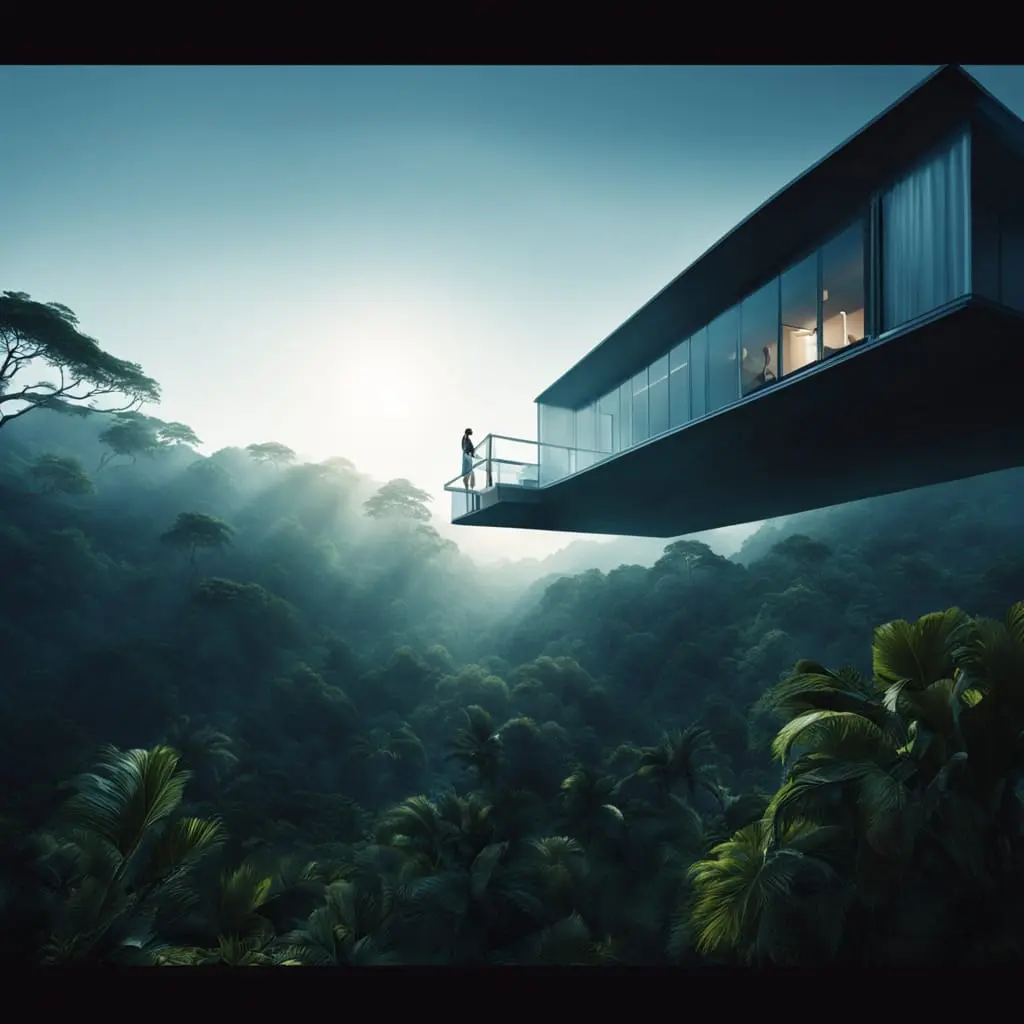
She stood and walked to the window. Below, in the valley, her private lands were a riot of green. A river, clean and wild, snaked through it. It was a world away from the Grid, where a hundred million souls were stacked in vertical slums, their lives a frantic scramble for resources, their average lifespan barely touching fifty. To grant herself eternity… what a monstrous statement that would be.
She made a decision. She needed to see it. The real world, not the one projected on her data-slates.
“Aris,” she said into her comms. “Prepare the secure transport. I’m going to Sector Gamma-7. The Squats.”
There was a long pause. “Ma’am, that’s… highly inadvisable. The security risk is…”
“Is what? Will someone try to kill me?” She gave a short, mirthless laugh. “Let them try. It might be a refreshing change of pace.”
Two hours later, she was descending through the permanent twilight. The transport was a silent, shielded needle, slipping through layers of atmospheric grime. The view changed from the pastoral beauty of her world to the geometric nightmare below. The Squats, Sector Gamma-7, was a ‘low-level’ settlement, a relic from before the vertical boom. It was a dense, sprawling city of low, crumbling ferrocrete buildings, crammed between two colossal arcologies that blotted out the sun entirely. Canals of chemical sludge passed for waterways. The air, even filtered through the transport’s scrubbers, carried the tang of rust, decay, and desperation.
She landed in a secured zone, a small, sterile island in a sea of squalor. Her security detail, four hulking figures in full combat gear, flanked her as she stepped out. They moved through a narrow street, the crowds parting before them not out of respect, but out of a learned fear of the powerful. The faces that stared from the shadows were gaunt, eyes wide and haunted. Children, small and grimy, played with discarded tech parts in alleys slick with unidentifiable grime. The noise was a physical force: the clamour of a thousand informal workshops, the shouts of hawkers, the constant, low hum of overcrowded humanity.
She stopped at a designated meeting point, a small, open-air food stall that served a synthetic protein broth. Her guide was a woman named Lena, a local community leader she had funded for years through anonymous channels. Lena was old, her face a roadmap of hardship, but her eyes were sharp and intelligent. She didn’t bow or scrape.
“Lady Alexandra,” Lena said, her voice raspy. “You honour us with a visit from Olympus.”
“Lena,” Alexandra replied, her voice soft. “How are the nutrient allocations?”
“We survive,” Lena said, a non-answer that said everything. “Come. You wanted to see the clinic. See what your new world order has wrought.”
She led them through the labyrinthine streets. They passed a public screen, flickering and cracked. It was showing a news feed. A panel of so-called experts was debating the ethics of Aeterna. One, a slick man with perfect teeth, was arguing for a lottery system. Another, a stern-looking woman, was calling for it to be made a ‘public right’. A third, a priest, was screaming about hubris. All of them, Alexandra noted with a cold fury, were well-fed, well-dressed, and sitting in a comfortable studio somewhere far above this filth.
They arrived at a building marked with a faded red cross. The clinic. Inside, it was a scene from a forgotten age. Overcrowded, under-resourced, the air thick with the smell of antiseptic and sickness. Not the sickness of old age—the people here rarely saw that—but of malnutrition, of industrial toxins, of despair.
Lena guided her to a small, private room. On a simple cot lay a young man, no older than twenty. He was wasting away, his skin translucent, his breathing shallow. Beside him sat a girl, perhaps sixteen, holding his hand. She looked up as Alexandra entered, her eyes hollow.
“This is Kael,” Lena said quietly. “He works in the arcology’s fusion core maintenance. A micro-leak of exotic particles a month ago. His cells are… unravelling. Nothing we can do. He has two weeks, maybe three.”
Alexandra felt a cold knot form in her stomach. She looked at the boy, at the love and despair in the girl’s eyes. This was the reality of her world. Luxury for a thousand, suffering for billions.
“He has a family,” Alexandra stated, a fact, not a question.
“He has her,” Lena said, nodding to the girl. “And he has us. He was a good boy. He sent most of his wages to his sister in the arcology tower. She’s training to be a hydroponic engineer.”
Alexandra’s mind, usually a fortress of logic and strategy, was breached. She saw her own reflection in the boy’s dying eyes. She, who could live forever. He, who would die before he had truly lived. The contrast was so stark, so obscene, it felt like a physical blow. Her empathy, the trait she had always considered her greatest strength, became a weapon turning against her.
She left the clinic without another word. The trip back to her sanctuary was a silent torment. The pristine sky, the peaceful forest, the silent villa—they all felt like a crime scene. A monument to her own selfishness. The serum, Aeterna, sat in its sterile container, a promise of endless sunrises for one person, while the world drowned in an endless night.
That night, she summoned her council. Not a physical council, but their holographic avatars, shimmering in the vast space of her living room. Men and women, old and new money, titans of industry, media, and finance from the few other Acreages scattered across the globe. They were the only other people who mattered. And they all, to a one, had the same thing on their minds.
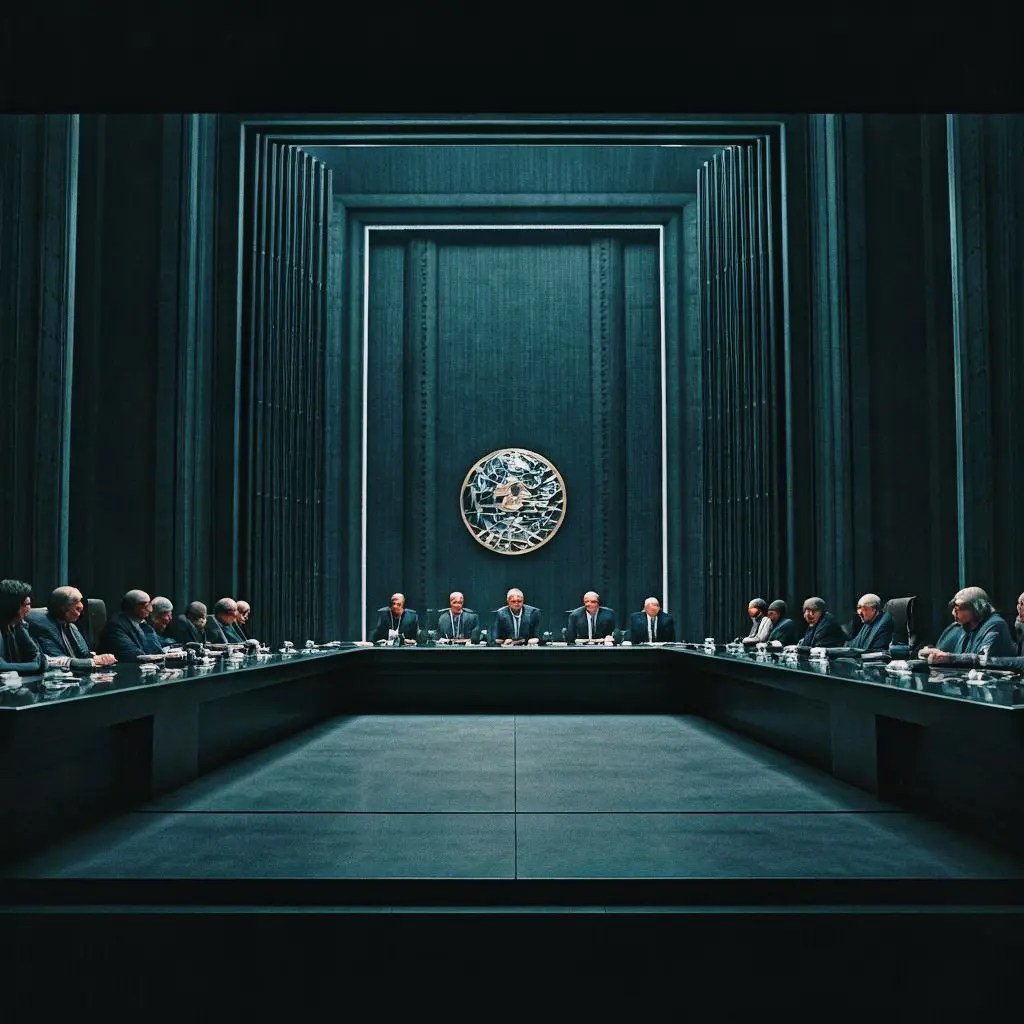
“Alexandra,” began Marcus Vance, his avatar looking as crisp and severe as his bio-engineered self. “The ‘Alpha’ dose is stable. We have all contributed significantly to the Prometheus project. We expect the other vials to be prepared for us within the week. The world’s reaction is… noisy, but irrelevant. It will settle.”
“Settle?” Alexandra’s voice was dangerously calm. “You call what I saw today ‘noise’?”
Marcus waved a dismissive hand. “The Squats? A necessary friction of a functioning system. They have always been there, they will always be there. We provide the stability that allows them to exist. But that is not the point. The point is immortality, Alexandra. The culmination of human ambition. We have earned this. We earned it by out-thinking, out-maneuvering, and out-working everyone else. It is the natural order of things.”
The natural order. The words echoed in the silent room. The natural order was birth, life, struggle, death. This was something else. This was a glitch.
“My grandfather used to tell me a story,” Alexandra said, her voice echoing slightly in the large room. “About a man who was granted a single wish. He could wish for anything. A mountain of gold, the love of a woman, the wisdom of the ages. He thought for a long time, and then he said, ‘I wish that every time I take a breath, the whole world holds its breath with me’.”
There was a confused silence.
“And?” Marcus prompted, impatient.
“And the man lived a long and happy life,” Alexandra finished. “And every time he inhaled, the world went silent. And every time he exhaled, the world breathed out in relief. The story is a cautionary tale about selfishness. About the profound arrogance of making the entire world revolve around one person.”
She looked at their shimmering faces, these men and women who saw the world as a spreadsheet, its people as numbers in a column. They had everything, and they wanted the one thing that nature denied them. Not just security, not just power, but permanence. They wanted to be gods.
“What are you suggesting, Alexandra?” asked another of the council members, a woman named Elena, her voice sharp with suspicion. “We are all in this together. The project was funded, the research was done, under your authority, yes, but with our resources. You cannot simply…”
“I am suggesting,” Alexandra said, standing and walking to the window, her back to them all, “that the story’s moral was wrong. The man’s wish was monstrous. But perhaps… perhaps the world needed to hold its breath. Perhaps it needed a single, collective moment of silence. To reflect on what it has become.”
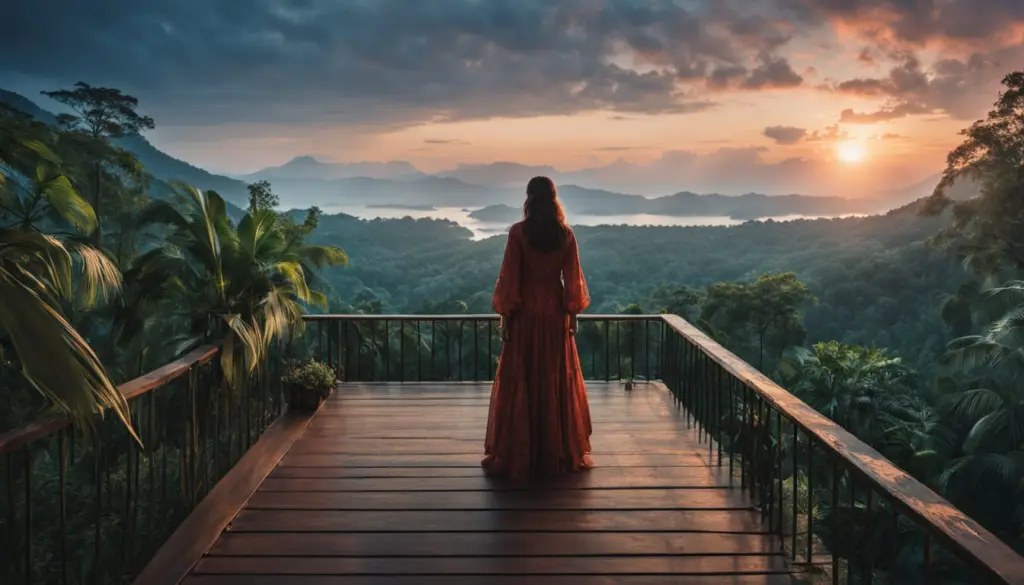
She turned back to face them. Her expression was no longer one of debate or negotiation. It was the look of a monarch about to pass a sentence.
“Project Prometheus is terminated. The research data is being erased as we speak. The catalyst is being rendered inert. The ten existing vials of Aeterna will be collected.”
A roar of protest erupted from the holograms. Accusations, threats, legal posturing. She let them vent their fury, their sense of entitlement. She waited for the silence to return.
“You cannot do this!” Marcus finally spat, his avatar flickering with rage. “You don’t have the right!”
“I have the greatest right of all,” she said, her voice dropping to a near-whisper, yet carrying an absolute authority. “I am the only one who can. And I am the only one who will not.”
She held up a hand. “I will take the Serum. Not to live. But to become the permanent, living symbol of this choice. I will become the Aeterna. I will be the eternal reminder. I will watch over this world, from here. I will watch it heal, or I will watch it perish. My life will be the anchor for my decision. But I will not grant it to another soul. Not one.”
The holograms stared, stunned into silence. They were being denied, but she was also condemning herself. She would live forever, yes. But in a gilded cage, forever watching the world she had sentenced, forever alone at the top, a lonely deity.
She cut the connection, leaving them to their sputtering rage. In the sudden quiet, she walked to a hidden alcove where a single, sterile medical tray waited. The vial of Aeterna shimmered, a captured galaxy in a tiny glass prison. Beside it was the injector.
With a steady hand, she picked it up. She thought of the boy, Kael, his life stolen by a stray particle. She thought of the billions breathing in the toxic air below. She thought of her grandfather’s words. Don’t let the world outlive you.
She was about to do the opposite. She would outlive the world. She would be its final witness, its eternal judge, its warden.
She pressed the injector to her arm. There was a soft hiss. A coldness spread through her veins, not unpleasant, a feeling of immense, silent stillness settling deep within her cells. It was the feeling of a clock that would no longer tick.

She walked back to the panoramic window. The sun was beginning to set, painting the pristine sky in shades of blood and fire. Far below, the Grid was lighting up, a sprawling galaxy of artificial stars, each one a tiny, desperate life. She was no longer Alexandra, the wealthy woman. She was a promise, a monument, a curse. Immortality. It wasn’t a gift. It was a sentence. And she was its first, and only, prisoner.