100
Part I: The Hubris of the Horizon
By 2046, Tokyo had ceased to be a city of stone and concrete; it had become a city of silk and sinew. After the “Century of Shivers”—the decades of increasing seismic activity that had defined the early 2000s—Japanese engineering had pivoted from resistance to resonance.
Kaito Sato stood on the 104th floor of the Izanagi Tower, the crown jewel of the Shinjuku skyline. As the lead structural kinesiologist for the Ministry of Land and Infrastructure, it was his job to ensure the city did not break, but rather, that it danced.
“The wind-load is nominal today,” his assistant, Miho, remarked, tapping a glass tablet. “But the deep-crust sensors in the Sagami Trough are… humming.”
Kaito looked out the floor-to-ceiling windows. The Izanagi Tower didn’t stand rigid like the steel skeletons of the past. It was built with Lithe-Steel—a carbon-nanotube alloy that possessed the tensile strength of a diamond but the flexibility of a willow branch. Between every twenty floors were “Bio-Joints,” massive hydraulic dampers filled with non-Newtonian fluids that mimicked the cartilage of a human spine.
“Humming isn’t a technical term, Miho,” Kaito said, though his eyes narrowed as he watched the horizon. Below, the city was a sprawling tapestry of neon and green-roofed skyscrapers. In the distance, Mount Fuji stood silent, a white-capped god watching over a country that had finally mastered the art of survival.
“It’s a rhythmic pulse,” Miho corrected, her voice dropping. “Magnitude 3.2, but perfectly cyclic. Every four seconds. It’s like the earth is breathing.”
Kaito felt a cold needle of dread prick the base of his neck. Japan was used to the “Shakes.” It was part of the national identity, like cherry blossoms or the Shinkansen. But a rhythmic pulse suggested something else. It suggested a build-up. A rhythmic tension that hadn’t found its “snap.”
“Alert the Sendai and Osaka hubs,” Kaito commanded. “I want the Dampener Levels at eighty percent across the Kanto region. Now.”
As Miho turned to execute the order, the world went silent. It was a vacuum of sound, as if the atmosphere itself had been sucked away by a giant lung. Then, the Izanagi Tower didn’t just shake—it groaned.
It was a sound Kaito would never forget: the sound of the planet’s crust screaming.
Part II: The Symphony of Steel
The tremor didn’t start with the usual sharp jolt. It began as a low-frequency vibration that rattled the marrow in Kaito’s bones. Then, the floor beneath him tilted.
In the old days, a quake of this magnitude would have shattered the windows instantly. Instead, the Izanagi Tower began to sway. Kaito gripped a reinforced rail as the building leaned a full fifteen degrees to the west. He watched, breathless, as the adjacent tower—the Amaterasu Plaza—bent in the opposite direction. They looked like two stalks of wheat caught in a gale.
“Status!” Kaito roared over the rising cacophony of sirens.
“Off the scales!” Miho screamed, clinging to her desk. “It’s not a 7.0… it’s not an 8.0… Kaito, the sensors at the coast just went dead. The seafloor just dropped fifty meters!”
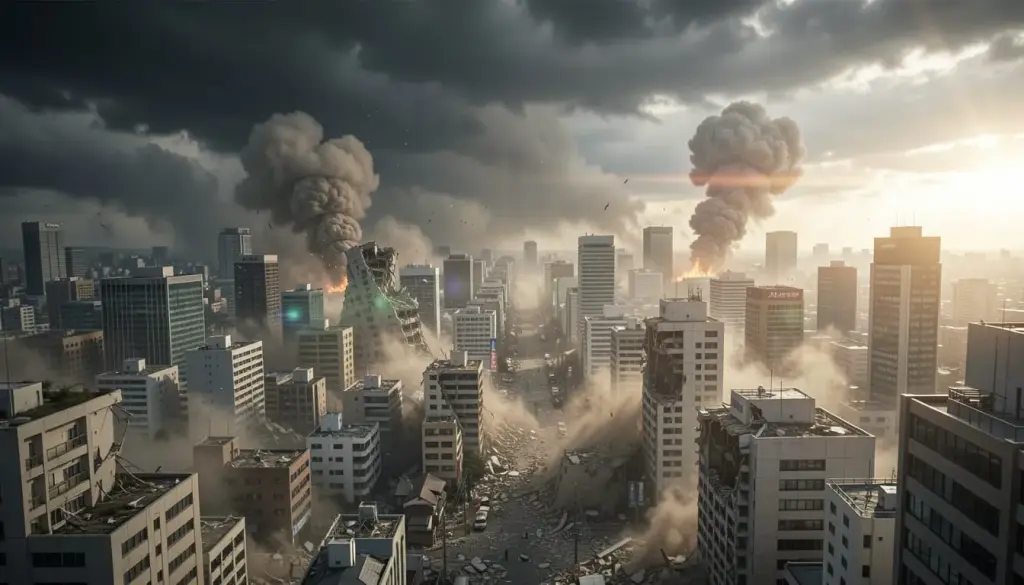
Outside, the sky turned a bruised, electric purple. The earthquake wasn’t just moving the ground; it was compressing the air, creating piezo-electric flashes in the atmosphere.
Kaito looked down at the streets. The ground was no longer solid. The asphalt was undulating like a dark ocean. Then, he saw it.
A line.
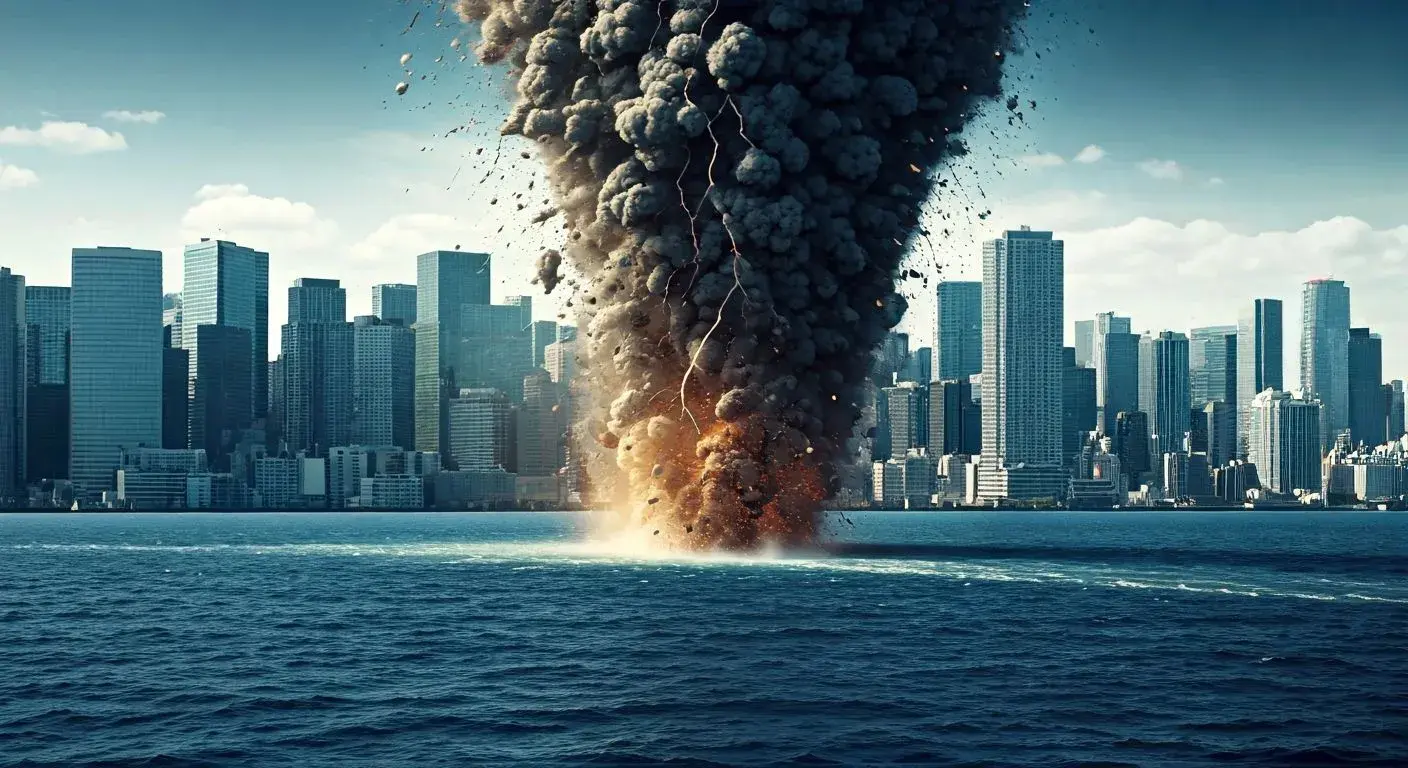
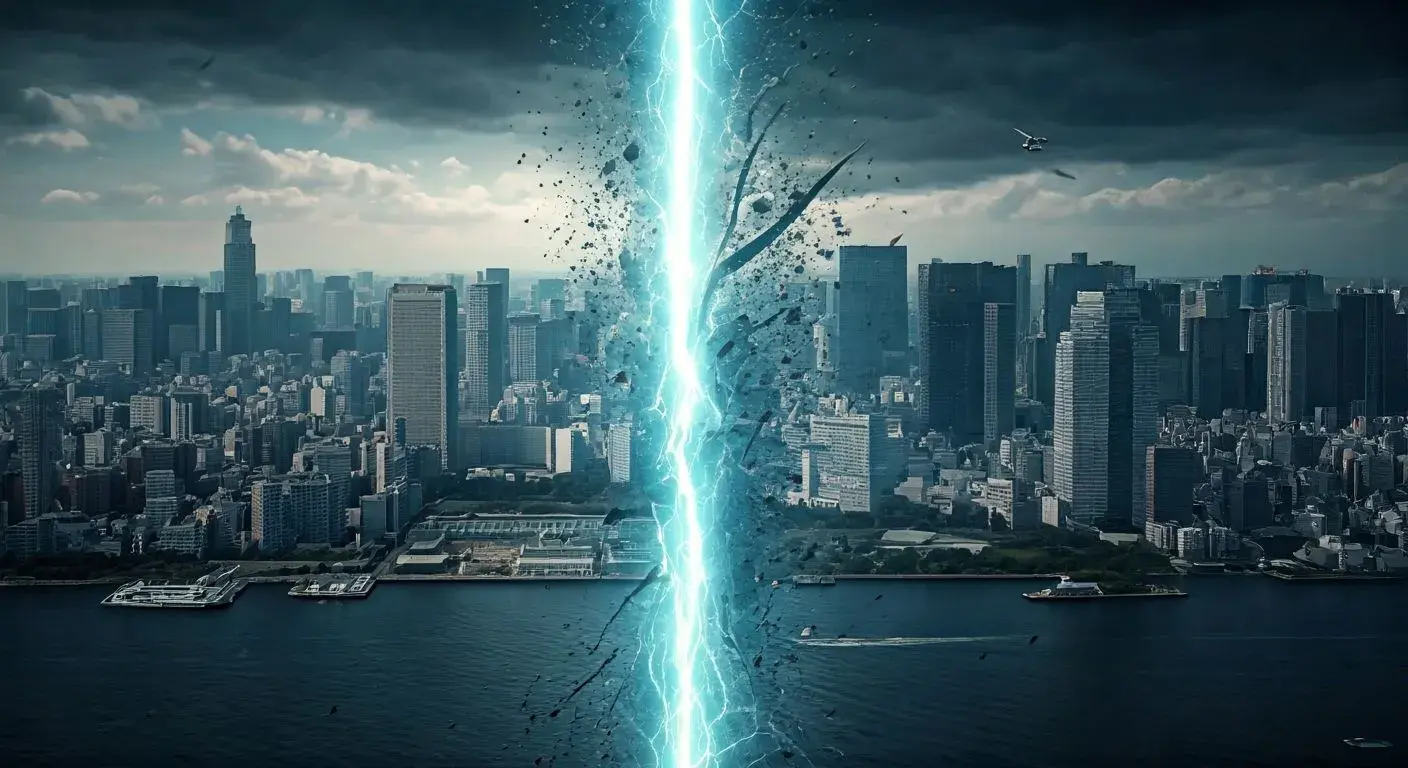
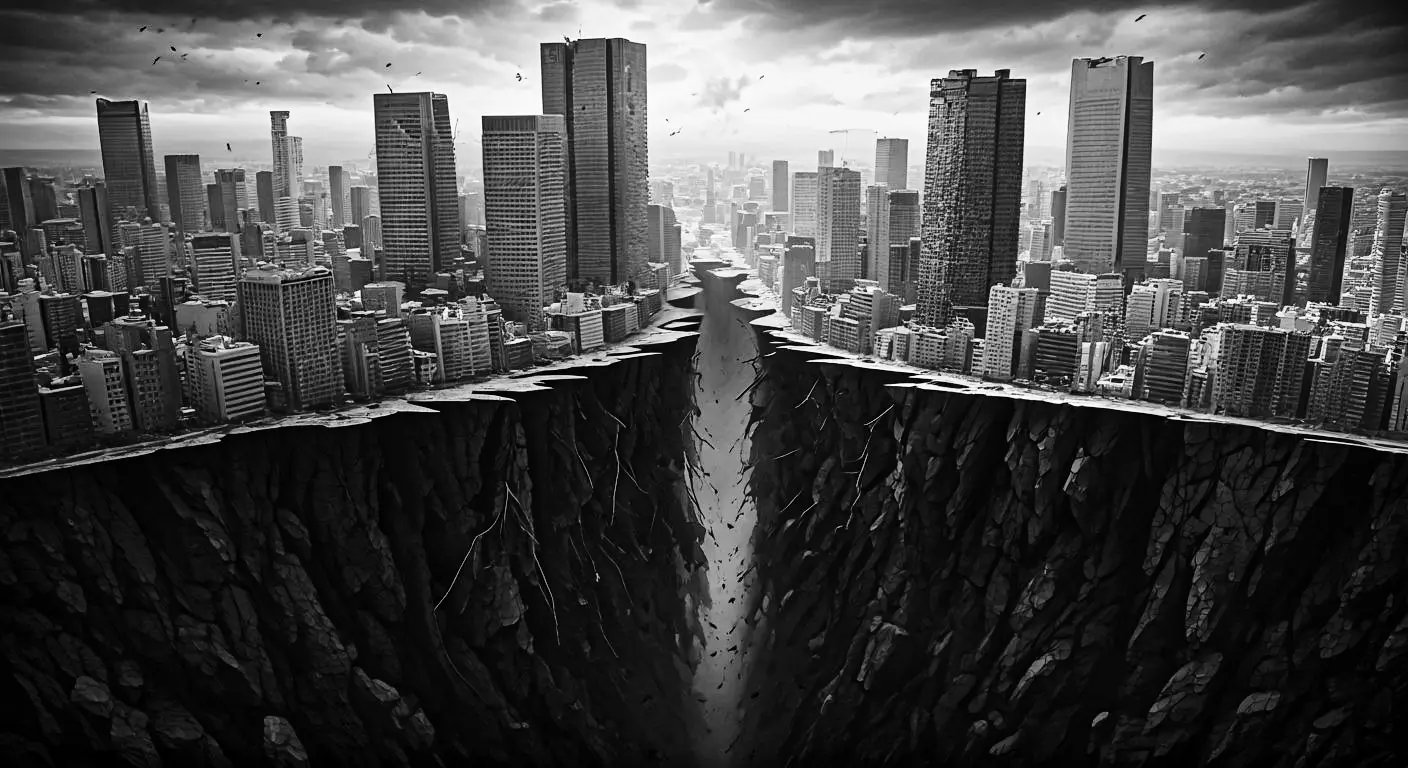
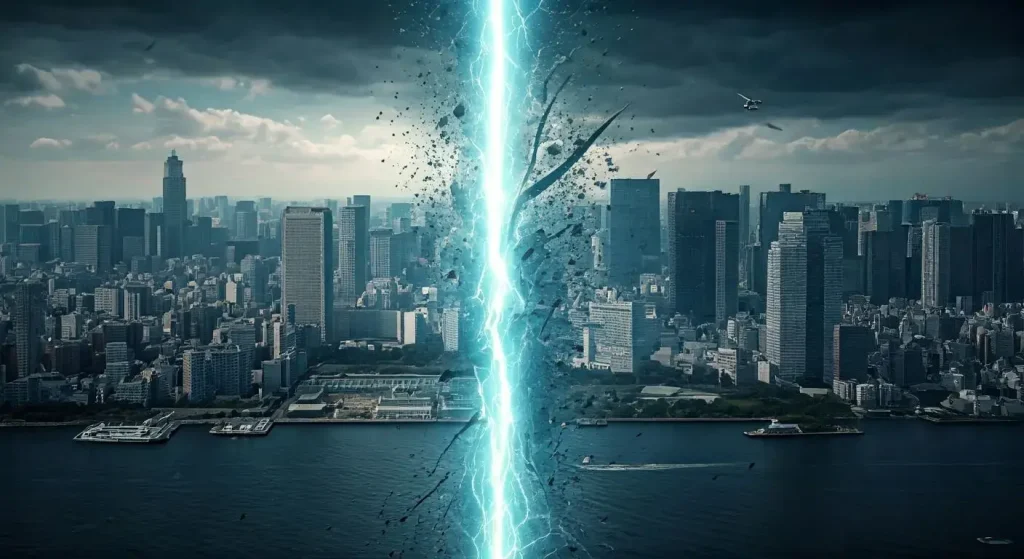
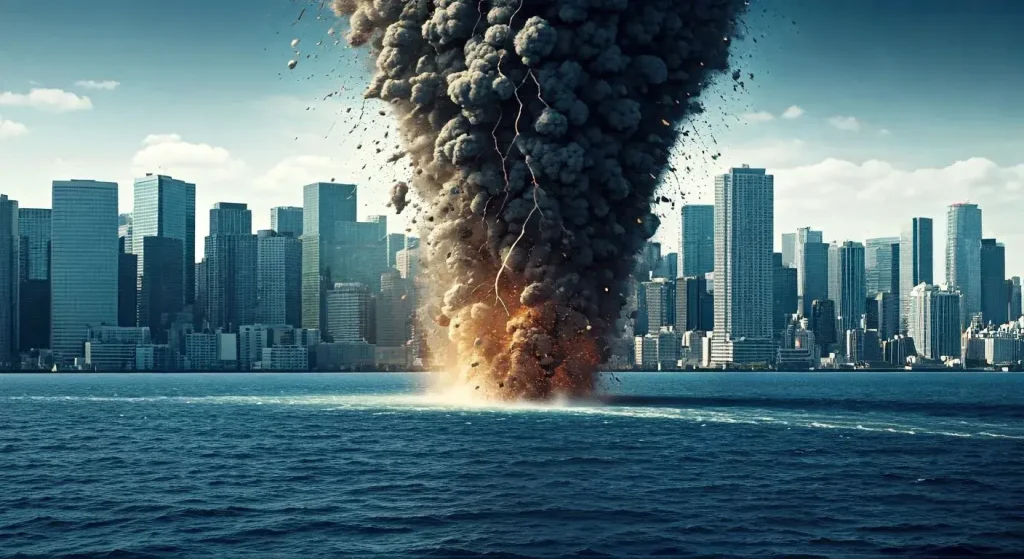
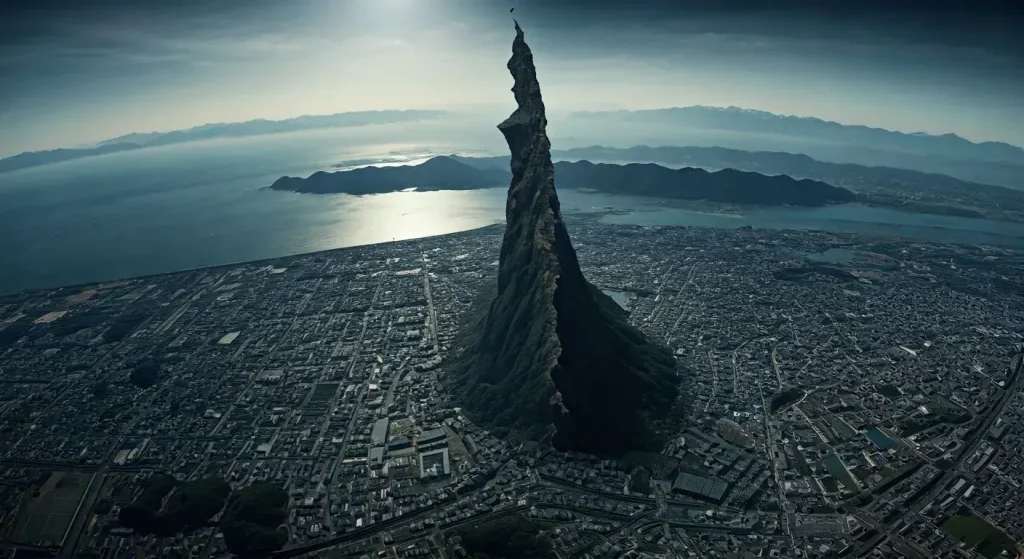
A jagged, obsidian rift opened near the Tokyo Bay, cutting through the heart of the Ginza district. It wasn’t a crack; it was a canyon. It moved with the speed of a lightning bolt, tearing northward.
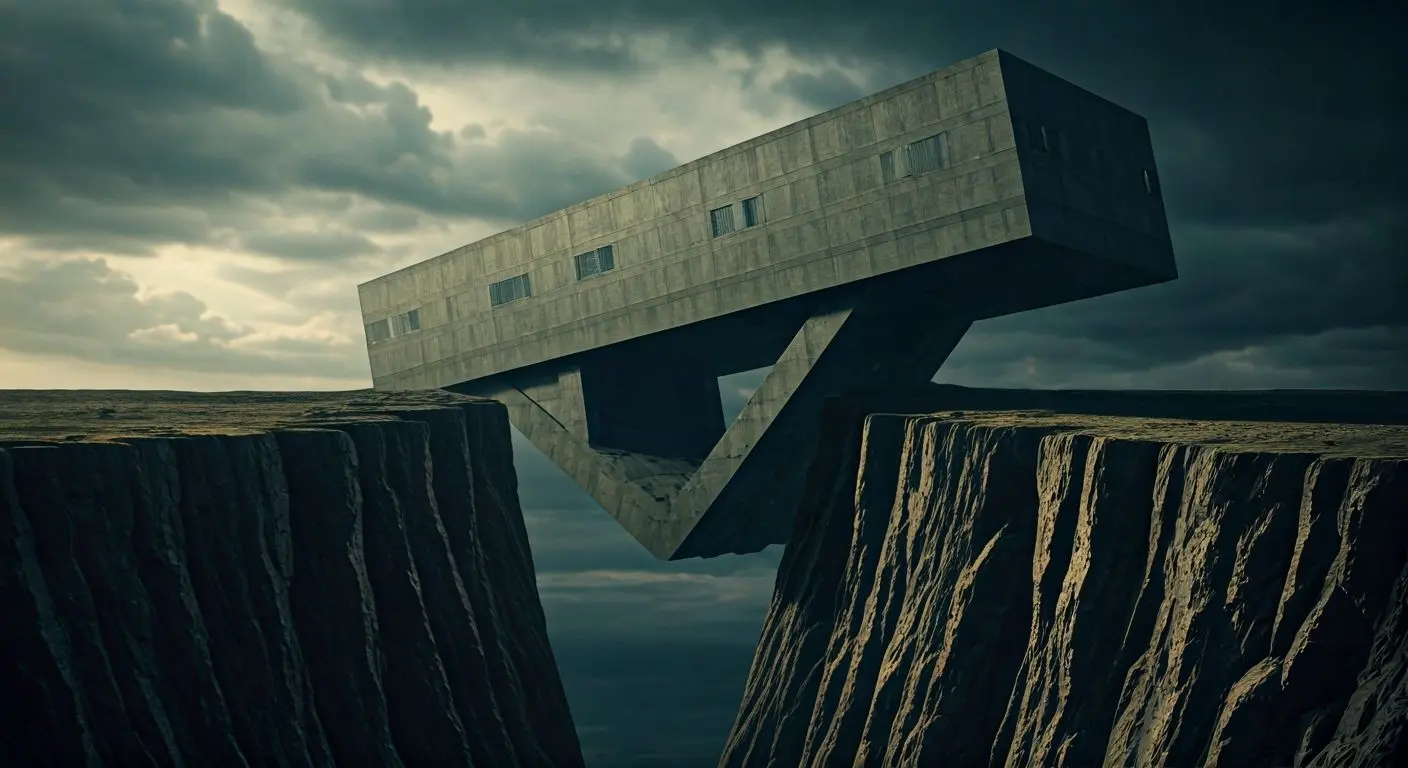
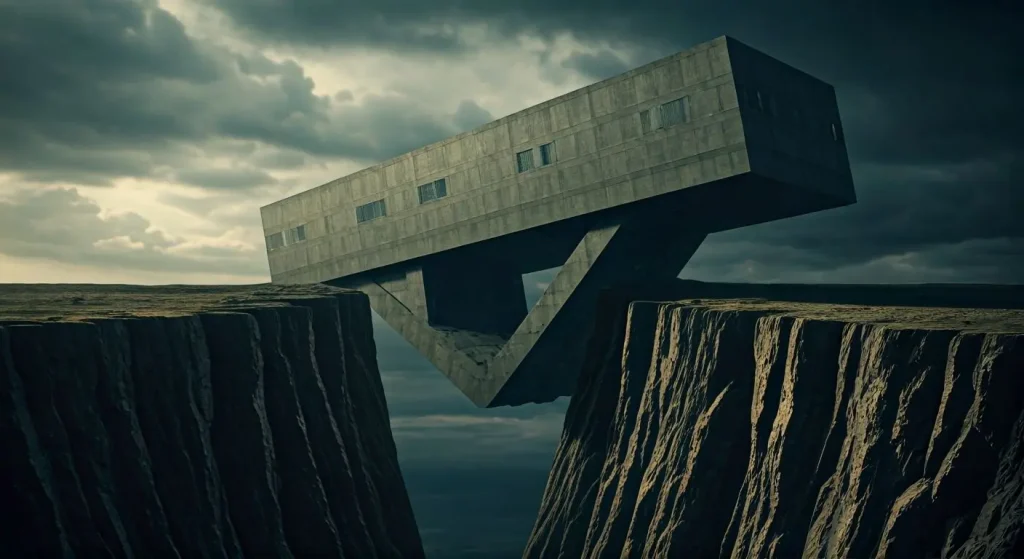
The Izanagi Tower shuddered violently. The Bio-Joints hissed, releasing clouds of cooling steam as they fought to keep the skyscraper upright. Kaito watched in horror as the rift reached the base of a nearby residential block. The building didn’t collapse—the Lithe-Steel held—but the earth beneath it simply ceased to exist. The building swung out over the abyss, suspended by its deep-pile foundations that were now anchored into the side of a newly forming cliff.
“The plates,” Kaito whispered, his face pressed against the glass. “The Philippine Sea plate isn’t subducting anymore. It’s… it’s tearing.”
The sound became deafening—a roar that sounded like a thousand jet engines. In the distance, Kaito saw the city of Tokyo begin to drift. Not the buildings, but the land itself. The rift was widening. The Pacific Ocean was rushing into the new wound in the earth, a wall of white water tumbling into the black maw.
“We’re splitting,” Miho sobbed, watching her monitors. “The whole island… Honshu is breaking in two.”
Part III: The Great Cleaving
The quake lasted for seven minutes. For those seven minutes, Japan was the most violent place on the billions-of-years-old Earth.
Kaito watched as the rift deepened and widened. It followed a path of least resistance, carved by ancient fault lines that geologists had mapped but never truly feared. It cut through the heart of the Kanto Plain, sliced through the mountains of Nagano, and reached the Sea of Japan on the other side.
The Izanagi Tower performed its miracle. It swayed, it bent, it groaned under stresses that should have turned it to dust, but the carbon-nanotube skeleton held. When the shaking finally subsided to a dull, rhythmic throb, Kaito looked out at a world that had been fundamentally rewritten.
The morning sun began to rise, casting a pale gold light over the catastrophe.
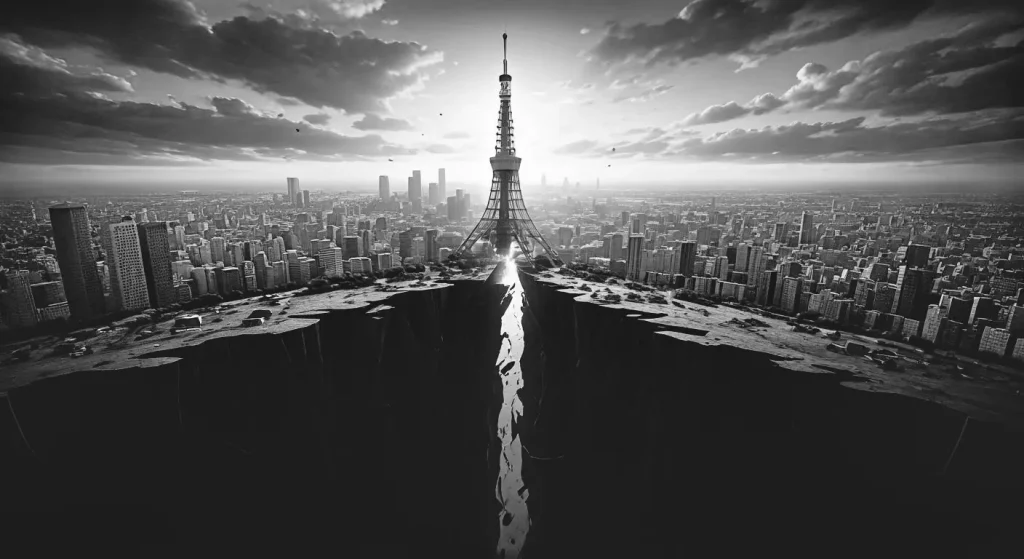
Tokyo was no longer one city. It was two.
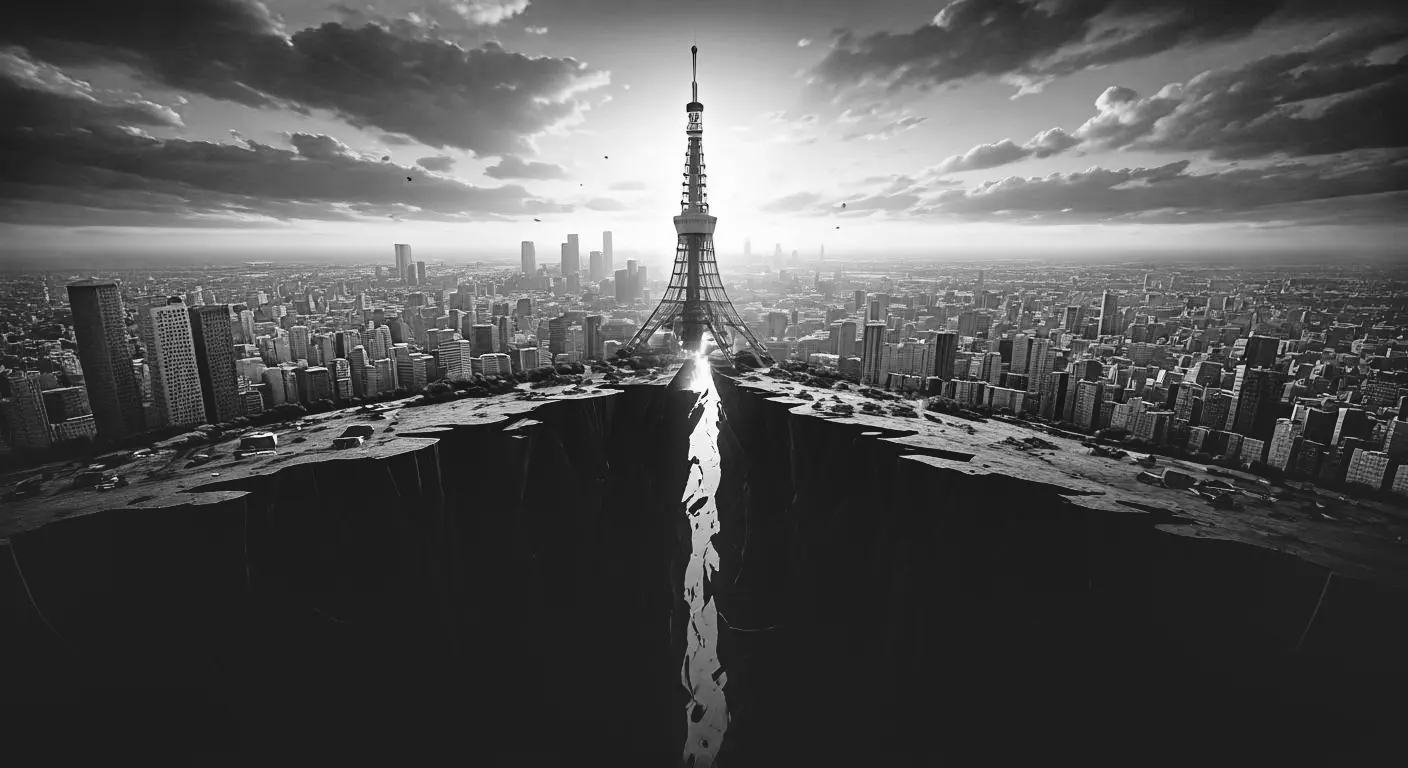
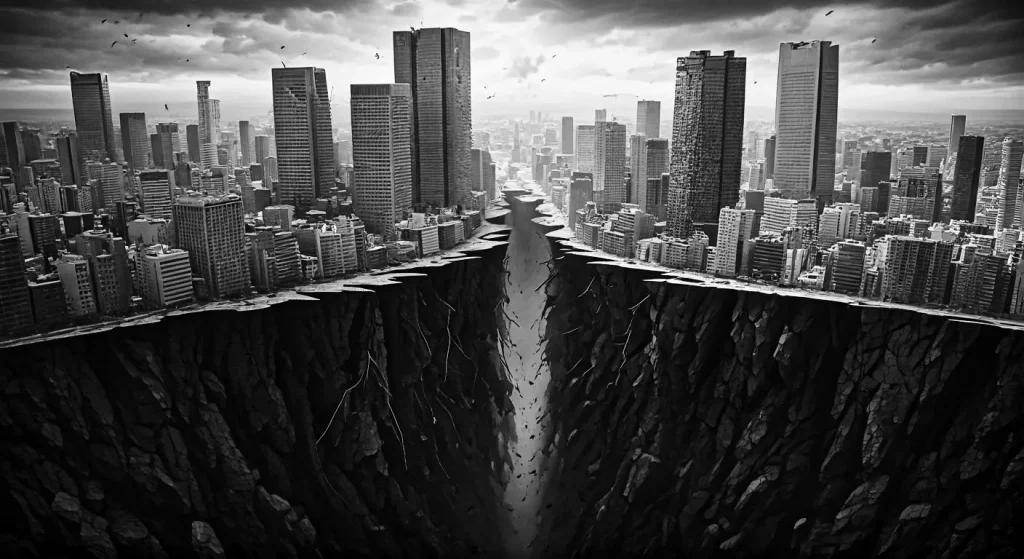
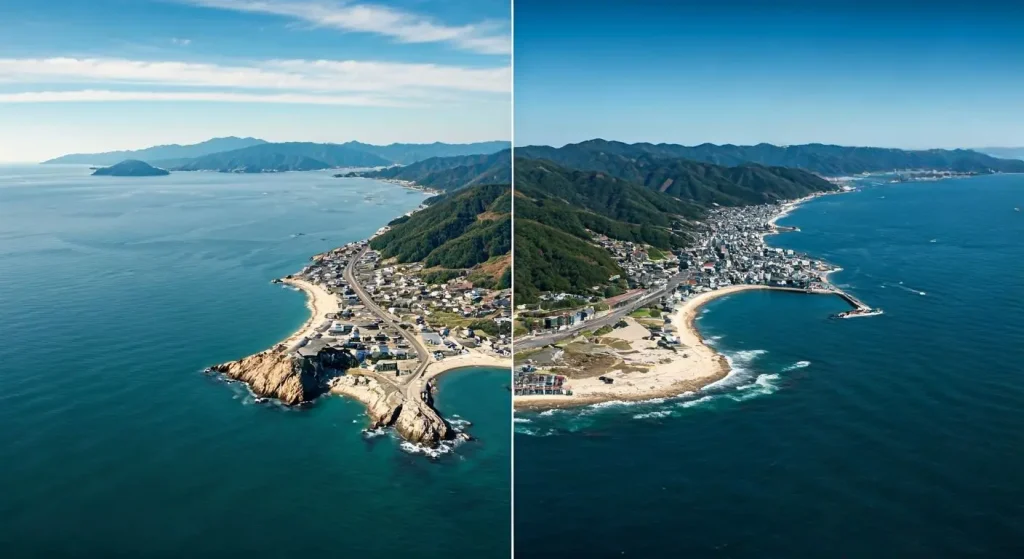
A new strait, nearly a kilometer wide, now separated the eastern and western halves of the city. The Ginza district was on the edge of a new sea. The skyscrapers of Shinjuku stood on the western precipice, looking across a churning channel of seawater at the towers of Chuo.
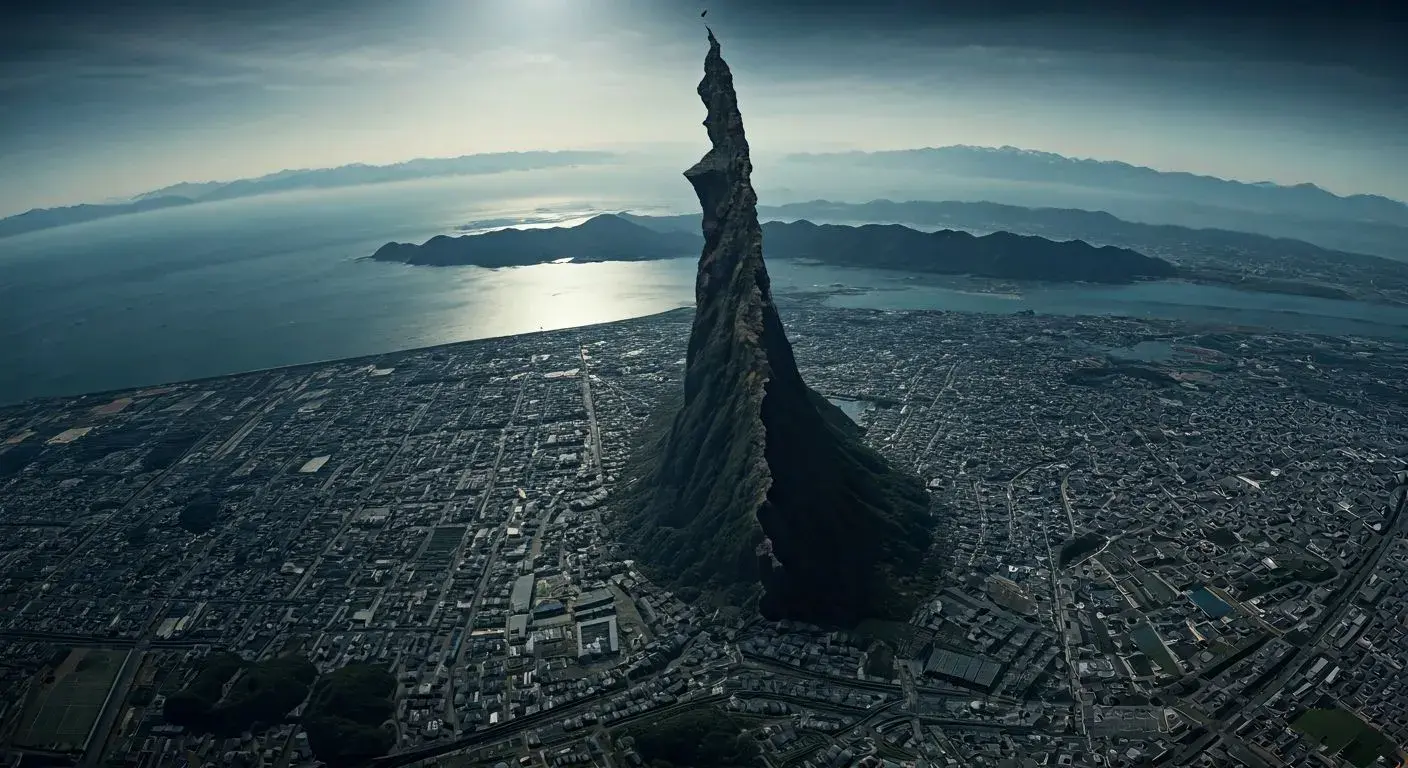
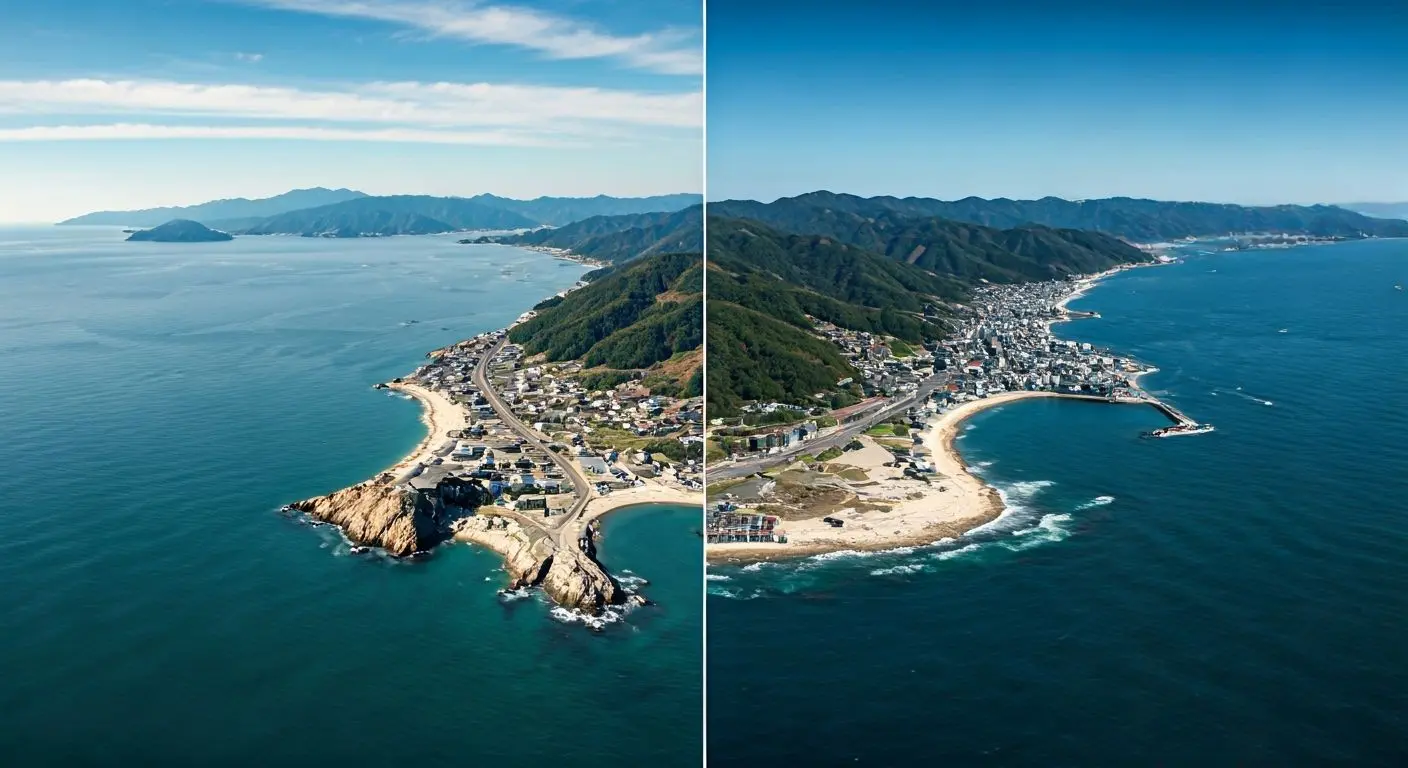
Beyond the city, the vision was even more staggering. The island of Honshu had been cleaved. A new body of water—quickly being dubbed “The Great Mid-Strait”—now ran the length of the country. Japan was no longer an archipelago centered around one massive island; it had become a twin-nation, two mountainous crescents mirroring each other across a brand-new sea.
“Communication Check,” Kaito said, his voice hoarse. His hands were shaking so violently he had to tuck them into his armpits.
“The mesh-net is still up,” Miho said, her voice trembling with a strange, hysterical relief. “The satellite links say… Kaito, the casualties… they’re incredibly low.”
Kaito blinked. “Explain.”
“The buildings,” she pointed out the window. “The Lithe-Steel. The flexible foundations. Because the buildings didn’t collapse into the streets, the people were safe inside. The rift… it moved through the soft soil of the parks and the transit corridors. It’s as if the city’s design guided the energy.”
Kaito looked out at the “Bending Towers.” Thousands of them were tilted at odd angles, some leaning precariously over the new cliffs, but they were standing. The lights were even flickering back on in some sectors as the geothermal backups kicked in.
Part IV: The Bridge of Sighs and Hope
The weeks that followed were a blur of adrenaline and grief, but also of a strange, burgeoning wonder.
The “Cleaving” had been the most terrifying geological event in recorded history, yet the death toll was a fraction of the 1923 or 2011 disasters. The technology of 2046 had done the impossible: it had survived the breaking of the world.
Kaito found himself appointed to the Reconstruction Council. His task was no longer just to keep buildings standing, but to figure out how to bridge a country that was now divided by a mile of open ocean.
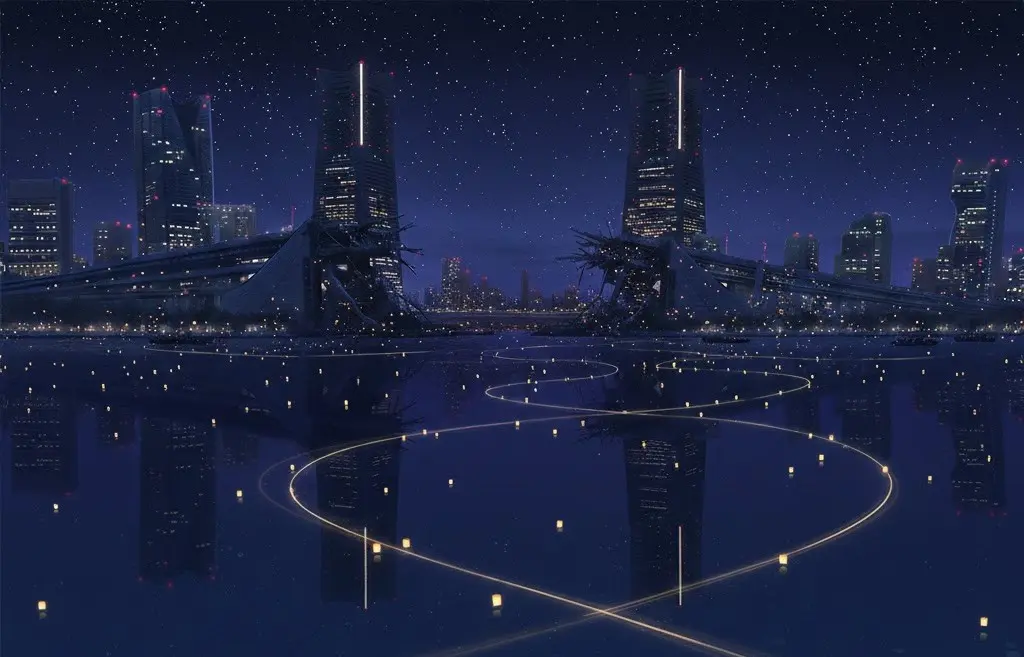
One month after the quake, Kaito stood on the new “East-Bank” of Tokyo, near the ruins of the Rainbow Bridge. Across the water, the “West-Bank” skyline glittered. The water between them was a deep, vibrant blue, surging with the tides of the Pacific.
He met with the Prime Minister, a woman named Arisaka who had spent the last thirty days in a flight suit, hovering between the two new islands in a VTOL.
“The world calls us ‘The Divided Kingdom,'” Arisaka said, looking across the water. “The geologists say the two halves are stable now. They’ve settled onto their new plates.”
“It’s a new geography,” Kaito said. “We have to rethink everything. Power, transport, identity.”
“People are calling the new islands ‘Taiyo’ (The Sun) and ‘Tsuki’ (The Moon),” Arisaka smiled sadly. “But look at the data, Sato-san. Look at what’s happening.”
She handed him a tablet. It wasn’t engineering data. It was social data.
In the wake of the disaster, the traditional rivalries between prefectures had vanished. Because the country had been physically split, the people had gripped onto each other with a desperate, digital, and emotional ferocity.
Volunteers from the “West Island” were flooding the “East Island” via a massive fleet of makeshift ferries. Since the high-speed rail lines were severed, the fishing fleets of Japan—traditionally a fiercely independent lot—had organized themselves into a “Water-Bridge,” transporting food, medicine, and people across the strait twenty-four hours a day.
“We aren’t just rebuilding,” Arisaka said. “We’re evolving. I’ve received messages from every world leader, but more importantly, from every prefecture. They don’t want to go back to the way it was. They want to build something new.”
Part V: The Birth of the Twin Suns
One year later.
Kaito sat in a small café on the edge of the Shinjuku Cliff. The “New Strait” was now the busiest waterway in the world.
The “Happy Ending” that the world hadn’t expected had arrived not through the absence of tragedy, but through the mastery of it. Japan hadn’t just survived; it had thrived in its new shape.
The engineering feat Kaito was most proud of stretched out before him. It was the “Nexus Strings”—a series of suspension bridges unlike anything ever built. They weren’t rigid structures; they were cables of Lithe-Steel that swayed with the wind and the tides, mimicking the very tech that had saved the skyscrapers. They looked like silver harp strings connecting the two halves of the city.
The “Great Mid-Strait” had also brought a surprising gift. The new volcanic activity deep within the rift had provided Japan with an inexhaustible supply of geothermal energy. The country was now 100% carbon-negative, exporting power to the rest of Asia.
But the most beautiful change was the “Blue Corridor.” The new sea in the middle of Japan had created a sheltered, nutrient-rich environment. Whales and dolphins, once rare near the heavy industrial ports, were now frequent sights in the heart of the new Tokyo.
Miho joined him at the table, carrying two cups of coffee. She looked out at the water, where a massive ferry, powered by the new geothermal grid, was gliding toward the East-Bank.
“Did you hear the news?” she asked. “The UN officially recognized the new borders today. They’re calling us the ‘United Islands of Nippon.'”
Kaito nodded, watching the sunset. The sun was dipping between two skyscrapers—one on the East, one on the West. For a moment, the sun seemed to be a bridge of light connecting the two.
“You know,” Kaito said softly, “when the ground first opened up, I thought it was the end of Japan. I thought the earth was rejecting us.”
“And now?”
“Now I think the earth was just making room,” Kaito replied. “Look at them.”
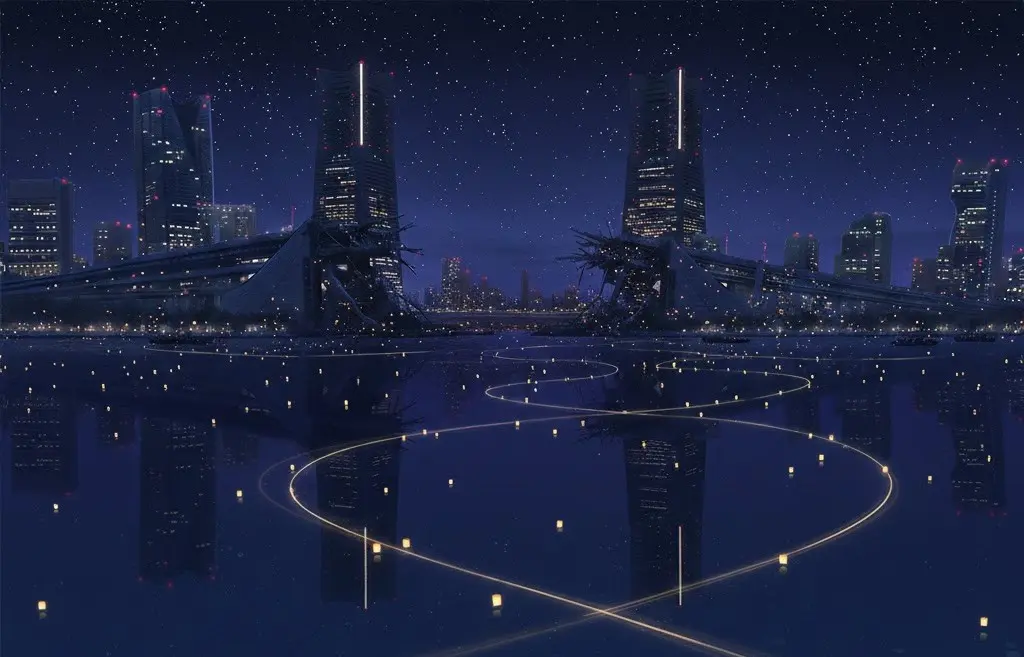
He pointed down to the promenade. Thousands of people were walking along the cliffside. There were festivals on both sides of the water. Lanterns were being released from the West-Bank, floating across the strait to be caught by people on the East-Bank.
The country was geographically divided, yes. A mile of salt water and a deep tectonic trench separated their soil. But the fear of the “Big One” was gone, replaced by the reality of having survived it.
The people of Japan had learned that unity didn’t require standing on the same rock. It required moving in the same rhythm.
As the Izanagi Tower gave a gentle, rhythmic sway—a reminder of its Lithe-Steel heart—Kaito realized that the earthquake hadn’t broken Japan. It had cracked the shell of the old world to let a more resilient one be born.
The city of Tokyo, now a twin-refracted jewel of the sea, glittered under the rising stars. Japan was two islands now, but as Kaito watched the lanterns cross the dark water, he knew they had never been more of a single nation.
The terror was over. The dance had begun.
Day 19: The Philosophical Paradox
The news channels were running tickers now: Government issues advisory. Prepare emergency kits. Seismic activity increasing.
The city was anxious, a low hum of fear vibrating through the streets. But in Aoyama, the Tanaka estate was silent.
Mei and Haruma sat in the tea room, the traditional tatami mats soft beneath them. A single scroll hung on the wall, depicting a solitary bamboo stalk bending in a storm.
“Do you remember what Father used to say?” Haruma asked, pouring tea with a steady hand. “He said that wealth is like water. It flows. It cannot be held, only channeled.”
“He was wrong,” Mei said softly. “Wealth is like stone. It is heavy. It anchors us. And now, the stone is going to sink.”
They had spent the last days making provisions for the people. Not the masses—saving the masses was impossible—but their staff. The gardeners, the cooks, the security, the drivers. For each, they had secured a place in a private, underground shelter in the mountains, stocked with supplies for a year. It was an act of extraordinary generosity, but also of detachment.
“Is it moral?” Haruma asked, staring into his cup. “To know that millions will lose everything, while we ensure our staff survives in comfort? While we sit here, knowing we have secured our own survival?”
“The morality of prediction is a paradox,” Mei replied. “If we told the world the exact date, the city would descend into anarchy within hours. The looting, the violence… it would be a slaughter before the quake even hit. By keeping the secret, we preserve order for the remaining days. We are sacrificing the truth to save them from themselves.”
“But we are safe,” Haruma pressed. “We have the bunker in Hokkaido. We have the private jet on standby.”
“We are not safe,” Mei said, her voice cracking for the first time. “We are merely physically preserved. Our home, Haruma… look around. In thirty days, this house is gone. The streets we walked to school, gone. The shrine where we prayed for our parents, gone. We are surviving, but we are losing our context. We are becoming exiles in our own land.”
Day 25: The Last Supper
The tension was a physical weight now. The air in Tokyo felt thick, charged with static. Birds had vanished from the sky. The dogs in the neighborhood barked incessantly at nothing.
Mei and Haruma hosted a dinner. It was a strange affair. The table was set with the finest porcelain, but the rooms around them were hollowed out, stripped of their art and history. It felt like dining in a shell.
They ate silently for a long time, the silence heavy with the unspoken.
“Do you think they knew?” Mei asked suddenly. “Our parents. Did they know the submersible would fail?”
Haruma paused, his fork hovering. “The technology existed then. The probability models. Father was a man who trusted data above all else. If there was a 1% risk, he would have calculated it.”
“Then he chose to go,” Mei said. “He chose to face the abyss.”
“We are facing our own abyss,” Haruma said. “Not the water, but the earth.”
He stood up and walked to the empty space where a statue of a dragon once coiled. “We have spent our lives preparing for this moment. Not the earthquake itself, but the moment when the world changes. We have the capital. We have the foresight. But what is the purpose of it all if everything we love is turned to dust?”
Mei joined him. “The purpose is to rebuild. We are not the survivors, Haruma. We are the seeds. The tree falls, but the acorn remains. We carry the genetic code of our family, the financial code of our empire. We must endure so that something can grow again.”
She placed her hand on his shoulder. “We are not mourning the house. We are mourning the safety of ignorance. We are the first generation to know our fate in advance. It is a burden, but it is also a privilege. We have time to say goodbye.”
Day 29: The Eve
The final day arrived with deceptive beauty. The sky was a piercing, cloudless blue. The air was crisp. The city of Tokyo bustled, a frantic, nervous energy driving the populace. The government had issued a vague warning, enough to cause stockpiling but not enough to cause a total evacuation.
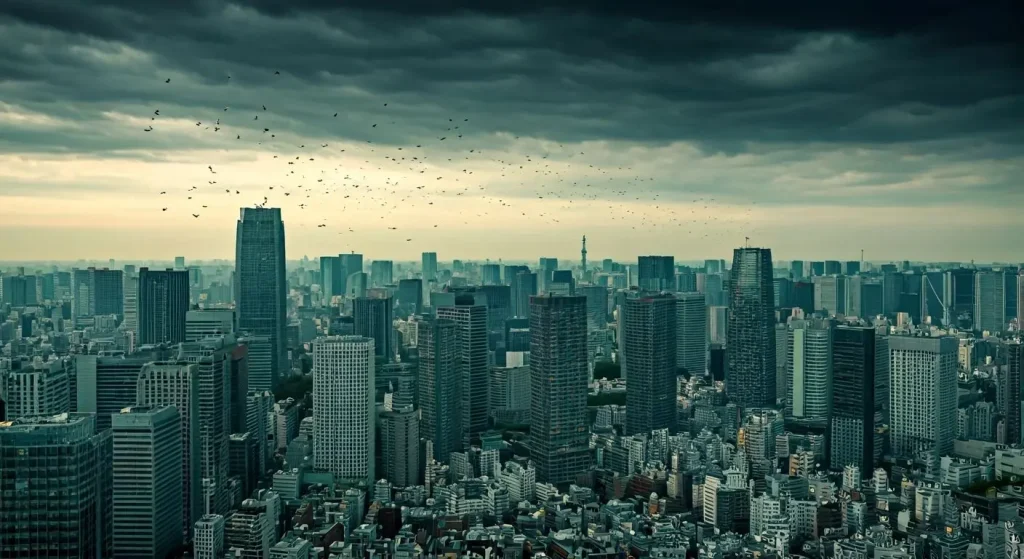
Mei and Haruma stood on the rooftop terrace of their estate. They wore simple, durable clothing—tech-fiber suits designed for travel and survival. Below them, the sprawling expanse of Tokyo glittered in the sunlight. The Tokyo Tower, the Skytree, the endless sea of skyscrapers.
It looked eternal.
“It is beautiful,” Haruma said.
“It is fragile,” Mei replied.
They checked their watches. The Quantum Seismograph predicted the event to the second: 14:03:12 the following day.
“Are you afraid?” Haruma asked.
“Yes,” Mei said. “But not of the shaking. I am afraid of the silence that follows.”
They had done everything they could. The wealth was secured, moved into the ether of quantum-encrypted ledgers and hard assets buried deep underground. The staff was safe. The history was preserved in the dark of the mines.
There was nothing left to do but wait.
“We should leave soon,” Haruma said. “The flight to Hokkaido departs in two hours.”
Mei nodded, but she didn’t move. She looked down at the city, at the millions of people moving through their routines, unaware of the precise second their lives would fracture.
“We are the gods of probability,” she whispered. “We know the future, yet we cannot change it. We can only watch it approach.”
“We can only prepare to rebuild it,” Haruma corrected gently.
He took his sister’s hand. Their palms were sweaty, a sign of humanity beneath their stoic veneer. Together, they turned their backs on the view. They walked away from the edge, leaving the rooftop to the wind, and descended into the elevator that would take them to the cars waiting below.
As the elevator doors slid shut, sealing them in the polished steel box, the city of Tokyo continued to hum, oblivious. The twins did not look back. They looked forward, into the dark, into the unknown, carrying the weight of the world in their minds and the seeds of a new one in their pockets.
The countdown continued, relentless and absolute. The earth was waiting. And so were they.