100
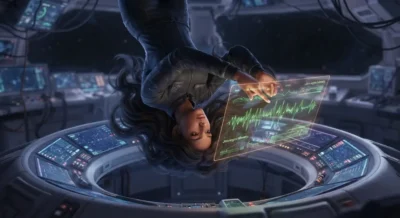
Elara Chen leaned forward, staring at the information on her quantum display. Her raven hair was draped over her shoulders, and her black eyes were lit by the scrolling information on her display. Outside, the year was 2073, and the Earth had reached a population of nine billion. Resources were being depleted, and the world was on the brink of conflict. But Elara was too busy to care. She was in her lab at the International Astrophysics Institute, one of the few who had access to the Kepler Observatory Space Station. At the age of 26, Elara had become the youngest doctoral candidate to be accepted into the Exoplanetary Research Division of the Institute. But that was all about to change. In that instant, Elara would discover the anomaly signal that would change the course of human history forever. With the world on the brink of destruction by a strategically directed Halley’s Comet in less than five years, two revolutionary findings were about to be made, the confirmation of the first Earth-like habitable planet in the Kepler-438 System, and the answer to the latest theory on the functionality of black holes. These black holes, it turned out, could be used as transport routes to long distances in space.
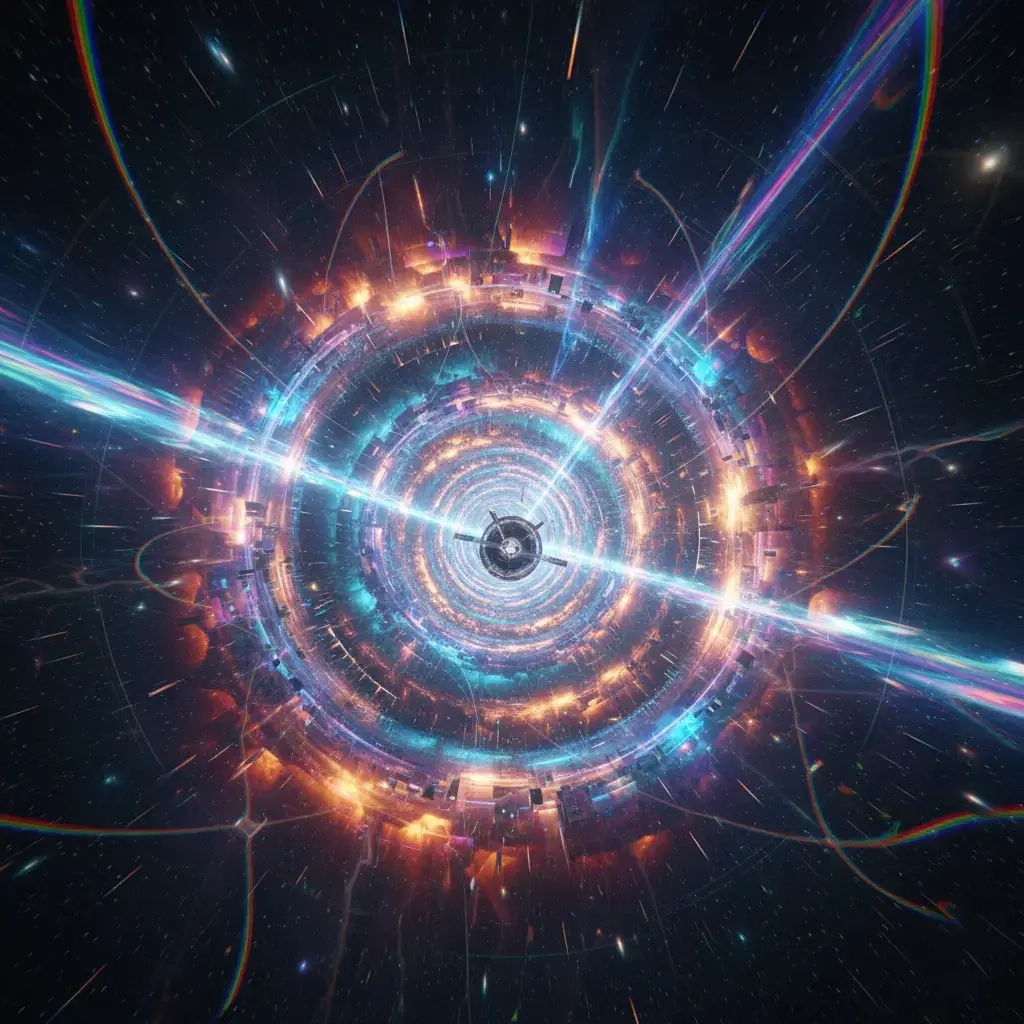
The discovery, which had occurred three years ago, was the result of Dr. Hiroshi Nakamura’s team of theoretical physicists at Tokyo’s Quantum Gravity Research Center. Dr. Nakamura’s team had finally been able to produce the necessary equations to map out the warped geometry of spacetime inside the event horizon of a tiny black hole, and what they discovered turned modern physics on its head: black holes were not dead ends, but doors. By calculating the precise means in which the quantum fields immediately around a black hole could be manipulated and controlled, information about matter passing through the ‘door’ could do so without being spaghettified into nothingness.
Pathfinder-1, a robotic probe, had been the first to pass through a micro black hole produced and stabilized in geosynchronous orbit of Earth in 2072. Pathfinder-1, which should have reappeared seven years later based on classical physics, was found just seven minutes later in a preplanned location near Saturn. Reactions to the test were both jubilant and immediately polarizing. The notion that interstellar travel was now possible, which once would have been considered science fiction, now dominated the public eye and the scientific community.”It is not magic,” Dr. Nakamura said during the United Nations briefing. “It is geometry. Black holes do not destroy information, but rather transpose it through higher dimensions. We have merely learned to navigate those dimensions.” While the technology remained hazardous and far from consistent – with several early probes lost in initial trials – the key hurdle was overcome. Faster-than-light travel was now a theoretical possibility, with human travel likely possible by taking shortcuts through the warped geometry of spacetime itself.
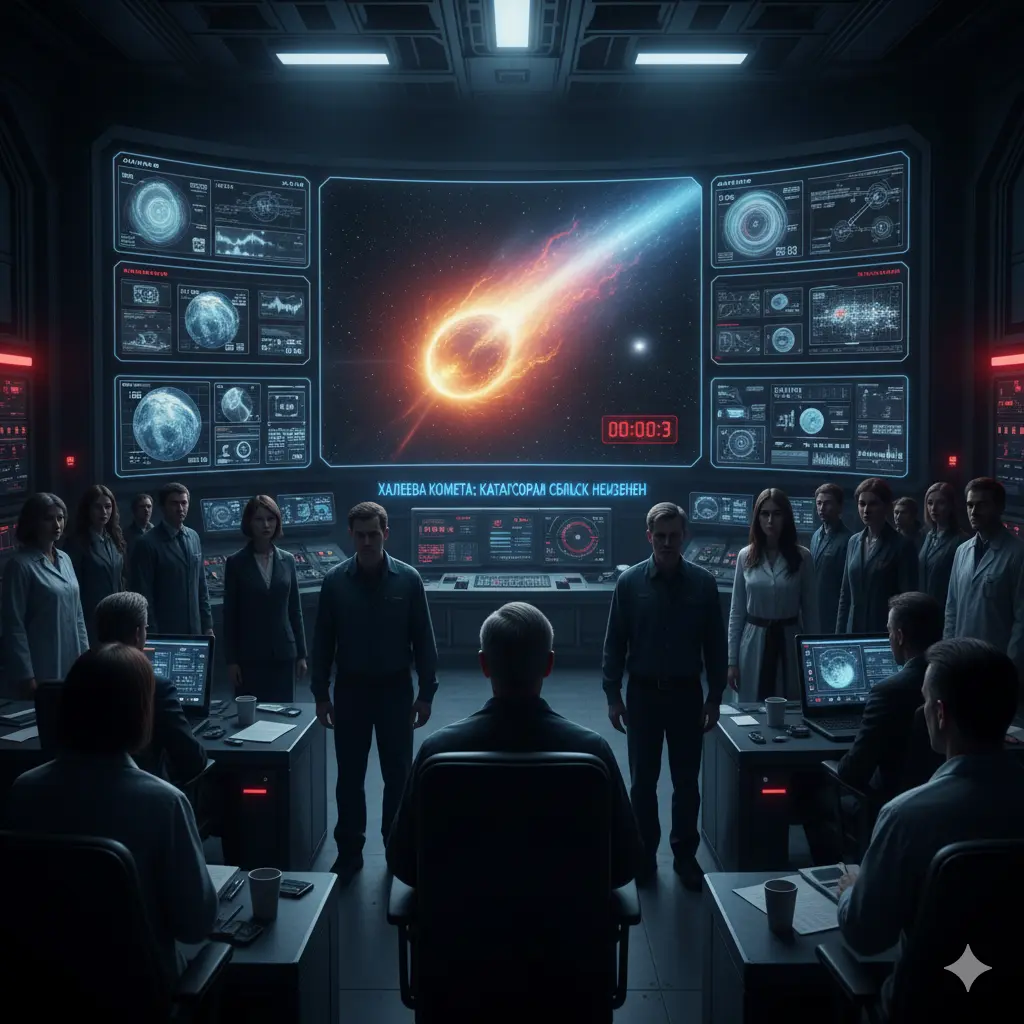
The resulting celebrations would be brief. On 12 January 2073, Dr. Sophia Alvarez of the Global Astronomical Monitoring Network delivered a new announcement. Updated calculations revealed that Halley’s Comet would not pass safely in its return in 2078. Instead, it would intersect the Earth’s orbit, and be captured by its gravity due to a miscalculation of perturbations from a close encounter with a large kuiper belt object. As the comet was a solid body, several kilometers across and composed of both ice and rock, it was large enough to destroy all life on Earth if it were to impact the planet.
“Multiple independent observatories have confirmed our calculations,” Dr. Alvarez said in a press conference as calm as could be expected given the circumstances. “We have a greater than 94% chance of impact. Halley’s Comet is on an Earth-impact orbit, and will collide with the planet if we do not deflect it on 17 October 2078.”
Analyses of the expected impact effects were uniformly catastrophic. The resulting explosion would vaporize much of the Earth’s surface, and cause earthquakes, tsunami hundreds of meters high, and a cooling of the planet for many decades as the resulting dust blocked the sun. The most conservative estimates placed 70% of all life on the planet at risk of dying, and all of civilization as it then existed. Every national government immediately began work on Project Bulwark, multinational cooperation on deflection techniques. Nuclear options were quickly ruled out as the comet would be too large and too solid for nuclear explosions to cause the required change in trajectory, and ion beam techniques offered some potential, but no existing technology seemed capable of doing the job in the five-year window. The Doomsday Clock was set for the first time since the Cuban Missile Crisis to 30 seconds to midnight.
It was against this backdrop of impending catastrophe that Elara Chen made her discovery. Working alone during a scheduled maintenance period at the Mauna Kea Observatory Complex, she had been granted rare access to the new Quantum Spectral Analyzer. While others focused on Halley’s Comet, Elara remained committed to her doctoral research on potentially habitable exoplanets.
The planet orbited Kepler-438, a red dwarf star 640 light-years from Earth. Previous surveys had identified planets in its habitable zone, but Elara’s analysis revealed something extraordinary: Kepler-438e displayed atmospheric spectrographic signatures that could only be explained by the presence of large-scale photosynthesis. Further analysis confirmed nitrogen-oxygen ratios remarkably similar to Earth’s, along with clear water vapor bands and methane concentrations suggestive of biological processes.
“It’s not just habitable,” she whispered to herself as the data solidified on her screen. “It’s inhabited.”
Within days, her findings were verified by senior researchers. Kepler-438e—soon nicknamed “Nova Terra” by the media—was approximately 1.2 times Earth’s size with slightly higher gravity and a 290-day orbital period. Its average surface temperature was estimated at 19°C, with evidence of oceans, continents, and polar ice caps. Most importantly, it showed no signs of technological civilization—no radio emissions, no industrial pollutants, no artificial illumination on its night side. If life existed there, it was pre-industrial, perhaps even prehistoric.
The 2070s had already been a decade of astronomical revelations and challenges before Halley’s Comet’s fatal trajectory was discovered. Climate instability on Earth had reached critical thresholds despite belated carbon capture initiatives. The lunar colonies established in the 2050s remained dependent on Earth for resources, while the struggling Mars outposts housed fewer than three thousand people. Humanity remained effectively trapped in its home system.
The decade began with the Great Solar Storm of 2071, which disabled 40% of Earth’s satellite network and caused worldwide communications disruptions. This was followed by the discovery of intermittent gravitational anomalies in the Oort Cloud, suggesting the presence of a yet-undetected massive object—possibly a brown dwarf—at the edges of the solar system. Astronomical bodies once considered stable and predictable were revealing new complexities and dangers.
Meanwhile, Earth’s resources continued dwindling under the pressure of nine billion humans. The Antarctic Treaty had been amended to allow limited resource extraction, pristine marine reserves were opened to deep-sea mining, and water wars had erupted in multiple regions. The luxury of space exploration was increasingly questioned as immediate survival concerns took precedence.
“We face a confluence of cosmic and terrestrial threats unprecedented in human history,” United Nations Secretary-General Amara Okafor noted in her famous 2073 address. “Our species stands at an evolutionary crossroads—adapt or perish.”
Elara’s discovery of Nova Terra transformed the global conversation overnight. What began as a scientific curiosity quickly became humanity’s potential salvation. If the black hole transport technology could be developed for human travel, and if Nova Terra was truly habitable, humanity might have an escape route from Halley’s impending impact.
Religious institutions were thrown into turmoil—some proclaimed the discovery divine intervention, a modern Noah’s Ark scenario, while others condemned the idea of abandoning Earth as sacrilege. Financial markets oscillated wildly as corporations pivoted toward space technologies. Nations with advanced space capabilities suddenly held unprecedented geopolitical power.
The ethical questions multiplied faster than answers. Who would go if only a fraction of humanity could be transported? What right did humans have to potentially disrupt Nova Terra’s existing biosphere? Would humanity export its same destructive tendencies to a fresh world?
“We’ve been given a second chance we don’t deserve,” wrote philosopher Aisha Montgomery in her viral essay “The Nova Terra Question.” “Having nearly destroyed one planet, we now contemplate colonizing another. Perhaps the true test is whether we can save Earth rather than abandon it.”
Yet pragmatism gradually overcame philosophical objections. As Project Bulwark’s deflection efforts encountered setback after setback, the prospect of establishing even a small human settlement on Nova Terra began to feel like the only meaningful survival strategy. Preservation of human knowledge and genetic diversity became the priority, with the Svalbard Global Seed Vault expanded to include digital records of all human learning and cultural heritage—a legacy that might survive even if most of humanity did not.
The dual crises—Halley’s approach and Earth’s ongoing environmental degradation—catalyzed an unprecedented golden age of theoretical and applied astrophysics. Resources poured into Nakamura’s black hole transport research. The principles underlying his discovery led to advancements in quantum gravity theory and revolutionary understanding of the universe’s fundamental forces.
Simultaneously, the desperate need to deflect Halley’s Comet accelerated development of plasma propulsion systems, gravitational tractors, and directed energy weapons. These technologies, though ultimately insufficient for the immediate threat, laid groundwork for future deep space capabilities.
Elara Chen found herself at the center of this scientific renaissance. Her expertise in exoplanetary atmospheres made her essential to assessing Nova Terra’s true habitability. Working with Nakamura’s team, she helped design specialized probes that could be sent through micro black holes to gather real-time data from the Kepler-438 system.
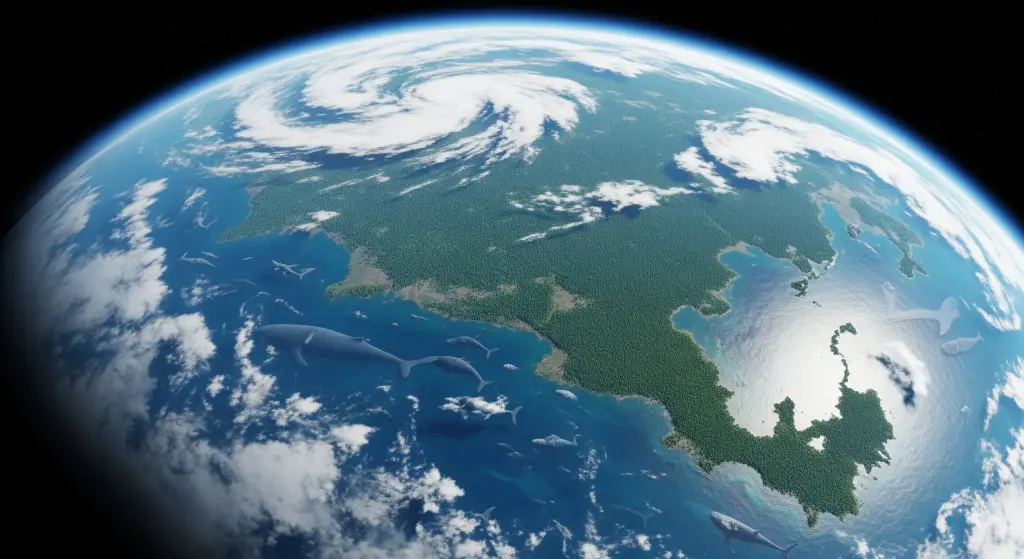
The first such probe, Messenger-1, launched in early 2074. Its journey through the black hole corridor took seventeen minutes, after which it successfully transmitted high-resolution images of Nova Terra—revealing a blue-green world with swirling white cloud patterns disturbingly similar to Earth’s. The images showed vast forests covering what appeared to be a single supercontinent, and oceans teeming with large life forms visible even from orbit.
“We’re looking at Earth’s twin,” Elara told the press, her voice breaking with emotion. “Or perhaps more accurately, we’re looking at Earth’s past—a world untouched by industrial civilization, pristine and balanced.”
By 2075, humanity found itself racing against time on parallel tracks. Project Bulwark continued its increasingly desperate attempts to deflect Halley’s Comet while the Nova Terra Initiative worked to perfect black hole transport for human passengers. The first biological samples—plants, microorganisms, and small animals—had been successfully transported to Nova Terra and back, showing survival rates approaching 85%.
Elara’s role had evolved from discoverer to potential pioneer. As one of the foremost experts on Nova Terra’s environment, she was among the candidates for the first human expedition—a one-way journey to establish a settlement that might preserve a fraction of humanity and its knowledge.
“We stand at the precipice of two possible futures,” she told her doctoral committee during her final presentation. “In one, we save our home world through unprecedented cooperation and technological innovation. In the other, we become a multi-world species, carrying the torch of consciousness to a new shore. Either outcome represents a transformation of what it means to be human.”
As Halley’s Comet grew brighter in Earth’s night sky—a celestial harbinger visible even in daylight—humanity’s greatest minds wrestled with forces beyond previous comprehension. Between the quantum corridors of black holes and the ancient promise of a second Earth, the species that had once huddled in caves gazing fearfully at the stars now reached for them with desperate determination. The question remained whether this cosmic trial would mark humanity’s extinction or its transcendence.