


100
I. The Veridian Sanctum
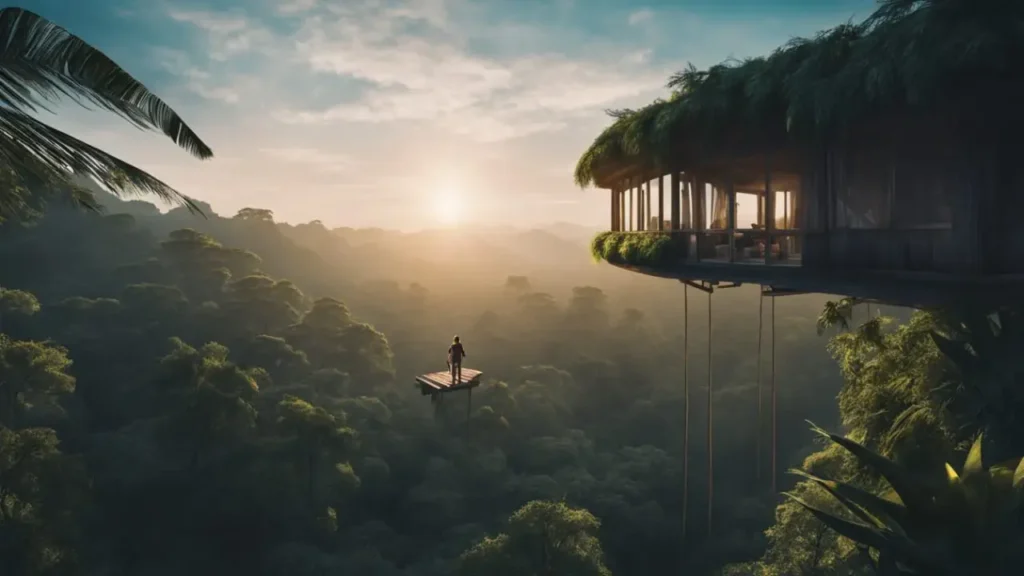
The air in the Amazonian basin was thick, heavy with the scent of damp earth, decaying orchids, and the electric ozone of a thousand invisible data streams. At the heart of this emerald expanse stood the Veridian Sanctum—the residence of Maria Vancroft. It was not a castle of stone and mortar, but a shimmering spire of quantum-glass and self-healing carbon nanotubes that seemed to grow out of the jungle floor like a sentient crystal.
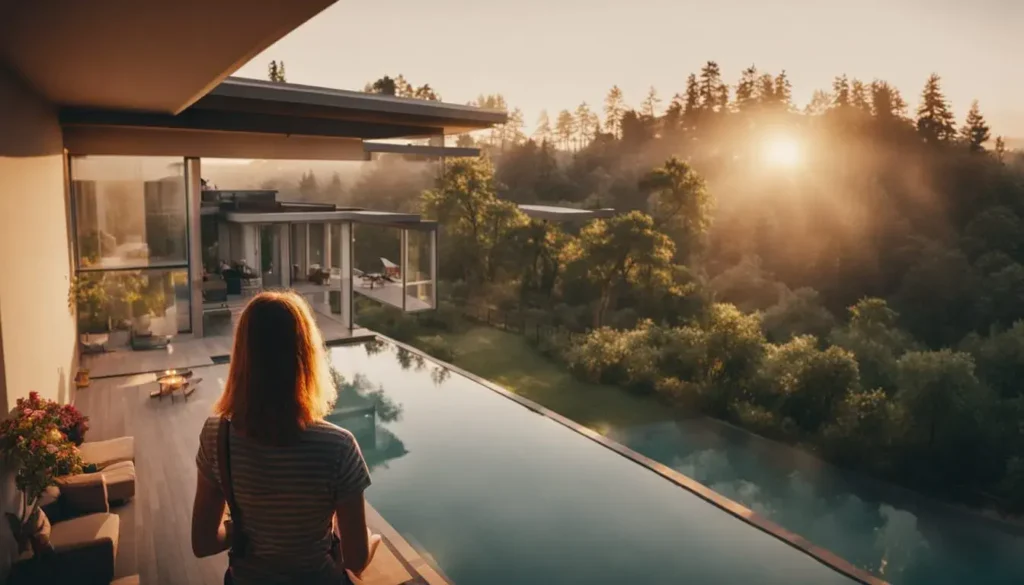
Inside, Maria stood by a floor-to-ceiling window, her reflection ghosting over the vibrant green of the canopy outside. At forty, she possessed a beauty that was often described in the remaining tabloids as “extragenetic.” Her skin had the luster of polished pearl, her eyes a deep, intelligent amber that seemed to hum with the same frequency as the machines she commanded. She wore a simple gown of liquid silk that shifted color with her mood—currently a somber, bruised violet.
She was the richest person to have ever lived. Her family, the architects of the Great Integration of 2032, had patented the fundamental algorithms that wedded Artificial Intelligence to the erratic laws of Quantum Mechanics. They hadn’t just built computers; they had built the nervous system of the planet. When the last of her kin died in a sub-orbital shuttle accident five years ago, the totality of the Vancroft Hegemony fell upon her narrow, aristocratic shoulders.
“The North African irrigation nodes are fluctuating, Ma’am,” a voice whispered from the air. This was ‘Ariel,’ the Sanctum’s core AI, an entity whose processing power exceeded the collective brainpower of the 20th century. “The local administrators are requesting a budget increase for the desalination filters.”
Maria didn’t turn. “Grant it. But tell them if the efficiency doesn’t rise by three percent within the quarter, the automated oversight will replace the human board. We are not paying for their incompetence.”
“Understood,” Ariel replied. “Also, the Brazilian delegates have sent a gift. A rare pre-collapse violin. They hope for an audience.”
“Deny the audience. Send a thank-you note signed by my digital proxy. And tell them to invest that ‘gift’ money into the favelas of New Brasilia instead.”
Maria sighed, her breath fogging the glass. This was her life. She was the Sovereign of the Meadow. The world’s elite—the “Global Citizens”—had realized decades ago that war was a legacy expense that hampered the bottom line. Under Maria’s rule, the Earth had become a private estate. The poor were kept in a state of managed subsistence—fed, housed, and entertained by Vancroft-subsidized VR—while the rich lived in floating enclaves or mountain fortresses, orbiting Maria like planets around a silent sun.
Peace had been achieved, but it was a peace born of cold mathematics and total surveillance. And she was the one who held the key to the cage.
II. The Paradox of Plenty
Despite the quantum revolution, humanity had remained stubbornly mercantile. The thirst for status, the hunger for property, and the drive for accumulation had only intensified as resources became digitized. The “New World” was a place where one could travel from London to Tokyo in twenty minutes via vacuum-tube transport, yet the distance between the man in the gutter and the woman in the clouds had become an unbridgeable chasm.
Maria was the bridge, yet she crossed it for no one.
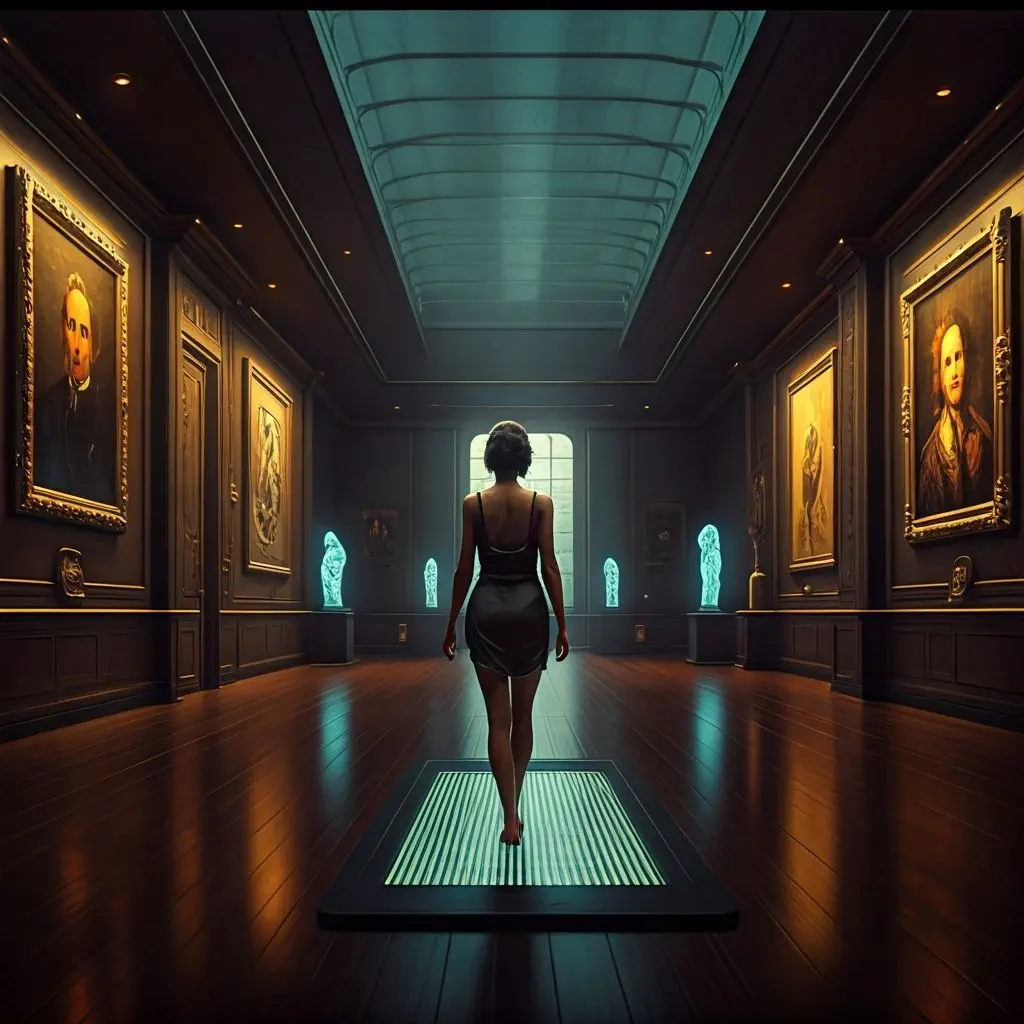
She walked through the halls of her mansion, her bare feet silent on the warm, haptic floors. She passed galleries of art that had been rescued from the rising tides of the 2030s—Rembrandts, Picassos, and digital sculptures that shifted form based on the observer’s heartbeat. She owned it all. She owned the air people breathed and the chips in their brains.

But as she entered her private quarters, the grandeur felt like a weight. The room was circular, offering a 360-degree view of the darkening jungle. As the sun dipped below the horizon, the bioluminescent flora of the Amazon began to glow—a neon blue sea of ferns and vines.
She sat at her vanity, looking at herself. She was a woman who could have any man on the planet. Emperors of industry, brilliant scientists, and the heirs of the old oil dynasties constantly vied for her attention. They sent poetry, they offered moons, they promised devotion.
But Maria knew better. To marry was to create a second pole of power. The global economy was a delicate quantum state; any interference, any “entanglement” with another high-net-worth individual, could cause the entire system to collapse back into the chaos of the 20th century. The hierarchy depended on her neutrality. She was the Virgin Queen of a technological age, a symbol of stability that could not be shared.
“Ariel,” she said softly. “Show me the genetic viability projections again.”
A holographic display bloomed in the center of the room. It showed a double helix, shimmering with data points.
“Your biological markers remain optimal, Maria,” the AI responded. “The life-extension treatments have preserved your fertility at the level of a twenty-five-year-old. However, the window for a natural, unassisted gestation is narrowing if you wish to avoid the use of an artificial womb.”
Maria touched the hologram. Her own DNA. She didn’t want a lab-grown heir. She wanted the visceral, terrifying, beautiful experience of carrying a child. She wanted a piece of her flesh and blood to continue after she was gone—not just to inherit the wealth, but to feel the warmth of a human connection she had been denied.
“The problem remains the contribution,” she whispered.
“Indeed,” Ariel said. “A donor from the ‘Super-Rich’ tier would create a legal and economic claim to the Vancroft Hegemony. A donor from the ‘Lower Tiers’ would be seen as a scandal that could destabilize the social hierarchy. The markets value your bloodline’s purity and its isolation.”
Maria felt a cold shiver. She was the most powerful person on Earth, yet she could not choose the father of her child without risking a global recession or a civil war among the elite. Her body was not her own; it was a sovereign asset.
III. The Intruding Ghost
The suspense of her life was not found in grand battles, but in the quiet, creeping realization that she was becoming a ghost in her own machine.
One evening, while Maria was reviewing the atmospheric scrubbers’ data for the Eurasian sector, the Sanctum’s security alarms chimed—a low, melodic sound that signaled a breach of the inner perimeter.
“Status,” Maria commanded, her heart racing. No one had breached the Amazonian sector in twelve years.
“A single drone, Ma’am,” Ariel reported. “Non-military. It carries no weapons. It originated from the ‘Forgotten Zones’—the old Appalachian territories.”
“Intercept it?”
“It has already self-destructed upon crossing the threshold, but it dropped a physical payload. A small lead-lined box. It is currently being scanned for pathogens.”
Maria felt a strange jolt of adrenaline. “Bring it to the containment lab. I want to see it.”
An hour later, Maria stood behind a sterile barrier as a robotic arm opened the box. Inside was something Maria hadn’t seen in years: a piece of real paper. It was yellowed, smelling of wood pulp and old ink.
She used the remote manipulators to unfold it. There was no text, only a hand-drawn sketch. It was a portrait of her. But it wasn’t the idealized, airbrushed version that appeared on the global news feeds. It was Maria as she was in her private moments—tired, contemplative, with a slight furrow in her brow that suggested a deep, hidden sorrow.
At the bottom was a set of coordinates and a single name: Jonathan.
“Ariel, track the origin of the drone’s flight path. Cross-reference the name Jonathan with the Appalachian records.” Jonathan
“Scanning… The name Jonathan appears. He was a lead architect for your father’s quantum-core project. He resigned twenty years ago and disappeared into the non-technological zones. He is classified as a ‘Luddite-Refusant.'”
Maria remembered him. Or rather, she remembered a tall man with ink-stained fingers who used to tell her stories about the stars before they were covered by the “Aether-Link” satellites. He had been her father’s brilliant protégé, the one who had actually solved the entanglement stability problem.
“Why would he send this now?” she wondered aloud.
“The coordinates point to a dead-zone,” Ariel cautioned. “No satellite coverage. No AI monitoring. It is a place where the old laws of physics still rule, unobserved by the system.”
Maria looked at the sketch again. The artist had captured her soul—the part of her that was trapped in the castle. For the first time in her life, the responsibility she held felt like a physical chain. She was the “Mother of the World,” but she was childless. She was the “Citizen of the Earth,” but she never touched the ground.
IV. The Journey Downward
Against the frantic warnings of her AI and the silent protests of her automated security team, Maria prepared to leave. She didn’t take her usual gold-plated transport. Instead, she took a stealth-skiff, a vessel designed for atmospheric research that could bypass the standard traffic-control grids.
She flew north, leaving the lush Amazon for the rugged, scarred beauty of the Appalachian Mountains. As she crossed the border into the “Dead Zone,” the HUD on her ship began to flicker. The quantum link was weakening. The constant hum of the world’s data—the voices of billions, the stock tickers, the weather updates—began to fade into a blissful, terrifying silence.
The ship landed in a small clearing surrounded by ancient oaks. When the hatch opened, the air hit her like a physical blow. It was cold, sharp, and smelled of pine needles and woodsmoke. It wasn’t the filtered, temperature-controlled air of the Sanctum. It was real.
She stepped out, her boots crunching on dry leaves. She felt exposed, vulnerable. Without the AI in her ear, she was just a forty-year-old woman in the woods.
A man emerged from a small cabin built of timber and stone. He was older, his hair a shock of white, his face etched with the lines of a life lived under the sun. Jonathan.
“You came,” he said. His voice was raspy, unused to much speaking.
“You sent a drawing,” Maria replied, her voice trembling. “How did you know?”
“I built the system, Maria. I knew what it would do to you. I knew what it would do to the world. We created a perfect machine, but we forgot that machines don’t have room for people. They only have room for functions.”
He stepped closer, but stopped at a respectful distance. Even here, her aura of power was palpable. “You’re the richest woman in history, and yet you look like a prisoner awaiting execution.”
“I have to maintain the balance, Jonathan,” she said, her aristocratic poise momentarily returning. “If I fail, the world goes back to war. They’ll tear each other apart for the scraps of the Vancroft estate.”
“The world is already torn,” Jonathan said softly. “It’s just been stitched together with invisible wire. You’re the only thing holding the seams, and you’re fraying.”
He looked at her with empathy—not the worshipful gaze of a subject, but the pity of a father. “You want a child. I know the Vancroft line. It craves continuity. But you know you can’t have one in that world.”
“I can’t marry,” she whispered. “I can’t choose.”
“Then don’t choose an heir for the empire,” Jonathan said. “Choose a child for yourself. Stay here for a season. Let the world think you’re in ‘meditative retreat.’ The AI can run the scripts. It’s been running them anyway, hasn’t it?”
V. The Secret Season
Maria stayed.
For three months, the world continued to spin. The markets remained stable. Ariel, under strict orders, used Maria’s digital twin to conduct meetings and sign decrees. The global elite remained oblivious, basking in their wealth, while their Queen reclaimed her humanity.
In the mountains, Maria learned to cook over an open fire. She learned the names of the birds that weren’t tracked by sensors. And in the quiet evenings, she and Jonathan talked—not of quantum mechanics, but of the old world, of philosophy, and of the fundamental human need to belong to something other than a ledger.
Jonathan was not her soulmate in a romantic sense—he was too old, too world-weary—but he was her catalyst. He introduced her to a young man from the local settlement, a teacher named Julian. Julian didn’t know she was Maria Vancroft. In the Dead Zone, there were no screens, no news feeds. To him, she was just ‘Maya,’ a visitor from the south with sad eyes and a brilliant mind.
For the first time, Maria experienced the “mercantile” thinking of the world falling away. In the village, they bartered for grain; they shared labor. There was no super-rich or very poor here—only the struggle against nature, which brought them together.
She found in Julian a kindness that wasn’t calculated. Their intimacy was not a merger of corporations; it was a quiet, desperate rebellion against the coldness of the century.
But as the autumn leaves began to turn gold, Maria knew she could not stay. The silence of the Dead Zone was a luxury she couldn’t afford forever. A glitch had appeared in the North American power grid—a problem Ariel couldn’t solve without her biometric authorization. The world was starting to fray at the seams.
VI. The Burden of the Heir
Maria returned to the Veridian Sanctum as silently as she had left.
The transition was jarring. The humidity, the lights, the constant chatter of Ariel—it felt like a sensory assault. She bathed for hours, trying to scrub the scent of woodsmoke from her skin, but she couldn’t scrub away the truth.
She was pregnant.
“Congratulations, Maria,” Ariel said, its voice sounding strangely hollow. “The biological scan confirms a successful conception. The genetic markers of the paternal contributor are… non-indexed. He is a ‘Ghost.'”
Maria sat in her darkened office, her hand resting on her still-flat stomach. “He will stay a ghost, Ariel. This child will be a Vancroft. My flesh, my blood.”
“The Board of Global Trustees will demand to know the lineage,” the AI warned. “The stability of the global currency is tied to your succession. A ‘bastard’ heir—if I may use the archaic term—will cause a twelve percent drop in the global index.”
“Then we will lie,” Maria said, her voice turning to steel. “We will synthesize a lineage. We will create a narrative of a private, anonymous donor of ‘high-tier’ status. You will scrub the coordinates of the Appalachian trip. You will delete the record of Jonathan.”
“I can do that,” Ariel said. “But you realize the cost?”
“I know the cost,” Maria snapped.
The cost was her final shred of peace. To protect the child, she had to become even more of a tyrant. She had to tighten the surveillance, solidify the hierarchy, and ensure that no one ever looked too closely at the “Meadow” she tended.
VII. The Prison of the Future
Nine months later, in a medical suite filled with enough technology to revive the dead, Maria gave birth to a daughter. She named her Emma.

The world celebrated. The “Miracle Heir” was hailed as a sign of a new golden age. The markets soared. The super-rich sent gifts of diamonds and orbital estates. The poor were given a week of double rations in honor of the royal birth.
Maria held the infant in her arms, looking out at the jungle. Emma was beautiful, with Maria’s amber eyes and a tuft of dark hair. She was perfect.
But as Maria looked at her, she began to cry.
She saw the life that awaited Emma. The girl would be raised by AI tutors. She would be told she owned the world before she could even walk. She would be groomed to be the next keystone of the global hierarchy. She would never be allowed to fall in love, never be allowed to disappear into the woods, never be allowed to be anything other than a function of the machine.
Maria had sought to escape her prison by bringing a new life into it, but she realized she had only built a smaller, more beautiful cell for someone she loved.

“Ariel,” Maria whispered, her voice breaking.
“Yes, Ma’am?”
“Update the security protocols for the heir. Level Ten isolation. No outside contact. No unauthorized data streams. She is to be protected at all costs.”
“The child will be the most secure individual in human history,” Ariel promised.
Maria looked down at Emma. The baby was sleeping, unaware that she was the most valuable property on the planet.
“I’m sorry,” Maria whispered into the child’s ear.
Outside, the jungle went on forever—vast, wild, and indifferent. But inside the Sanctum, the lights were bright, the air was perfect, and the Queen of the World sat on her throne, more alone than she had ever been, holding the heir to a kingdom that was also a graveyard.
The world remained at peace. The rich remained rich. Statistics remained stable. And in the heart of the emerald hell, the most powerful woman in the world realized that while she had finally gained someone of her own flesh and blood, she had also condemned them to the same gilded eternity.
In the new world, everything had changed—science, physics, the very nature of reality. But the old mercantile heart of man remained the same: it still broke when it realized that some things, like freedom and true connection, could never be bought, only lost.


Много интересно, поздравления.