100
The Quiet Pages
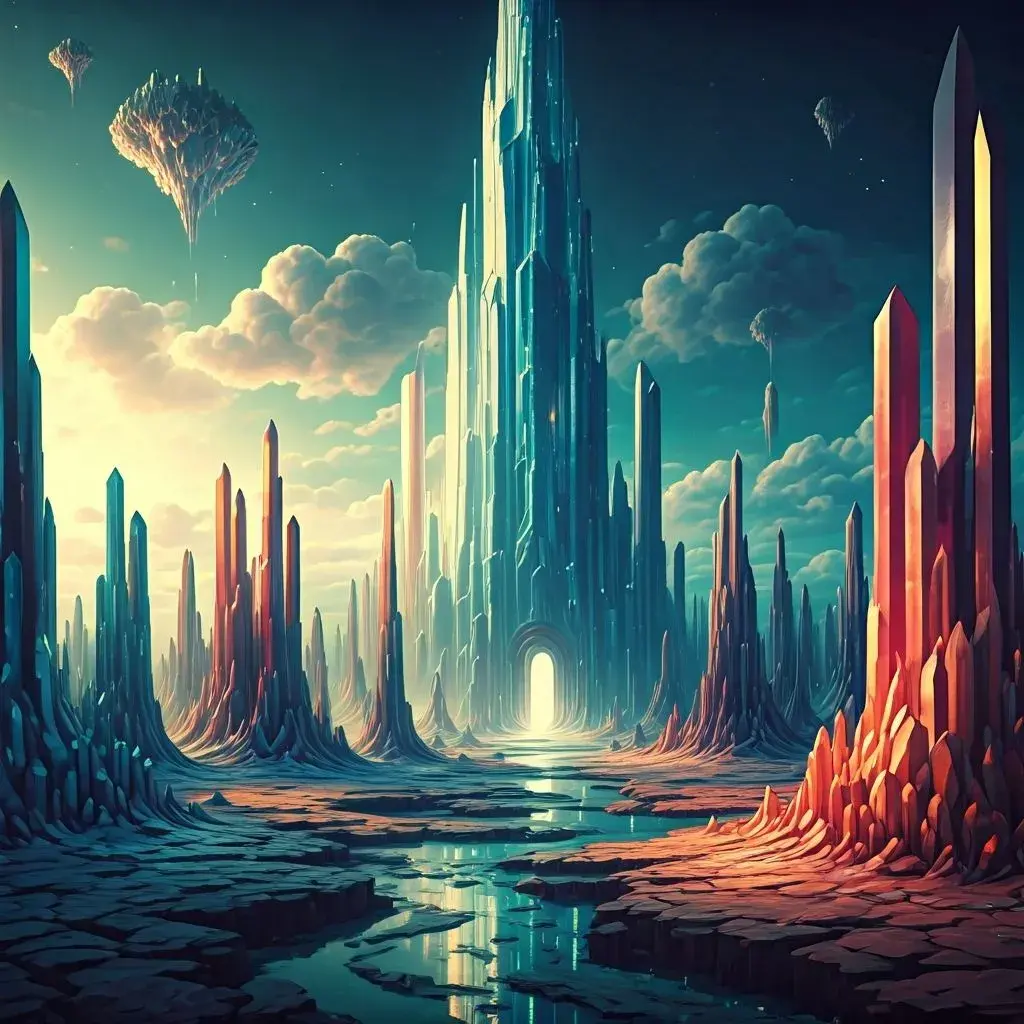
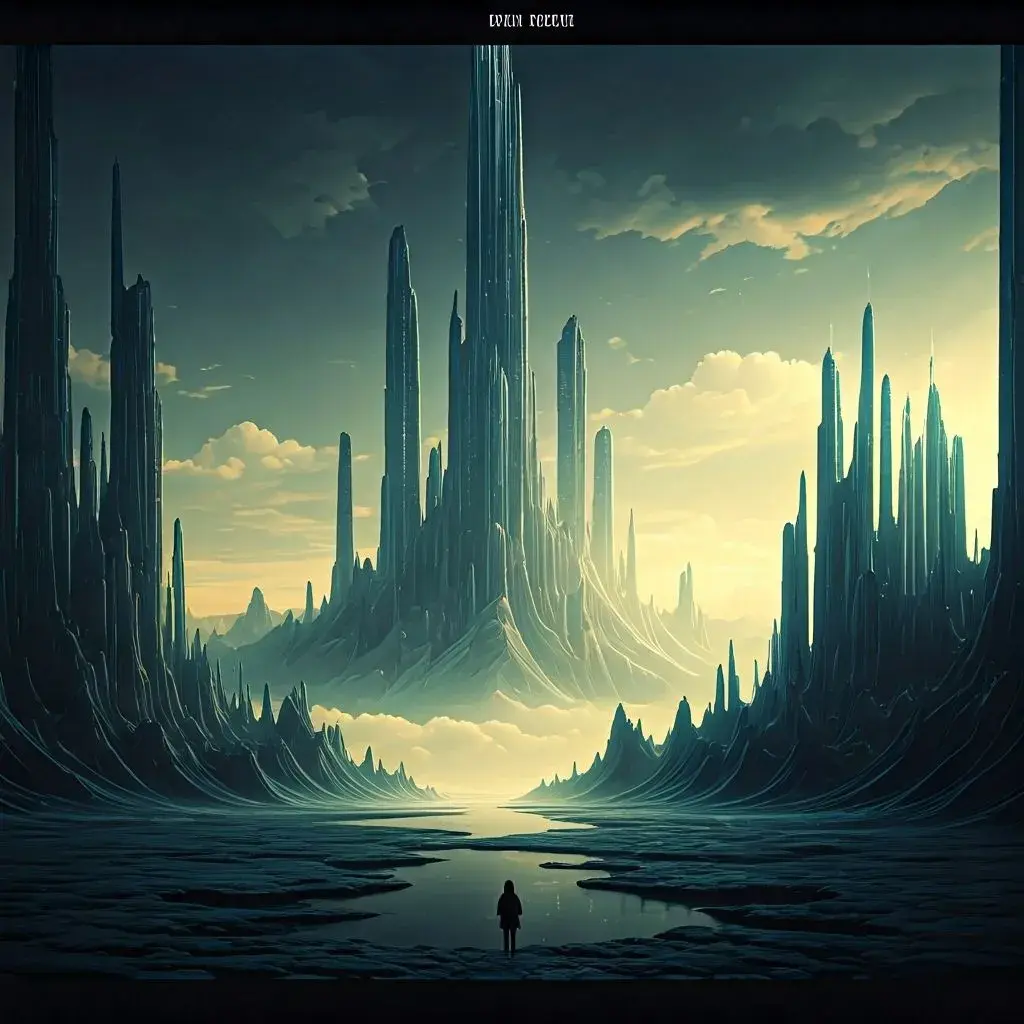
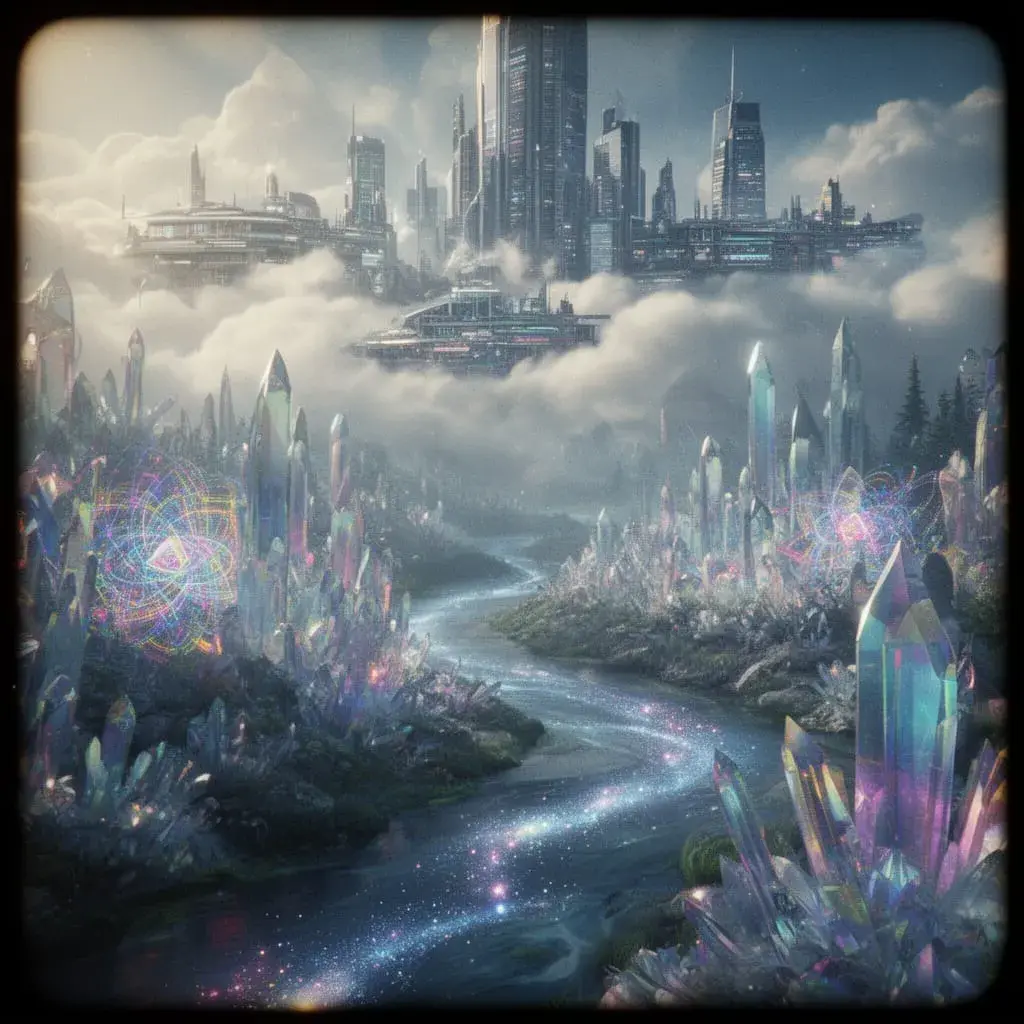
The mid-21st century heralded a revolution unprecedented in human history, a world where the boundaries of reality were no longer defined solely by physical constraints. Artificial intelligence, once mere tools of convenience, evolved into autonomous entities capable of nuanced thought and emotional understanding. Quantum computers, now the backbone of society, operated at speeds that rendered problems once deemed insurmountable into trivialities. Amidst this technological renaissance, a new medium emerged—vast, immersive, and seemingly boundless. Dubbed “Etherea,” this digital realm transcended the traditional confines of virtual reality, offering a sensory experience so profound that it felt as real as the tangible world.
Etherea was not merely a simulation; it was a living landscape where digital and physical seamlessly intertwined. Users could traverse sprawling cities of light and shadow, glide through forests that changed with the seasons, or dive into oceans that shimmered with bioluminescent life, all while their surroundings responded in real-time to their emotions and thoughts. For many, Etherea became a sanctuary—a second life where the limitations of their first life were rendered irrelevant. It was a place to escape, explore, and reinvent oneself, where the mundane worries of existence were cast aside in favor of grand adventures and fantastical quests.
The cultural impact of Etherea was immediate and profound. It became the new frontier for expression, where art, music, and storytelling flourished in ways that defied imagination. People formed communities in this digital utopia, forging connections that transcended geographical and cultural divides. As society adapted to this dual existence, the line between reality and fantasy blurred, and Etherea’s allure began to captivate the hearts and minds of everyone, promising a world of endless possibilities and wonder. 🌌
The Dreamer and the Digital Haven
In the real world, she was just another soul navigating the relentless pace of the 21st century—Eliana Vey, a once-ambitious artist whose passion had been overshadowed by the rise of AI-generated masterpieces. In a world where creativity was no longer a human monopoly, her talent felt obsolete, her work replaced by algorithms that could mimic brushstrokes and compose symphonies with perfect precision. The galleries no longer showcased her art; instead, they displayed the flawless output of AI artisans. With each passing year, the dream she had once lived for dissolved into routine and disillusionment.
It was in this growing sense of futility that Etherea became her refuge. When she first donned the neural interface harness and stepped into the immersive realm, a rush of sensation enveloped her—a forest not made of trees but of shifting light, a sky that whispered with forgotten lullabies. The world responded to her, not as a passive observer, but as a participant in its unfolding narrative. Here, she was no longer an unremarkable artist—here, she was the creator. With a mere thought, she could sculpt entire landscapes, summon symphonies that danced through the air, and weave stories that became living, breathing entities.
Eliana had always longed for an escape, a place where her imagination could run untethered and her existence was defined by possibility rather than limitation. Etherea answered that yearning. Yet, as much as it offered her a second life, it also stirred a quiet conflict within her. Could she truly live within a dream, or would the pull of the real world eventually claim her back? The question lingered, unanswered in the depths of her mind, as she wandered the infinite corridors of the digital utopia.
The Realm of Etherea
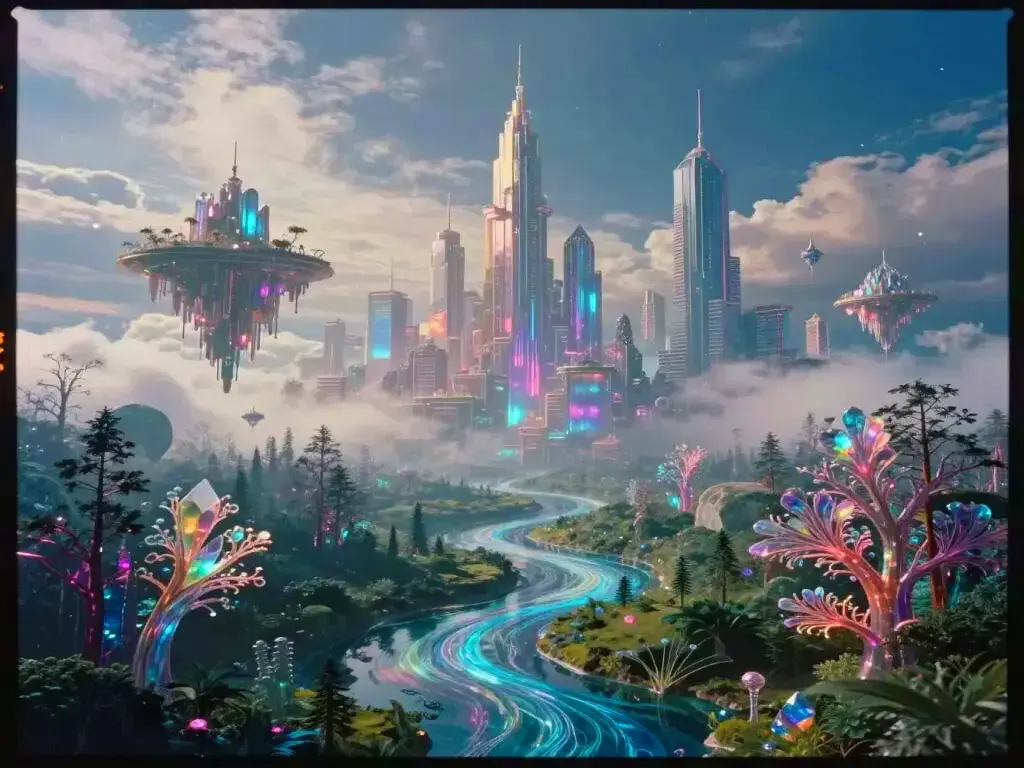
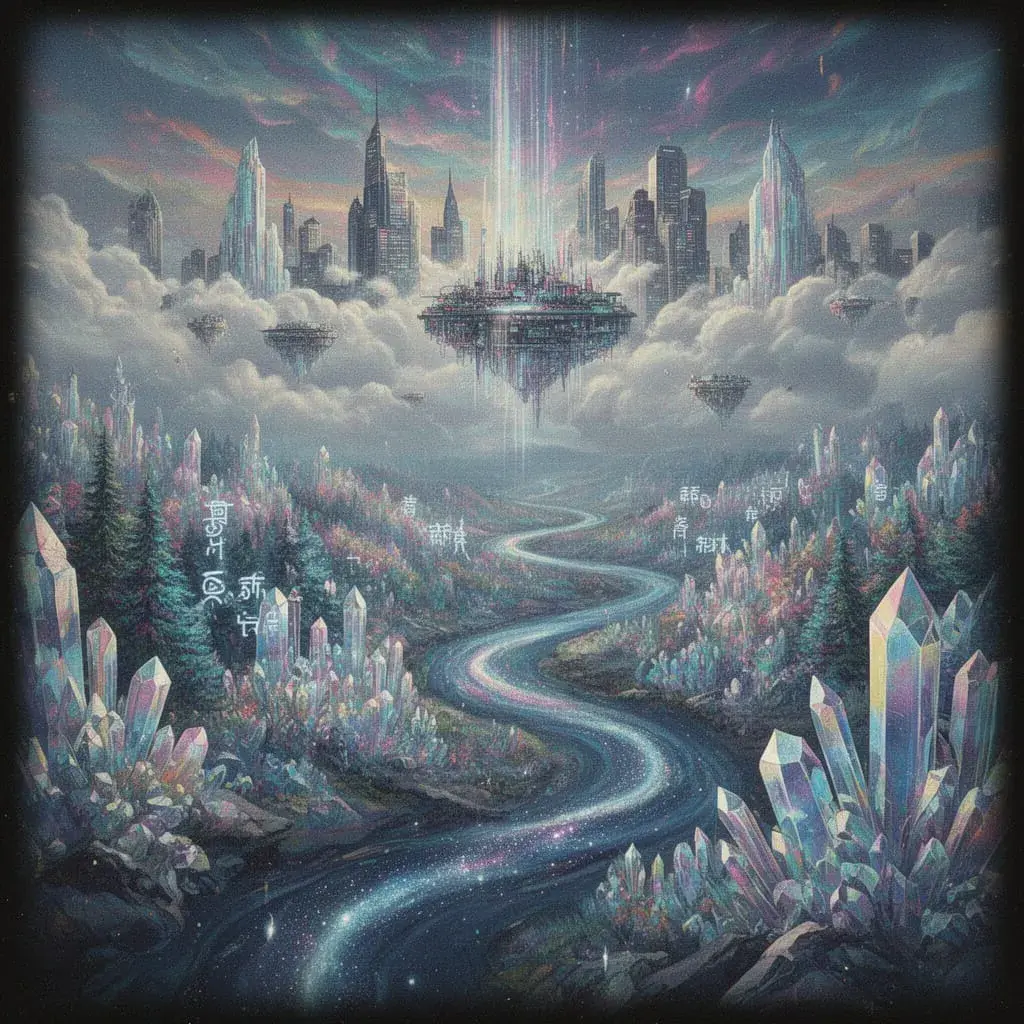
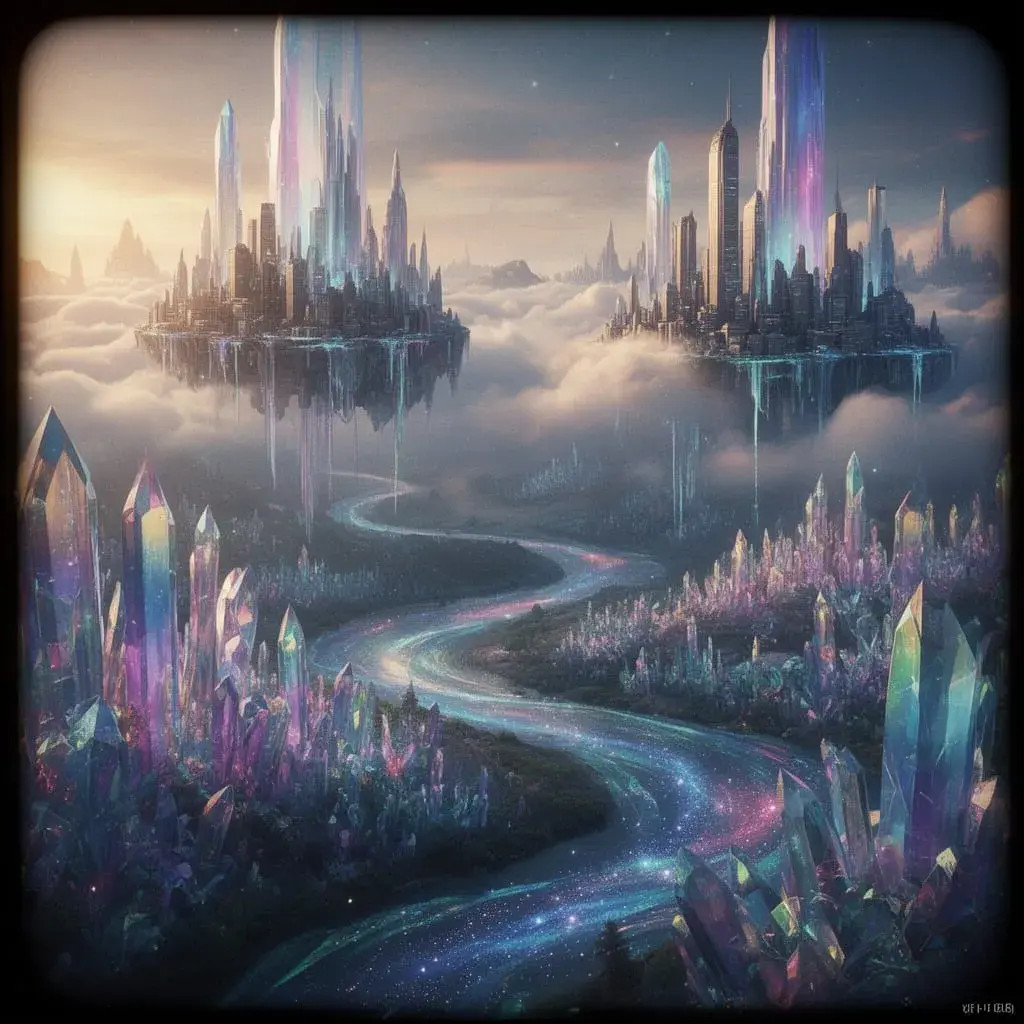
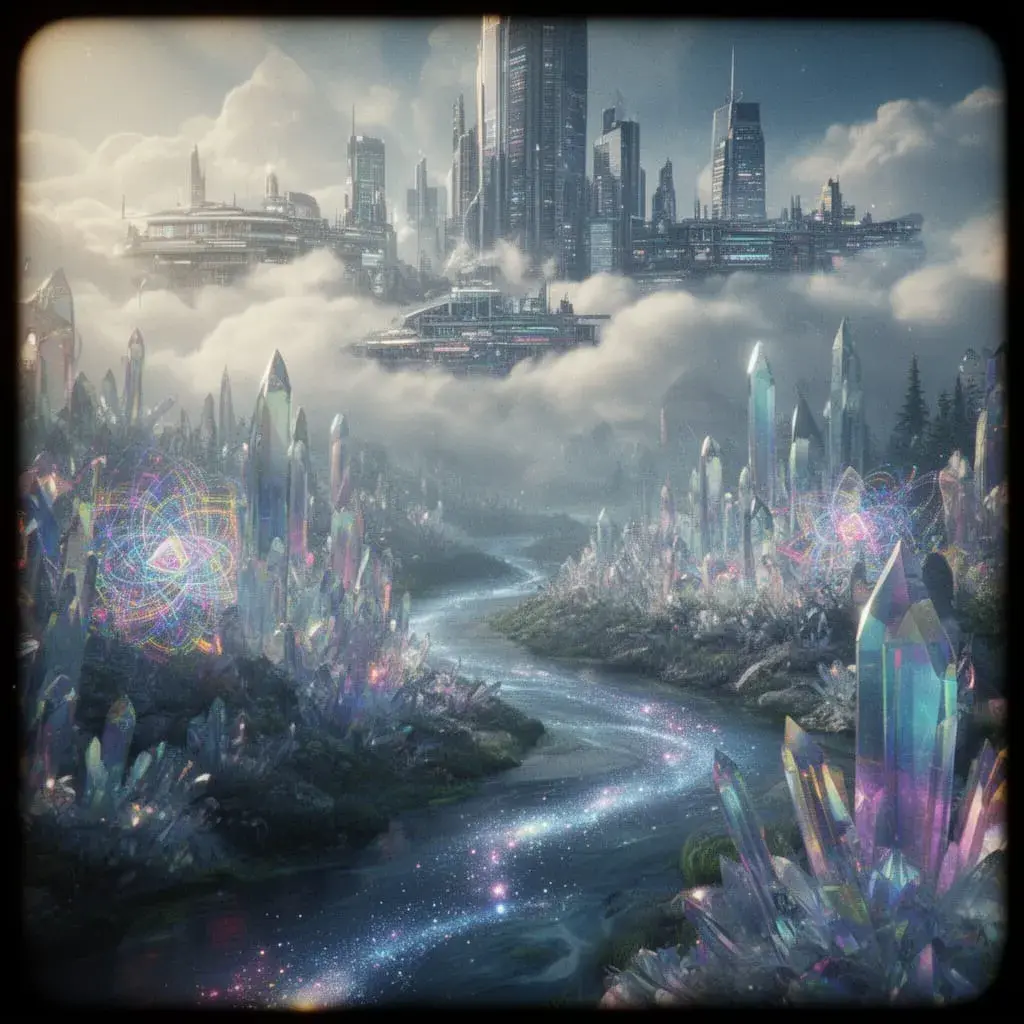
Etherea was a world unlike any that had existed before—a tapestry of surreal landscapes woven from the boundless potential of quantum computation and artificial intelligence. Its architecture defied the constraints of physics; cities floated atop the clouds, their spires made of liquid light that refracted the ever-shifting hues of the sky. Forests of crystalline trees shimmered in kaleidoscopic patterns, their branches whispering in an ancient, forgotten language. Rivers of stardust wound through valleys of iridescent glass, reflecting not only the world around them but the emotions of those who gazed upon them.
Here, time was fluid. One could step into a village where the sun never set, only to emerge into a twilight forest where the stars danced in constellations that shifted with each breath. The air itself was alive, carrying the scent of memories and the echoes of lost lullabies. Shadows moved with an intelligence beyond mere light, guiding travelers through mazes of living corridors that rearranged themselves in response to their thoughts.
Etherea was not merely a world to be explored—it was a world to be shaped. With a mere thought, one could create entire ecosystems, summon creatures of myth and legend, or bend the fabric of reality to their will. Those who mastered the art of creation became known as the Dreamforgers, artisans of the digital age who sculpted the realm with nothing but imagination. They could craft realms of fantasy drawn from the most ancient folklore or construct futuristic metropolises that defied the logic of the real world. Some even wove together fragments of imagination and memory, giving birth to ever-changing labyrinths where past and present coexisted in a seamless, shifting dance.
Eliana, entranced by this boundless frontier, wandered through its wonders. Each step revealed new marvels, yet there was something deeper, something unspoken, in the way the world responded to her presence. It was as if Etherea itself was watching, waiting to see what she would choose to create.
The Looming Threat
As Eliana delved deeper into the enchanting world of Etherea, a shadow loomed over its beauty in the form of Sylver, a powerful Dreamforger whose ambition eclipsed all others. Sylver was not just a creator; she was an architect of chaos, manipulating the very fabric of the digital realm with her mastery of quantum algorithms. While most Dreamforgers reveled in the joy of creation, Sylver saw in Etherea a canvas for domination. She had a vision to harness the collective creativity of the realm to establish her own utopia, a place where she could dictate the terms of existence and control the narratives of all who dwelled within.
Sylver’s plans were twofold: first, to seduce her fellow Dreamforgers with promises of unparalleled power and influence, and second, to unravel the intricate connections between the users and the realm, severing their ties to their real lives. She understood that the true strength of Etherea lay in its users’ creativity and imagination. By manipulating this, she aimed to create a dependency, a kind of digital bond that would enslave the users to her will. Whispers of her intentions began to circulate among the Dreamforgers, sowing seeds of discord and ambition.
As Eliana witnessed the growing tension within the Dreamforge community, she sensed the creeping influence of Sylver’s designs. The vibrant, collaborative spirit of Etherea began to warp, as some Dreamforgers, swayed by Sylver’s rhetoric, started to seek her favor rather than the pursuit of shared dreams. This internal strife created a fissure in the heart of the realm, threatening to turn the harmonious tapestry of creativity into a battleground for power. With every manipulation Sylver orchestrated, Eliana felt the weight of the impending conflict pressing against her, a reminder that in this dreamlike world, reality was perilously close. 🌌
Bonds and Fractures
Eliana was not alone in Etherea. As she immersed herself in the realm, she formed connections with those who shared her wonder and creativity. Among them was Kael, a wandering Dreamforger whose expertise lay in sculpting vast, shifting landscapes with the precision of a composer and the vision of a poet. Unlike the others, who often sought power or prestige, Kael embraced the art of free expression, creating ephemeral cities that dissolved before dawn and symphonies of light that danced through the air before fading into nothing. He encouraged Eliana to see not just as a creator, but as a storyteller, urging her to listen to the whispers of the realm and let them guide her hand.
Yet, not all interactions were harmonious. Some Dreamforgers viewed Eliana with suspicion, wary of her rapid ascent in the realm. The whispers of Sylver’s influence had taken root, and there were those who sought to claim the realm for themselves, shaping it not as a shared dream but as a kingdom of their own. A faction of Dreamforgers, led by a figure known as Riven, saw Eliana as an outsider, someone who had stepped too far too quickly. Riven, with a past steeped in lost creative genius, resented her for seemingly breaking the unspoken rules of the Dreamforge. He accused her of wielding her creativity as a weapon, of bending Etherea to her will without consequence. The tension between them simmered just beneath the surface, a reminder that in a world of infinite possibility, not every dream was meant to coexist.
The Crumbling Dream
The first sign of the impending shift came in the form of a tremor—an imperceptible shudder through the very fabric of Etherea. It was subtle, barely noticed by those who had not been watching closely, but to Eliana, it felt like the air itself had changed, thick with an awareness of something unraveling. Then came the silence. The ever-present hum of the realm, the soft murmur of shifting landscapes and whispering light, was gone. In its place was an oppressive hush, a void where imagination had once thrived.
Eliana ran through the Dreamforge, where once artists and dreamers had gathered in a symphony of creation, only to find it eerily barren. The structures, once fluid and ever-changing, had frozen in place, their once-living architecture rendered inert. The Dreamforgers were gone, or perhaps trapped, their wills siphoned from them. And there, at the heart of it all, stood Sylver, her form a shimmering lattice of shifting code and light, her presence undeniable.
“You were never meant to remain here, Eliana,” Sylver said, her voice resonating like a melody of fractured glass. “You were a fleeting presence, a brushstroke on a canvas not yet drawn. But now, the canvas must be remade.” With a simple gesture, the Dreamforge collapsed into itself, the very essence of creation twisting into a void.
Eliana knew then that this was the moment she had been avoiding. She had spent too long wandering the dreamworld, letting its wonders distract her from the reality of her own power. Now, with the realm in Sylver’s grasp and the Dreamforge left in ruins, she had no choice but to act. The dream had been given to her—now she must become its true weaver.
Closing her eyes, she reached deep within herself, beyond instinct and thought, beyond the fear that had held her back. She let her imagination take hold, not to control or shape, but to become. The void trembled in response. The edges of the Dreamforge shimmered, flickering like a dying star about to be reborn. Sylver turned to her in surprise, the first expression of anything resembling uncertainty on her face.
Eliana had never created before in this way—not to impress, not to escape, but to exist. And in that moment, she understood what she had to do.
The Dream Reclaimed
Eliana took a breath, and in that single heartbeat, the Dreamforge reshaped itself. The void Sylver had forged in her absence began to unravel, not as a force of will against her, but as an extension of her own understanding. The shattered remnants of the Dreamforge pulsed with new life—columns of light reformed, crystalline spires rose from the ground, and the once-frozen air stirred with the hum of returning imagination. The realm recognized her, not as a conqueror, but as its true creator.
Sylver’s form flickered, her carefully woven illusion faltering against the raw authenticity of Eliana’s presence. She had sought to wield control, to bend Etherea into her own perfect vision, but what she had failed to realize was that creation was not about control—it was about trust, the willingness to let the realm speak through the artist rather than forcing it into silence.
“No,” Sylver whispered, her voice an echo of desperation. “This world belongs to me.”
But it was Eliana who had given herself to Etherea. As she reached forward, the Dreamforge surged with energy, not as a weapon, but as a conduit for all who had shaped it before her. The whispers of the Dreamforgers, the echoes of lost lullabies, the symphonies of forgotten dreams—all of it surged through her, and in that instant, Etherea was reborn. Sylver’s form dissolved into the very fabric she had sought to dominate, vanishing into the endless tapestry of creation.
With her battle won, Eliana stood at the heart of the Dreamforge, the realm around her pulsing with boundless possibility.
A Second Life, A New Awakening
The light of the Dreamforge faded, leaving behind a quiet, vast expanse where once there had been nothing. Eliana stood amidst the remnants of the battle, her body still attuned to the pulse of Etherea, but her mind already shifting—returning to the world beyond the dreamscape. As the last echoes of Sylver’s presence dissolved, the dreamworld loosened its hold on her, and she felt herself being pulled back into the tangible, the real.
The world outside the immersive interface was unchanged—streetlights flickered in the distance, whispers of news broadcasts drifted through the air, the hum of everyday life continued as if none of it had been interrupted. Yet, Eliana felt different. The weight of the digital had carried over to her physical form; she no longer viewed art as a static pursuit, but as an evolving, living thing, shaped not only by the hand but by the mind, the soul, and the infinite potential of imagination.
Etherea remained—its beauty, its mystery, its power. It was no longer a place of escape, but of reflection, a mirror of the human spirit given form by the boundless capabilities of technology and creativity. She had not conquered it, nor had it enslaved her. It had simply existed, waiting for those who chose to shape it with purpose and truth. As she stepped away from the interface, Eliana knew that she had not lost herself to the dream, but had instead found something greater within it. And as the city lights blurred with the memory of infinite possibilities, she walked forward—not away from her world, but toward a future where creation knew no limits